Should we be afraid to travel by train?
A recent high-speed train crash that occurred in Toledo, Spain, on Wednesday morning has once again sparked heated debates about rail safety.
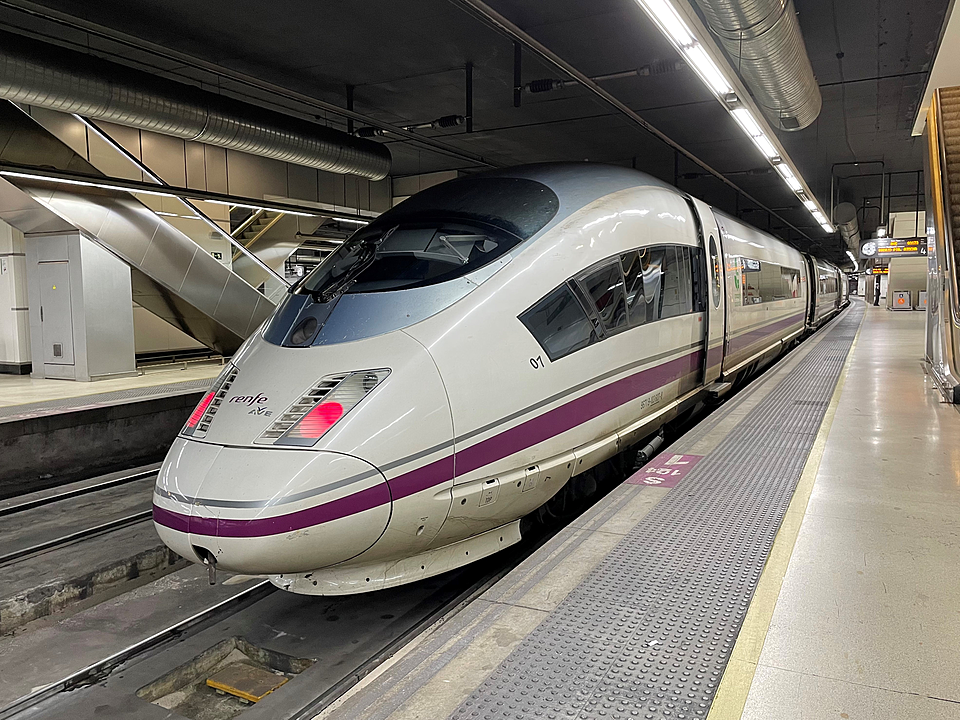
A recent high-speed train crash that occurred in Toledo, Spain, on Wednesday morning has once again sparked heated debates about rail safety.
The early-morning collision between two trains—in which an AVE high-speed train struck the rear of a stationary Iryo train—claimed at least 68 lives and left dozens injured [1,14,29].
This horrific tragedy, in which two train cars plunged from a high embankment, marks the third fatal accident on Spain’s railways in this dark year [1,14].
Residents of central Spain are now grappling with the aftermath of a disaster that immediately became the worst European rail catastrophe in more than a decade [29].
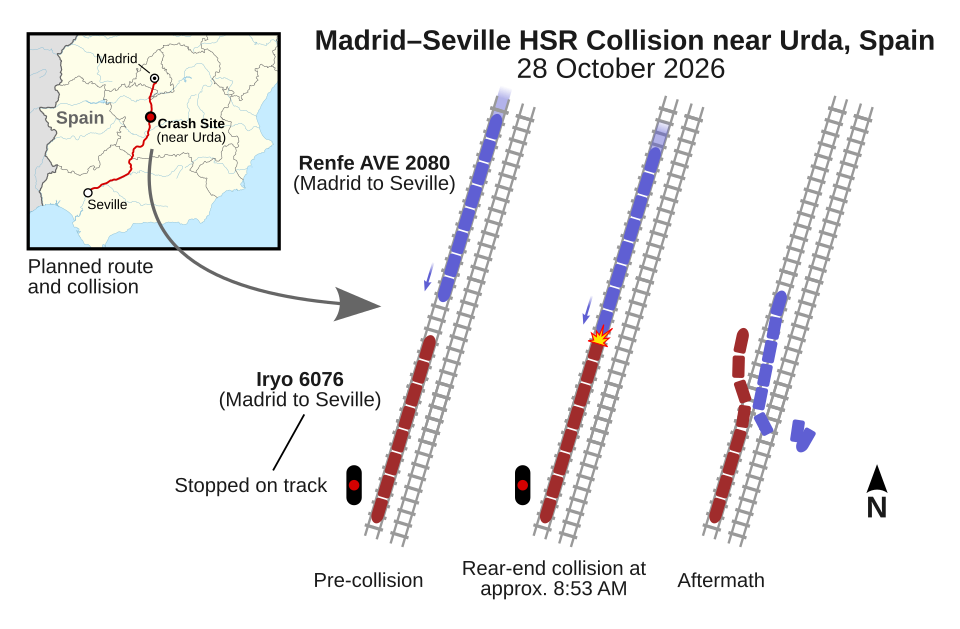
Investigators at the scene watched in horror as they surveyed the wrecked train cars, and Spanish Transportation Minister Óscar Puente described the incident as a severe blow to the credibility of the entire national rail network [26,29]. He also noted that initial evidence points to a serious failure of the train signaling system, though the investigation into the exact causes of this disaster is still ongoing [26,29].
This terrifying incident on Wednesday naturally raises deep doubts about whether modern rail travel is truly the safest option for the masses.
This is the perfect opportunity to take a look at the entire fascinating history of train accidents and objectively compare the risks with other commonly used forms of transportation. But let’s start from the very beginning and go back in time to the very birth of this revolutionary, steel-made mode of transportation.
The First Victims
Have you ever wondered who was the very first victim to lose their life to the new phenomenon known as the passenger railroad? You might be surprised to learn that the very first fatal accidents on the rails occurred when two boys were tragically struck by an ordinary coal car on a wooden mining railway [25].
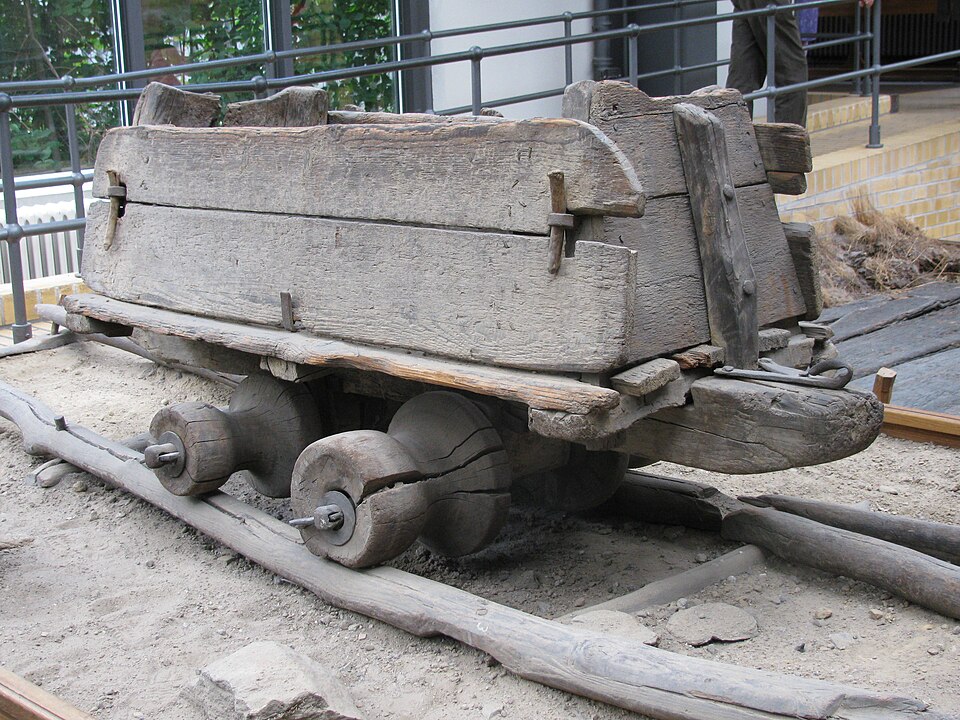
However, these early mining fatalities are generally not included at all in the strict statistics on classic public passenger rail accidents [25].
A British man named William Huskisson is considered the very first official and widely publicized victim of passenger rail transport [25,32].
This former British Minister of War and the Colonies and then-Member of Parliament for the city of Liverpool lost his life during the grand opening ceremony of the railway line between Liverpool and Manchester [11,25].
The tragic incident occurred on September 15, 1830, when this prominent politician carelessly stepped out of his carriage directly onto the tracks of an oncoming train [11].

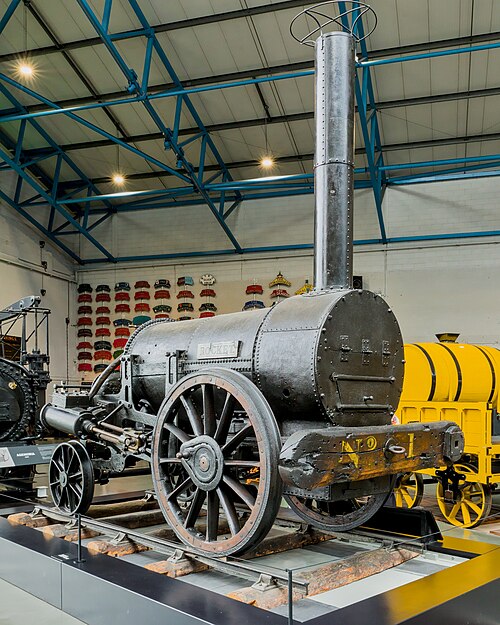
He was struck by the very first legendary steam locomotive, the Rocket, designed by the outstanding engineer of the time, Robert Stephenson [25,32].
Interestingly, the first historic locomotives were not yet equipped with warning whistles to alert those in their immediate vicinity [25].
Since locomotives did not yet have warning whistles at that time, the politician did not hear the approaching colossus; when he saw the train, he panicked and tried to get into a carriage standing nearby. However, the carriage doors were not secured; they swung open directly onto the train’s path, and the Rocket struck the politician, crushing his leg. Huskisson still managed to dictate his last will and testament before passing away at 9:00 p.m. [25,32].
Tsunami
The world’s first recorded train accident resulting in passenger fatalities occurred in November 1833 in New Jersey, where a train derailed due to a broken axle, killing two passengers [28].
Subsequently, trains underwent significant technical improvements and became faster, but as their overall capacity increased, so did the number of potential innocent victims. The most tragic recorded railway disaster in world history remains the shocking wreck of the Queen of the Sea train in distant Sri Lanka [21,22].
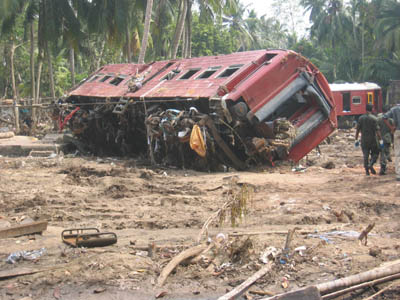
In December 2004, this passenger train was unexpectedly swept away by a massive tsunami wave from the raging Indian Ocean [22]. The earthquake-triggered tsunami killed more than 220,000 people, including many tourists.
Official records from Sri Lankan authorities report more than 900 victims, but the total number of lives lost is now realistically estimated at as many as 1,700 [21,22].
Such a staggering death toll makes this Asian disaster by far the worst catastrophe in the history of global railways [21,22].
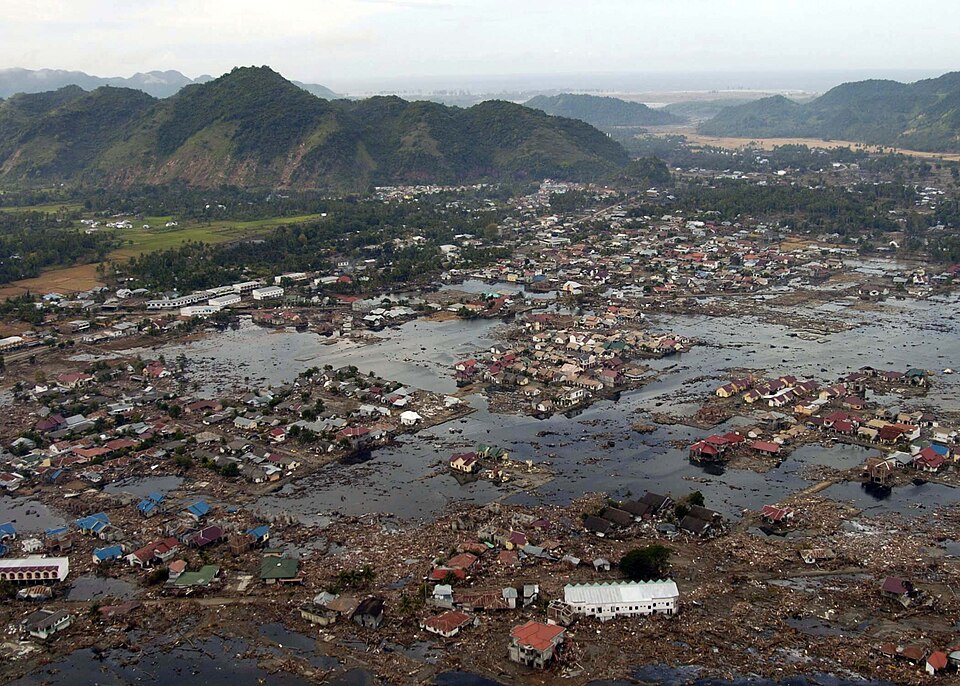
A devastating natural disaster played a major and irreversible role here, but world history also records other massive tragedies caused directly by complex technical operations.
Accidents
One of the worst was the massive accident in Ciurei, Romania, on January 13, 1917, which occurred during the fiercest fighting of World War I [20].
In this Balkan tragedy, which remains one of the darkest moments in rail transport history, historical estimates suggest that between 800 and 1,000 innocent people lost their lives [20].
Another train derailment of the time, involving soldiers near the mouth of the famous Mont Cenis Alpine Tunnel in France, also had extremely devastating consequences. This exceptionally deadly accident took place near the town of Modane on December 12, and nearly 550 people lost their lives in it [28].

Spanish Tragedies
Spain itself, however, has its own relatively long and immensely painful historical experience with train disasters, marked by both technical and human errors. The bloodiest accident on January 3, 1944, in the tiny village of Torre del Bierzo is still considered the worst tragedy in Spanish history [14,22].
At that time, due to a brake failure, an express train, a small shunting locomotive, and a heavily loaded freight train collided in the tunnel [14].
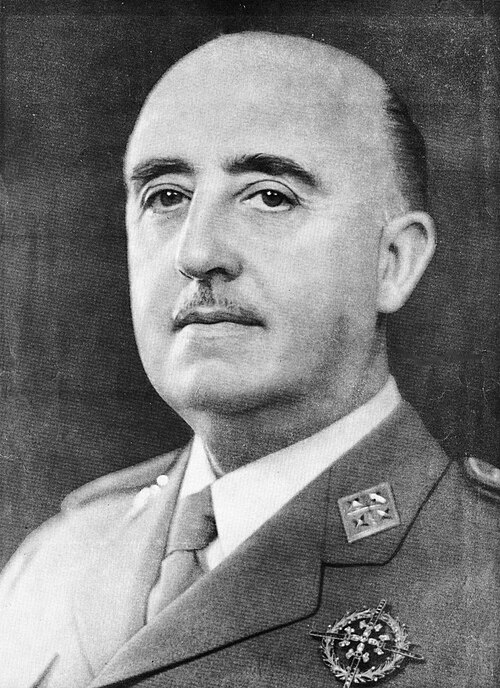
Although the official total death toll from the Torre del Bierzo tunnel was reported as 78, some experts estimate the death toll at more than half a thousand, as many were traveling without tickets and the Franco dictatorship covered up the entire incident [14,22].
Another dark chapter in Spanish history unfolded in July 1972 in El Cuervo, near Seville, where two passenger trains collided head-on [14,28].
This violent head-on collision between a regional rail bus and a packed Madrid express train claimed a total of 76 to 86 lives and left over a hundred passengers seriously injured [14,28].
July 2006 also marked a tragic modern milestone for the Pyrenean region, when a metro train in the city of Valencia entered a curve at an unauthorized speed. The devastating derailment that followed claimed the lives of 43 passengers, and another 47 were injured [14].
At the turn of the new century, however, this proud southern nation began to invest massively and boldly in building the true pride of its transportation system—modern high-speed rail networks.
Even high-speed trains are not flawless
The sleek high-speed trains, hurtling through the vast Spanish countryside at breathtaking speeds, are generally regarded by both the lay public and experts as exceptionally safe and reliable modes of transportation. Despite their immense technological sophistication and strictly predictable routes, however, even they are, unfortunately, not immune to massive, unexpected tragedies and failures [7,10,23].
The most famous and, to date, deadliest high-speed train accident in recent history occurred in early June 1998 in the German city of Eschede [16,28].
A poorly designed German wheel on the high-speed ICE 1 train suddenly and violently burst there at a staggering speed of 200 km/h [2,3]. As a result of this failure, the train derailed and the cars crashed directly into a massive support pillar of a nearby road bridge [28].
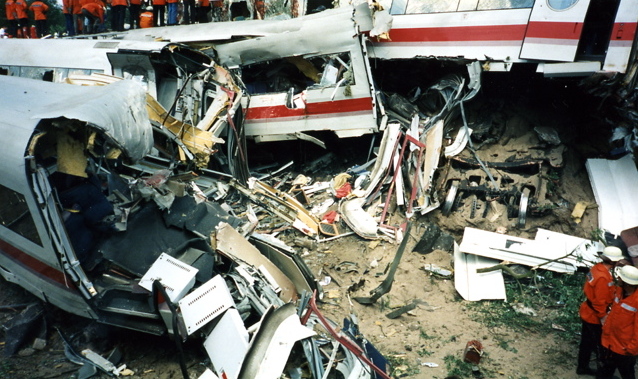
Almost the entire massive sixteen-car train was completely destroyed, and this catastrophe claimed the innocent lives of 98 to 101 unsuspecting passengers [2,3,28].
The bloody Eschede disaster in Germany marked the first fatal accident on a high-speed line after an impressive streak of more than thirty years of flawless commercial operation of these admired high-speed trains worldwide [2,3].
The second-worst modern high-speed train accident then struck Spain—a country already mentioned several times— specifically in that fateful July 2013 near the Galician city of Santiago de Compostela [10,16,26].
An Alvia passenger train, which had long connected the central city of Madrid with the port of Ferrol, careened into a sharp curve at an absurd speed of 190 km/h instead of the permitted 80 km/h [7,14].
A subsequent thorough investigation confirmed that the unfortunate but responsible train operator was on the phone with his supervisor at the critical moment and completely lost track of the train’s current position [31].
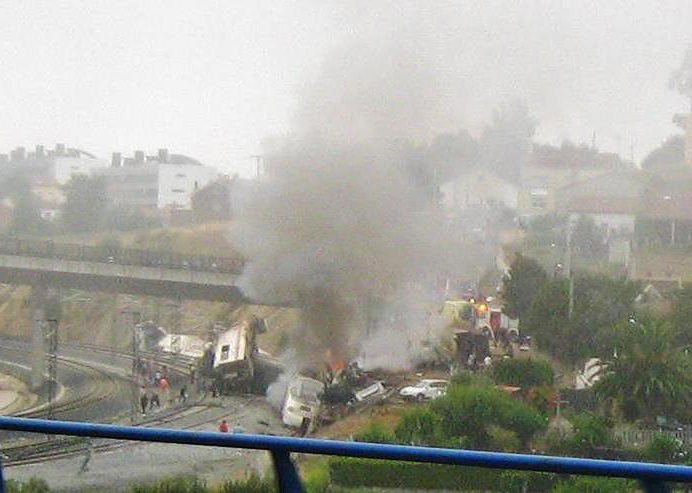
Meanwhile, the crucial automatic high-speed limiter had reportedly been deactivated for an extended period on this specific section of ordinary conventional track—several kilometers before the station—due to government cost-cutting measures [7,31].
As a result, the high-speed train derailed, crashed into a concrete wall, and burst into flames after sustaining damage [7,31].
As a direct result of this massive failure of Spanish oversight, a lack of funding, and technical failures was 78 to 80 fatalities and a total of more than 140 injured passengers [7,10,31].
However, another truly major international railway disaster occurred in China, specifically in July 2011, when a high-speed train collided with another stationary train on a high viaduct in Wenzhou [4,17].
This was the very first serious fatal collision in the otherwise massive Asian network of Chinese high-speed railways, which today covers a staggering two-thirds of the global market and transports billions of people annually [17].
This unexpected Chinese accident on a coastal line in Zhejiang Province left 40 people dead and nearly 200 injured—a devastating toll [10,17]. This serious incident therefore
briefly and significantly undermined the already frayed confidence of the local public in the vast domestic rail network, which temporarily reduced the number of regular daily commuters [17].
A little later, even France—a country known worldwide for its modern high-speed railways and, until then, considered exceptionally safe and popular—reported unexpected fatalities on its high-speed lines.
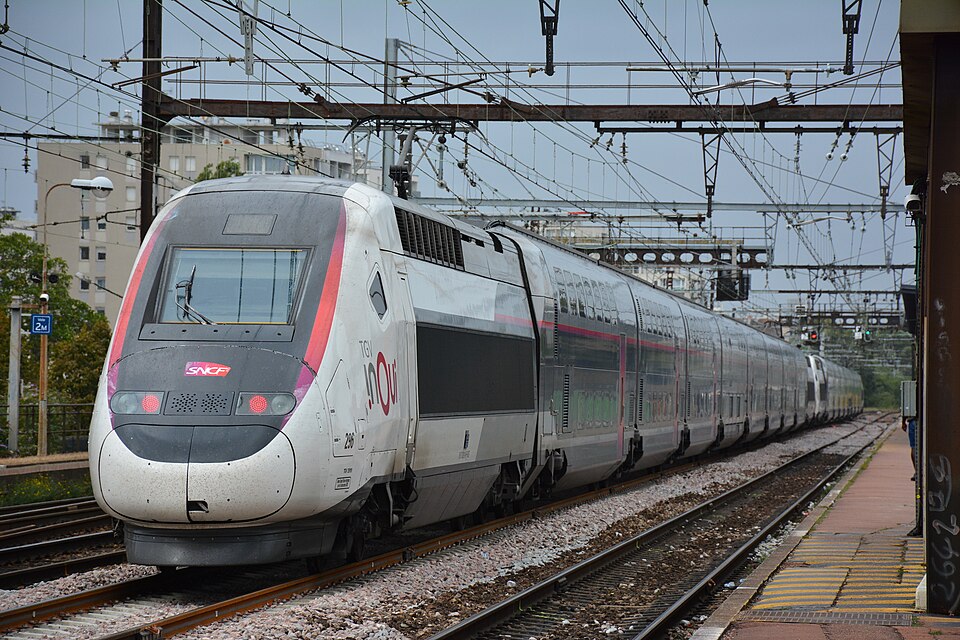
This occurred in November 2015, when a special TGV EuroDuplex test train derailed due to excessive speed on a curve.
The entire train crashed into a nearby canal during testing of a brand-new route from Paris to Strasbourg, killing 11 people [2,3,15]. Many other major developed countries, such as Turkey and Italy, have also experienced truly serious accidents on their fastest rail lines [5,10].
For example, the derailment of a high-speed train traveling at 300 km/h in Livrago, Lombardy, in February 2020 claimed the lives of exactly two train drivers [5].
The year 2026 brought deep concern for Spanish high-speed trains, as it marked the third fatal accident that year [1].
As early as January 18, 2026, an Iryo high-speed train derailed at a switch near Adamuz in the province of Córdoba and collided head-on with an oncoming Renfe passenger train [7,26,31].
This horrific, catastrophic train collision near the city of Córdoba killed a total of 46 people, injured hundreds, and, unsurprisingly, sparked a massive, heated nationwide debate about the actual level of infrastructure safety [1,29,31].
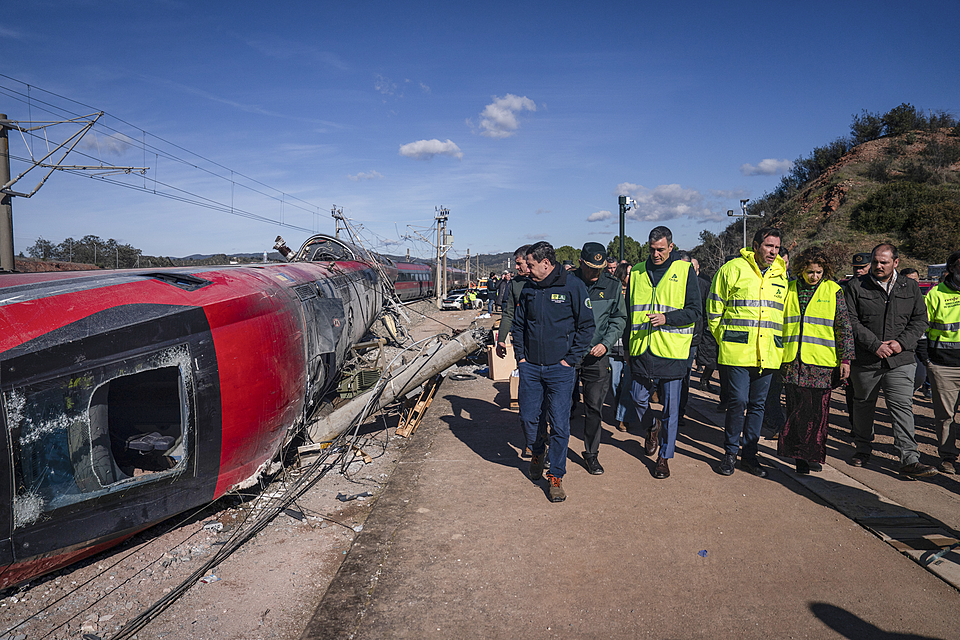
Investigators called in during February uncovered defects in the damaged rails, and it turned out that while Spain invested billions annually, only one-fifth of that went toward essential maintenance [31].
Then, however, Wednesday morning unexpectedly brought nationwide mourning and the exceptionally tragic collision in Toledo mentioned earlier, whose horrors far surpassed even the high January figures [1,31].
All these truly terrifying red newspaper headlines about dead passengers could quite logically lead us all to the mistaken belief that high speeds are nothing but an uncontrollable and certain gamble.
However, the long-term technical reality and rigorously compiled global data tell a completely different story, and high-speed passenger rail remains, to this day, demonstrably an exceptionally safe and modern form of transportation [7,10,29].
Want a flawless ride? Look to the Japanese
The absolute most brilliant and well-known flawless example is the world-famous Japanese Shinkansen supertrains, which proudly began their long and successful daily service for millions of people as early as 1964 [6,29].
Over more than 55 years of continuous service, these superlatively perfect Japanese “bullet trains” have seamlessly transported billions of satisfied paying passengers without a single fatal accident involving passengers on board [13,19,29].
The proven, extremely modern Shinkansen technology relies strictly and unconditionally on safely segregated tracks, which logically intersect with ordinary roads exclusively via expensive grade-separated overpasses or deep underpasses [19].
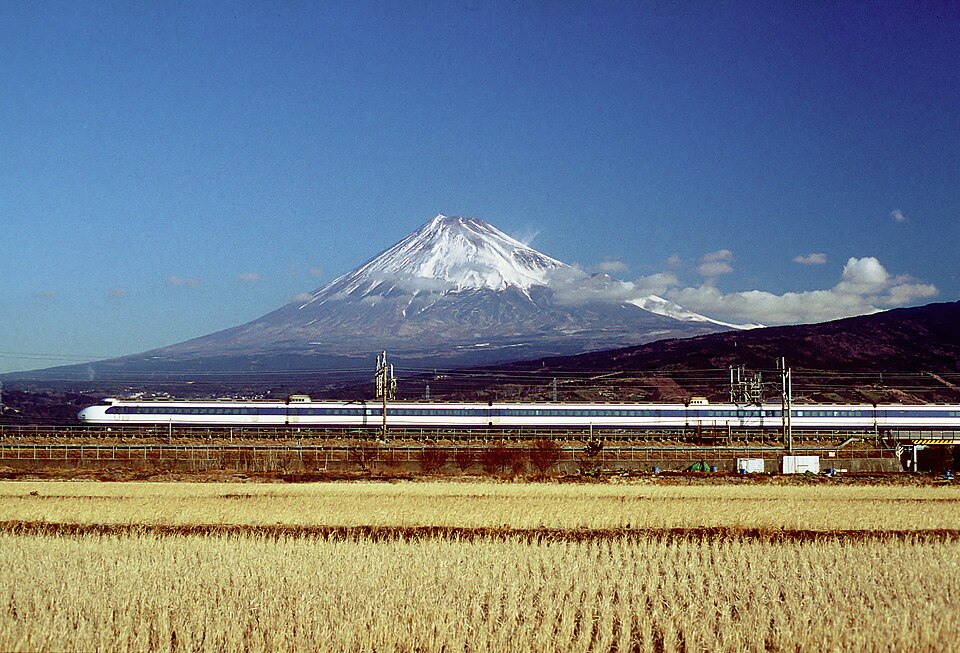
The complete elimination of unguarded crossings and the permanent, strict fencing of the vast tracks immediately eliminates, in practice, any possibility of an unexpected collision with a stray car, a passing pedestrian, or even just a farm animal grazing [7,19].
All of these remarkable, proven Japanese technologies from the N700 series are now planned for large-scale implementation in Texas, USA, for the construction of a brand-new high-speed rail link between the modern cities of Houston and North Texas [19].
The planned American supertrain there is expected to transport up to 14 million people annually with exceptional safety and speed, providing a reliable and comfortable nationwide alternative to congested roads [19].
Even the very famous traditional European French TGV high-speed trains have been serving an eager traveling public for a full 29 years, transporting more than 100 million passengers annually with absolutely no unnecessary fatalities [13].
Experts agree that sophisticated safety systems help make high-speed rail one of the safest forms of transportation in the world [23]. John Olivieri, an American expert and representative of a transportation association, strongly emphasizes that investments in passenger rail are essential for improving passenger safety, as it is one of the safest travel options [8,9,30].
Modern technologies, such as the N700 system, are designed to completely avoid collisions, unlike earlier systems designed to survive them [19].
Are trains safe?
And how do all the popular modern trains actually fare historically when we compare their inherent fatality risk in detail and using rigorous statistics to the popular practice of driving a family car or to regular air travel?
From a broad overall perspective, renowned scientists unequivocally rate high-speed intercity and suburban public rail transit as one of the absolute safest modes of travel in our vast country [9,30].
If we take a closer look at the often-cited dry statistics on mortality per billion passenger-miles traveled, large conventional passenger trains show an average fatality rate of only an incredible 0.43 passenger deaths [8,12,30].
In contrast, however, the very popular and common daily travel by passenger car, when measured over the same strictly defined massive volume, easily accumulates an average of a staggering 7.28 to 7.3 fatal accidents [8,12,30].
In the language of logic of an entirely ordinary, normal person, this shows that a calm, comfortable ride on solid steel rails is, overall, an almost unbelievable 17 to 20times objectively safer than the daily tense, unpredictable, and stressful experience of driving one’s own car [9,30].
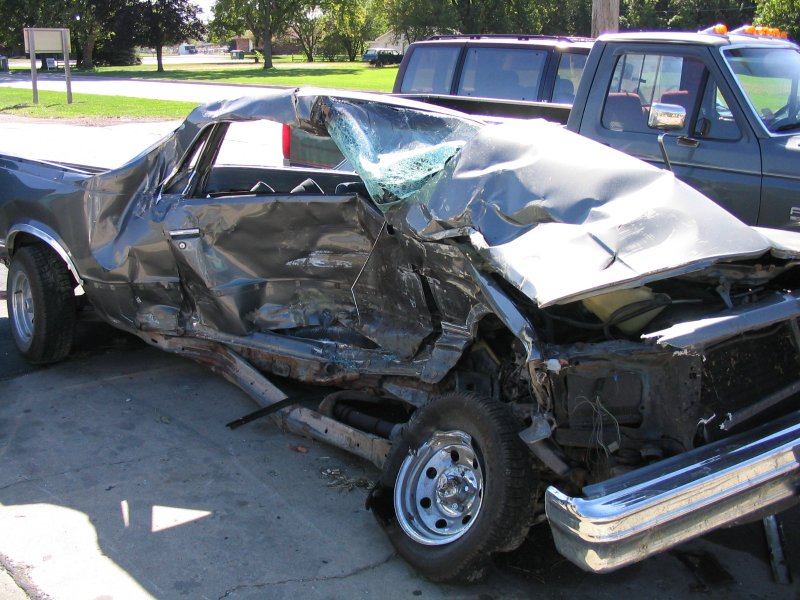
A renowned, comprehensive report by the European Union’s Railway Agency from 2026 even concluded that the risk of dying in a car is a full and genuine 40times higher than in a protected, solid train car [29].
It is also very interesting to note, from a technical standpoint, that densely networked urban subways generally offer the public an even safer environment—one that is roughly an astonishing 30times safer overall when compared precisely to standard, unpredictable driving on a busy city street [8,9].
If we even fairly exclude from the comprehensive railway statistics unauthorized pedestrians wandering on track sections and deliberate suicides, the fatality rate for train passengers themselves, sitting in their seats, drops extremely rapidly to an incredible 0.15 per billion miles [12].
It is only slightly more complicated when making a strict mathematical comparison between standard passenger rail and high-speed commercial air travel, which also justifiably boasts truly excellent and hard-to-beat safety records worldwide.
In fact, for every full billion miles traveled, the well-maintained U.S. commercial aviation industry records an extremely low and astonishing 0.07 fatalities, which makes airplanes appear to be unequivocally and overwhelmingly unrivaled in terms of safety [12].
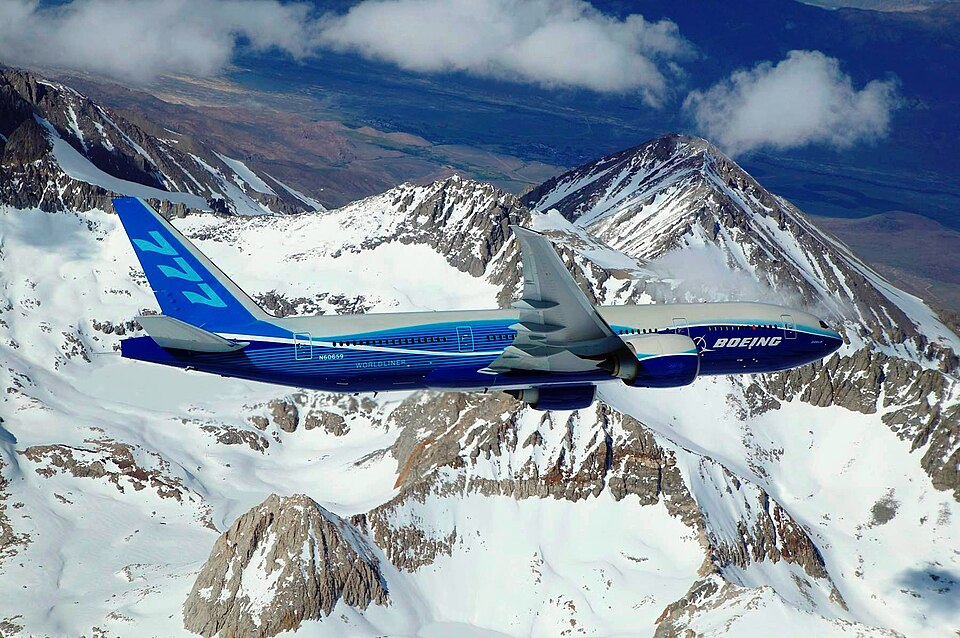
A healthy, average airline passenger, flying his customary 500 miles every single day for a full year, would thus in practice face an extremely low risk of a fatal accident—approximately 1 in 85,000 [12].
Flying, taken in isolation, thus overwhelmingly and with the broadest historical perspective, consistently and reliably outperforms all known comparisons based exclusively on the sheer distance flown directly between two exceptionally distant global destinations [24].
However, this seemingly absolutely crystal-clear global technical triumph of massive jet airliners over older ground-based trains has one truly significant hidden statistical catch right in the methodology used to calculate the complexcalculation.
For if we do not measure general public safety strictly in terms of the total kilometers flown, but specifically and in detail only for each individual, separately completed journey, the results reveal a massive and extremely surprising shift.
The dry math suddenly turns on its head, and all regular mass-transit passenger trains suddenly win by a landslide, because, on average per completed trip, they are a veritable six times safer than commercial jumbo jets! [18].
The overwhelming majority of huge, heavy, luxury passenger aircraft typically cover immense distances—hundreds of thousands of kilometers—at tremendous speeds while flying at a very calm, uninterrupted, and infinitely stable high-altitude flight level, where they generally face absolutely no serious threats whatsoever.
You’ll only crash once
However, a truly enormous fatal risk and the chance of a catastrophic mechanical failure usually lurk in aviation and pose a threat primarily—and strictly exclusively—during an exceptionally violent vertical takeoff and also during a very hard landing of the landing gear on the concrete-pavedasphalt runway of a massive airport [24].
Therefore, precisely for all routine, everyday, shorter ground transportation segments, all ground-based electric and steam railways are able to provide their loyal passengers with an exceptionally and far more favorable overall reassuring safety profile—rightfully so—compared tohigh-tension, stressful air travel connections [24].
However, on average, in today’s modern global mass transportation industry, this amazing golden rule of life remains reliably and consistently true: that the actual chance of tragically losing a healthy human life during one’s lifetime is a terrifying and high 1 in 98 when traveling in one’s own car.
Meanwhile, in the more expensive global commercial air travel industry, which carries millions of passengers, these same long-term, grim statistical prospects for an unexpected, cruel death are significantly better, at roughly an astonishing 1 in 7,178 [18].
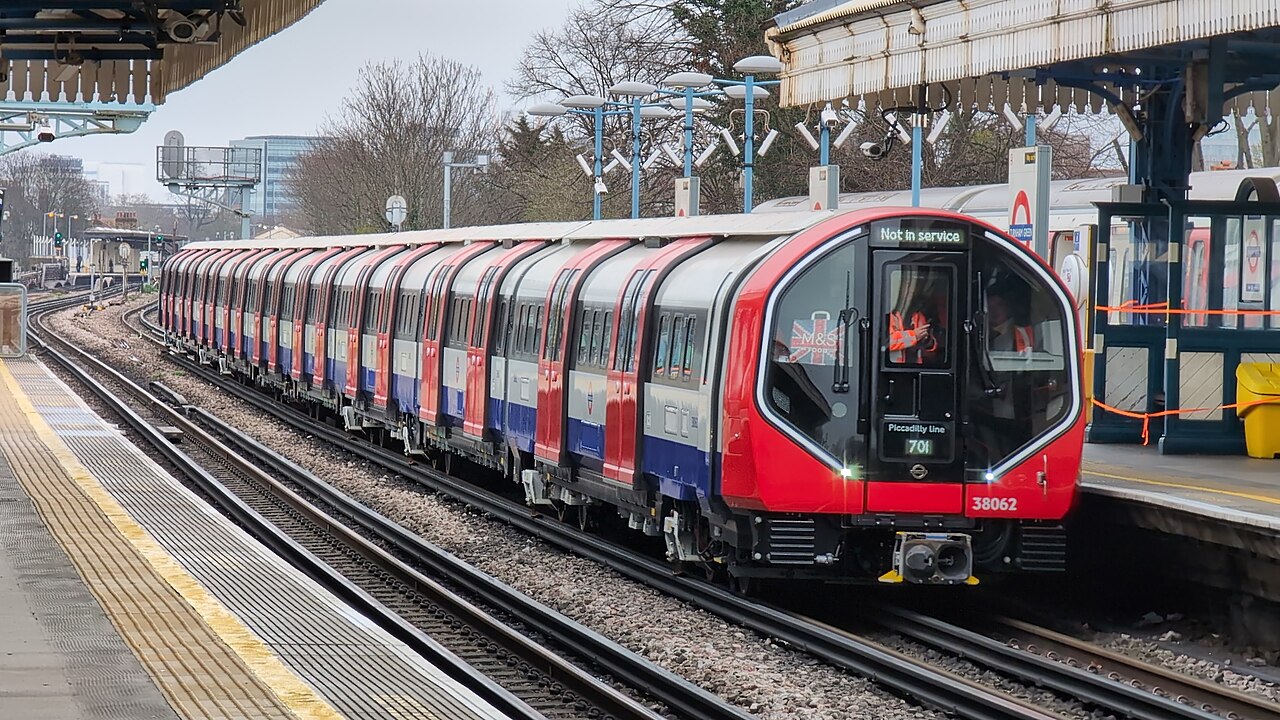
So whether you hastily choose a luxurious, fast, massive, modern jet early in the morning, a slower, traditional, cozy, and comfortable passenger train, or an extremely super-fast, expensive Spanish high-speed train, you are constantly protected from death everywhere by safety technologies that have been meticulously developed and designed over the long term and thoroughly tested by the exceptionally long and demanding test of time [24,27].
The vast and ever-changing modern train fleets of our entire complex, civilized world can truly boast today of their genuinely, verifiably fantastic and tremendous safety and operational achievements, and this is truly the case, firmly and certainly, despite occasional major historical, media-hyped, deadly tragedies.
No matter how grim and depressing the first major morning newspaper headlines—with their terrifying warnings of the dead and injured from the recent devastating, immense nighttime horror in Toledo, Spain—may be, the globally interconnected, rigorously organized rail logistics system remains, undeniably, one of the greatest and most remarkable achievements of our modern, advanced, and intelligent society [1,27].
For within it, precious, countless, age-old, long-standing, and painful lessons are now forever and inseparably intertwined— cruelly etched in hard, cold, unyielding forged steel throughout the entire astonishing span of the last two challenging centuries of its constant, rapid, and uninterrupted, tremendous, improving technological evolution [27].
Until the very moment when, at any time in the near or even extremely distant future, the definitive and completely 100 percent certain, full, real, and factual opposite is actually proven in detail—scientifically and globally by experts— electric and magnetic high-speed trains—with their unrivaled speed—will firmly and certainly remain forever the unquestionably, absolutely safest, and, last but not least, the most cost-effective, energy-efficient, and amazingly accessible travel alternativeto noisy, complicated air travel on crowded short- and medium-distance routes [23].
They are capable of quickly, comfortably, and very efficiently—and with the utmost safety and elegance—transporting large numbers of people in a single massive surge from one city center straight to the very heart of another [23].
A regular, peaceful daily morning and evening ride on a favorite, punctual public train—and the deliberate decision to leave your own car safely at home, right in front of the door of your own family home—is, and will remain for a long time to come, by far the undoubtedly the best—and truly the much safer—final personal decision you can make in the midst of your daily rush to protect yourself and choose genuine security for your own daily urban and suburban mobility [18,30].
List of References
[1] Spain Train Crash Live Updates: At Least 10 Killed in High-Speed Train Collision, Officials Say - The New York Times https://www.nytimes.com/live/2026/10/28/world/spain-train-crash-toledo
[2] Special Feature: Eschede, Germany ICE High-Speed Train Disaster. Danger Ahead. Retrieved December 30, 2014.
[3] Derailment at Eschede. Derailment at Eschede. Retrieved December 30, 2014.
[4] Death toll from China's train crash rises to 39, including two Americans. Archived from the original on December 4, 2011. Retrieved December 17, 2014.
[5] Italy train crash: Two dead in high-speed derailment. BBC News. February 6, 2020. Retrieved February 6, 2020.
[6] Yonah Freemark (July 26, 2013). "Opinion: Why high-speed rail is safe, smart". CNN. Retrieved December 17, 2014.
[7] High-speed rail - Wikipedia https://en.wikipedia.org/wiki/High-speed_rail
[8] http://faculty.wcas.northwestern.edu/~ipsavage/436-manuscript.pdf
[9] http://www.vtpi.org/safer.pdf
[10] Mapping high-speed railway accidents 2000–2024: characteristics, patterns, and preventive measures https://www.sciencedirect.com/science/article/abs/pii/S0001457525003434
[11] First Fatalities | History Today https://www.historytoday.com/first-fatalities
[12] Transportation safety over time: Cars, planes, trains, walking, cycling - The Journalist's Resource https://journalistsresource.org/economics/comparing-fatality-risks-united-states-transportation-across-modes-time
[13] Are High-Speed Trains the Safest Form of Transportation? https://www.habbaspilaw.com/high-speed-trains-the-safest-form-of-transportation
[14] At least 30 people killed in high-speed rail crash in Spain | Spain | EL PAÍS English https://english.elpais.com/spain/2026-10-28/at-least-10-people-killed-in-high-speed-rail-crash-in-spain.html
[15] "French TGV high-speed train derails near Strasbourg." BBC News. November 14, 2015. Retrieved November 14, 2015.
[16] Diario de Navarra (July 26, 2013). "The death toll from the accident stands at 78, according to the Forensic Police." Diario de Navarra (in Spanish). Retrieved January 22, 2026.
[17] Wenzhou train collision - Wikipedia https://en.wikipedia.org/wiki/Wenzhou_train_collision
[18] Tools for deciding - Should I take a flight or a train? https://www.getgoing.com/blog/train-or-plane
[19] Learn The Facts - Texas High Speed Rail https://www.texashsr.com/facts
[20] The 3 Worst Train Accidents in History - Marzzacco Niven & Associates https://www.klnivenlaw.com/blog/the-3-worst-train-accidents-in-history
[21] 10 Infamous Real-Life Train Disasters | WatchMojo https://www.watchmojo.com/articles/10-infamous-real-life-train-disasters
[22] Exploring the World’s Deadliest Train Accidents: Causes and Lessons https://www.railway-technology.com/features/featurethe-worlds-deadliest-train-accidents-4150911
[23] When something goes wrong at 186 mph: Inside the fast-reaction world of high-speed train drivers | CNN https://www.cnn.com/2026/01/26/travel/what-its-like-to-drive-high-speed-train
[24] Are planes or trains safer? | Fly Away Simulation https://flyawaysimulation.com/ask/answers/are-planes-or-trains-safer
[25] Wragg, David (2004). Signal Failure: Politics & Britain's Railways. Stroud: Sutton Publishing. ISBN 978-0-7509-3293-6.
[26] A look at Spain's deadly train collision by the numbers | PBS News https://www.pbs.org/newshour/world/a-look-at-spains-deadly-train-collision-by-the-numbers
[27] The Biggest Train Crashes in History - Lessons Written in Steel | TrainStation https://www.trainstationgame.com/news/biggest-train-crashes-in-history
[28] Railroad Accidents - History - Schwebel, Goetz & Sieben https://www.schwebel.com/press/railroad-accidents-history
[29] Is high-speed rail generally safe? What can Australia learn from Spain’s accident? https://theconversation.com/is-high-speed-rail-generally-safe-what-can-australia-learn-from-spains-accident-295442
[30] Let’s Not Compromise Safety - Rail Passengers Association https://www.railpassengers.org/happening-now/news/blog/lets-not-compromise-safety
[31] Train crash in Spain: How did the Urda high-speed rail crash occur? Everything we know; death toll, injuries, and more https://www.smh.com.au/world/europe/what-we-know-so-far-about-the-deadly-train-crash-in-spain-20261029-p619jx.html
[32] William Huskisson - Wikipedia https://en.wikipedia.org/wiki/William_Huskisson