Alarming heat waves. When did it all start?
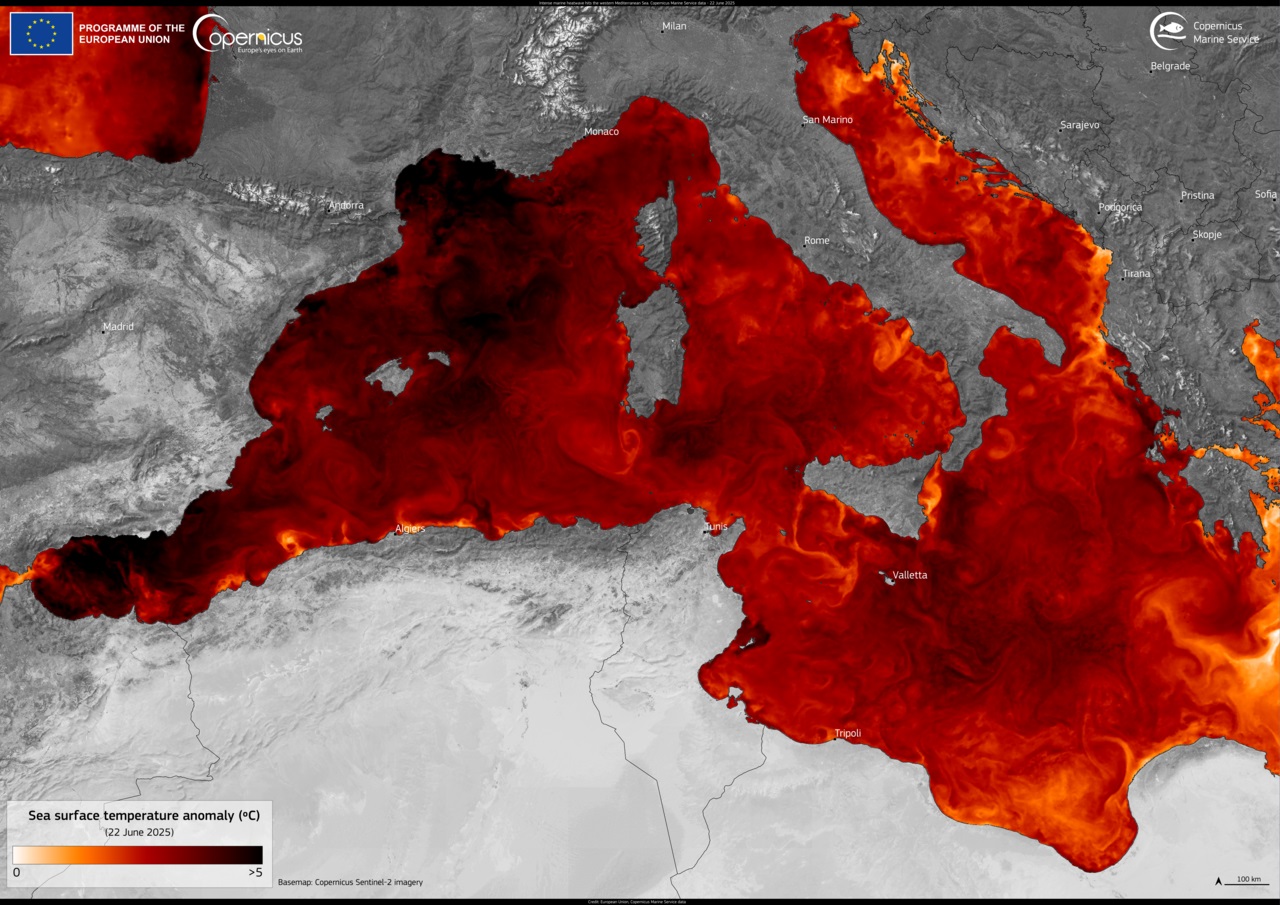
Europe is currently becoming an infamous hotspot for extreme heat waves, showing increasing trends that are three to four times faster than in the rest of the northern temperate latitudes [6].
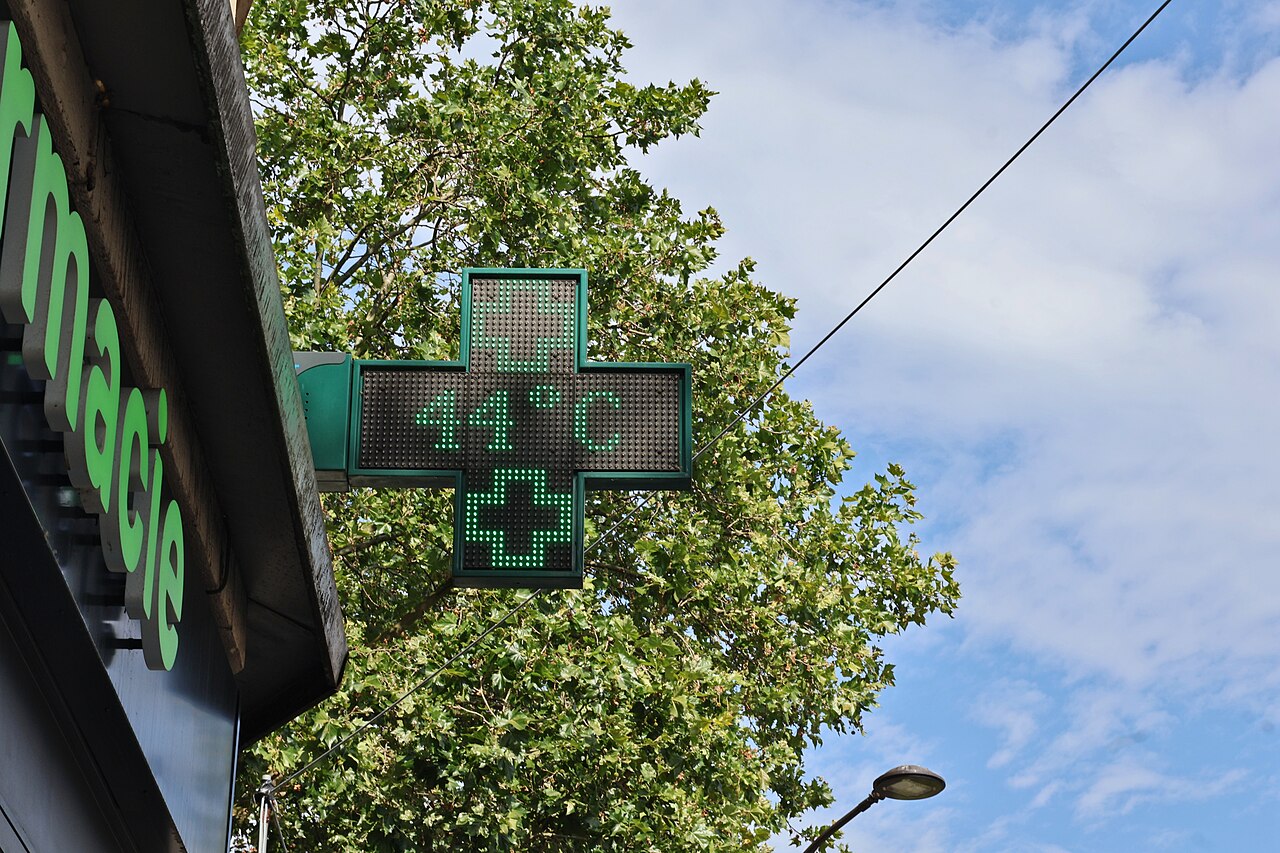
This dramatic increase has been particularly evident since the devastating summer of 2003, with the cumulative intensity of summer heat waves rising at an alarming rate [1], [2].
The world today is thus facing a rapidly changing climate, with Europe becoming the fastest-warming continent globally [3].
Looking at the list of the worst heat waves since 1950, it is abundantly clear that as many as 23 of the 30 most extreme events have occurred since the year 2000 [4]. Heat waves such as those we are experiencing today are currently about thirty times more likely than they would have been in the era before significant climate change [5].

Such massive extremes would have been a once-in-three-hundred-years event in the past, but today they commonly occur more than once a decade [5].
It has been scientifically proven that, for example, the summer heatwave of 1976 would be 3.5 °C cooler today as a result of global warming [6]. Even the extreme heatwave of 2003 itself would feel 2 °C cooler under today’s conditions due to the lower level of global warming at that time [6].
Moreover, the sweltering nighttime temperatures that Europeans commonly struggle with today are approximately 100 times more likely than they were two decades ago [6].
Record-Breaking Europe and North America
The absolute highest officially recorded temperature in the history of continental Europe is 48.8 °C [7]. This historic heatwave was recorded on the Italian island of Sicily on August 11, 2021, and was subsequently definitively verified by the World Meteorological Organization [7].
This Italian record dethroned the long-standing previous European record of 48.0 °C, which had stood since July 10, 1977, for the Greek cities of Athens and Elefsina [8], [7].

As for North America and global records, the officially highest temperature in the history of our planet stands at a breathtaking 56.7 °C [7]. This extreme heat was recorded on July 10, 1913, at Furnace Creek, located in California’s Death Valley [9], [7].
Death Valley itself continues to hold the world record for the hottest month, as in July 2018 the average daily temperature there reached as high as 42.3 °C [7].
An exceptionally harsh period for North America was the legendary summer of 1936, during which as many as 17 states broke their then-record high temperatures [10]. The state of North Dakota, for example, recorded a staggering 49 °C, and the extreme heat in the north also brought parts of neighboring Canada to a standstill [11].
In fact, that same year, thermometers in the Canadian province of Manitoba rose as high as 44.4 °C, and the city of Toronto in Ontario reached its all-time high of 40.6 °C [10].
Another significant modern-day disaster was the heat wave of June 2021, which redefined temperature norms in the western part of the North American continent. In the Canadian province of British Columbia, the town of Lytton recorded an incredible 49.6 °C on June 29, 2021, which fundamentally rewrote the historical statistics for the entire country [12].
This extraordinary heat dome forced neighboring California to declare a state of emergency immediately and caused the deaths of hundreds of people in the region [13], [14].
Drivers of Heat Waves: Massive High-Pressure Systems, Heat Domes, and Jet Streams
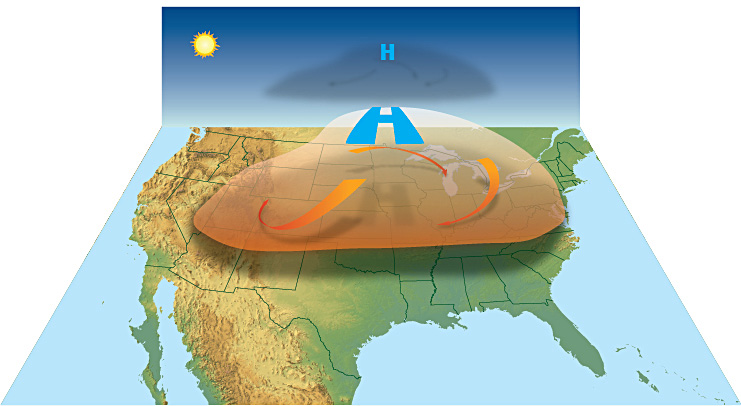
From a meteorological perspective, the primary triggers of such deadly heat waves are massive blocking anticyclones, or extensive atmospheric high-pressure systems [15], [16]. These systems form what is known as a heat dome, because the descending air is constantly compressed, rapidly raising temperatures very close to the Earth’s surface [16], [13].
At the same time, high pressure effectively prevents cloud formation, allowing solar radiation to reach the ground unimpeded and leaving the generated heat with nowhere to dissipate [16], [13].
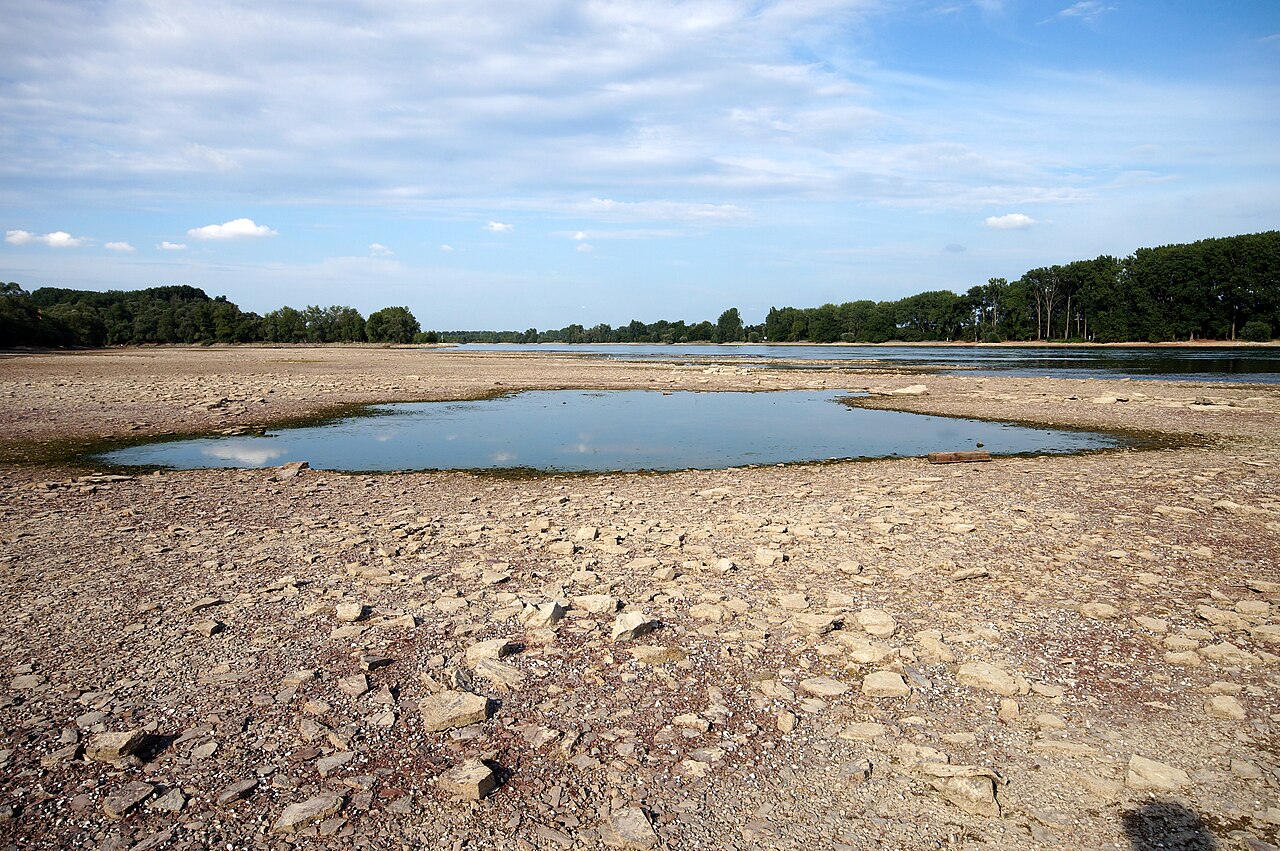
The severity of the situation is often catastrophically exacerbated by a long-term deficit in soil moisture and the associated widespread drought [17], [18]. An example is the 1936 heat wave in the United States, which was drastically exacerbated by improper agricultural practices and the crisis era known as the Dust Bowl [10].
Without sufficient natural moisture in the vegetation, most of the sun’s energy is converted directly into radiant heat, causing the air to overheat extremely rapidly and dangerously [19], [10].
Unusual atmospheric flow known as the jet stream, located over Eurasia, also regularly contributes to historical European anomalies. A double jet stream configuration was particularly persistent, for example, during the deadly summer of 2003, directly contributing to the formation of the most intense heat wave [2].
Today, rising greenhouse gas emissions further exacerbate these natural phenomena, causing heat waves to begin at a much higher baseline temperature [16], [20].
Measures Against Heat Waves
In the past, without modern air conditioning, people’s reactions to such unbearable conditions often bordered on sheer desperation. For example, in Lincoln, Nebraska, residents spent entire nights in 1936 sleeping outdoors on the lawn in front of the state capitol [10].
At the same time, in major American cities, people flocked to movie theaters, as these were among the few places with rudimentary cooling [10].
During the terrible heat wave in New York in August 1896, residents fled in panic from the heat of their overcrowded apartments to rooftops, fire escapes, or even the harbor piers [21].
The rush to cool down often paralyzed the entire urban infrastructure, as people in desperation opened dozens of fire hydrants on the streets. As a result of this desperate act, drinking water pressure completely collapsed in several urban communities [21].
Extreme social isolation posed a huge risk to all vulnerable and elderly population groups. Communities eventually adapted, with cities across America encouraging citizens to actively check on their isolated neighbors and elderly family members [22].
Research has shown that residents who participated in these community outreach programs felt better during the heat wave and significantly reduced their risk of health crises [22].
Governments have historically sought to prevent worst-case scenarios through immediate bans and emergency logistics. In North Carolina, strict regulations on public water conservation were implemented during the 1952 heat wave [19].
State assistance even went so far as to have military cargo planes fly hay from the American Midwest to struggling farmers who, due to the drought, had no pasture at all for their livestock [19].
During subsequent U.S. heat waves, presidents began to make extensive use of federal emergency funds to assist the most socially vulnerable citizens. U.S. officials allocated millions of dollars through the LIHEAP program to pay high electricity bills for the poor and ensure the procurement of home air conditioners [23], [24].
They also provided financial support for free transportation of seniors to community cooling centers, which significantly helped protect those most at risk of heatstroke [23].
European countries radically reassessed their governmental approaches following the shock and casualties they suffered in the summer of 2003. Most European countries subsequently systematically developed crisis action plans to combat extreme heat, which they had notably lacked until then [21], [6].
These new national strategies immediately ensured the installation of early warning systems, the development of green spaces in overheated cities, and emergency measures to protect vulnerable populations [21], [6].
Consequences, or Full Steam Ahead Toward a Global Catastrophe?
The economic and environmental losses resulting from these drastic historical events have always been absolutely enormous. In 2003, 2010, 2015, and 2018 alone, Europe suffered direct economic losses equivalent to 0.3% to 0.5% of its total gross domestic product [25].
These macroeconomic losses stemmed primarily from reduced labor productivity, which in turn negatively impacted the vital tourism sector, agriculture, and the European economy as a whole [25].
In North America, the 1980 heat wave devastated vast areas and directly caused economic losses amounting to an astronomical $16 billion [26]. The damage was further exacerbated by the paralysis of urban infrastructure, as the heat caused railroad tracks to buckle and highway asphalt to melt on a massive scale [16], [14].
The enormous strain on overloaded power grids caused by the excessive use of air conditioners often led to dangerous power outages and crippling blackouts [16], [27].
Naturally, the environment itself also suffered massive disasters, often literally burning to the ground due to the extreme conditions. During the summer of 2003 alone, thousands of fires in Europe destroyed as many as 647,069 hectares of various types of forest [28].
Livestock, starved by heat and drought, died by the thousands, and the destruction of wheat production directly contributed to a sharp rise in prices on commodity markets [28], [11].
The tragic and deadly consequences of heat waves currently make them by far the most dangerous manifestation of extreme weather. Global databases list the infamous European summer of 2003 as one of the worst natural disasters of modern times, with a total of over 70,000 deaths [29], [10].
Unfortunately, this alarming statistical trend repeated itself in 2022, when more than 60,000 people died in Europe due to severe heat waves [6].

Historical heat waves in North America throughout history have also resulted in devastating and shocking death tolls. The brutal summer of 1936 killed approximately 5,000 innocent people in the U.S., while at least another 1,100 people died in affected areas of Canada [11], [21].
The 1980s also left a significant historical tragedy in their wake, specifically the heat wave of 1980, which claimed the lives of approximately 10,000 Americans [13].
The highest mortality rates are invariably closely linked to an aging population, as well as to a complete lack of indoor cooling. This was clearly evident, for example, in France, where, without appropriate timely measures and a lack of air conditioning, a staggering 14,000 elderly residents died in the summer of 2003 [21].
However, developments in 2006 clearly demonstrated that once governments finally implement public awareness campaigns and issue proper warnings, the number of preventable deaths drops dramatically [14].
List of References
[1] Christidis, N., Jones, G. S. & Stott, P. A. Dramatically increasing chance of extremely hot summers since the 2003 European heatwave. Nat. Clim. Chang.5, 46–50 (2015).
[2] Accelerated western European heatwave trends linked to more-persistent double jets over Eurasia https://www.nature.com/articles/s41467-022-31432-y
[3] Records fall as extreme heat grips Europe https://wmo.int/media/news/records-fall-extreme-heat-grips-europe
[4] Extreme weather and human health, ESOTC 2023
[5] Deaths, disruptions across Europe: What you should know about the heatwave https://www.aljazeera.com/news/2026/6/24/deaths-disruptions-across-europe-what-you-should-know-about-the-heatwave
[6] European heatwave is worst ever and impossible without climate crisis, scientists say https://www.theguardian.com/environment/2026/jun/26/europe-heatwave-impossible-without-climate-crisis-scientists
[7] Highest recorded temperature on Earth | Guinness World Records https://www.guinnessworldrecords.com/world-records/highest-recorded-temperature
[8] WMO confirms verification of new continental European temperature record https://wmo.int/news/media-centre/wmo-confirms-verification-of-new-continental-european-temperature-record
[9] Highest recorded temperature by country in Europe https://jakubmarian.com/highest-recorded-temperature-by-country-in-europe
[10] North America’s Most Intense Heat Wave: July and August 1936 | Weather Underground https://www.wunderground.com/cat6/North-Americas-Most-Intense-Heat-Wave-July-and-August-1936
[11] 1936 North American heat wave - Wikipedia https://en.wikipedia.org/wiki/1936_North_American_heat_wave
[12] https://en.wikipedia.org/wiki/List_of_weather_records
[13] Extreme Heat Risks - What Property Owners Need to know / ClimateCheck https://climatecheck.com/risks/heat
[14] Guest post: What have been the most extreme heatwaves in history? - Carbon Brief https://www.carbonbrief.org/guest-post-what-have-been-the-most-extreme-heatwaves-in-history
[15] Pfahl, S. & Wernli, H. Quantifying the relevance of atmospheric blocking for co-located temperature extremes in the Northern Hemisphere on (sub-)daily time scales. Geophys. Res. Lett.39, 12807 (2012).
[16] Heatwaves – a brief introduction - Copernicus Climate Change https://climate.copernicus.eu/heatwaves-brief-introduction
[17] Seneviratne, S. I. et al. Investigating soil moisture–climate interactions in a changing climate: A review. Earth-Sci. Rev.99, 125–161 (2010).
[18] Miralles, D. G., Teuling, A. J. & van Heerwaarden, C. C. & Vilà-Guerau de Arellano, J. Mega-heatwave temperatures due to combined soil desiccation and atmospheric heat accumulation. Nat. Geosci.7, 345–349 (2014).
[19] Historic Heat Waves in the Carolinas https://www.weather.gov/ilm/heatwaves
[20] Europe is battling a record-breaking heatwave. What’s making it so severe? https://theconversation.com/europe-is-battling-a-record-breaking-heatwave-whats-making-it-so-severe-286019
[21] Heat Waves Throughout History | HISTORY https://www.history.com/articles/heat-waves-throughout-history
[22] Kathryn Lane, Lauren Smalls-Mantey, Diana Hernández, Siobhan Watson, Sonal Jessel, Darby Jack, Leanne Spaulding, et al. “Extreme Heat and COVID-19 in New York City: An Evaluation of a Large Air Conditioner Distribution Program to Address Compounded Public Health Risks in Summer 2020,” Journal of Urban Health 100 (2023): 290–302.
[23] Administration of Jimmy Carter, "Heat and Drought Conditions in the United States," published July 15, 1980, as reprinted in Presidential Papers, pp. 1345-1346. The President also directed the Secretary of Agriculture to provide economic relief for agricultural entities.
[24] Stanley Changnon, Kenneth Kunkel and Beth Reinke, "Impacts and Responses to the 1995 Heat Wave: A Call to Action," Bulletin of the American Meteorological Society, vol. 77, no. 7, July 1996.
[25] Current and projected regional economic impacts of heatwaves in Europe | Nature Communications https://www.nature.com/articles/s41467-021-26050-z
[26] Thomas Karl and Robert Quayle, NOAA National Climatic Center, "The 1980 Summer Heat Wave and Drought in Historical Perspective," Monthly Weather Review , vol. 109, no. 10, October 1981.
[27] Extreme Heat – NYC Hazard Mitigation Plan https://nychazardmitigation.com/documentation/hazard-profiles/extreme-heat
[28] [PDF] Impacts of summer 2003 heat wave in Europe https://www.unisdr.org/files/1145_ewheatwave.en.pdf
[29] Robine, J.-M. et al. Death toll exceeded 70,000 in Europe during the summer of 2003. C. R. Biol.331, 171–178 (2008).