The story of the Mašín brothers continues to divide society
The recent death of Josef Mašín, who was the last of the Mašín brothers to pass away at the age of 94 in Santa Barbara, California, has once again brought to life one of the most dramatic stories of the Cold War [21].
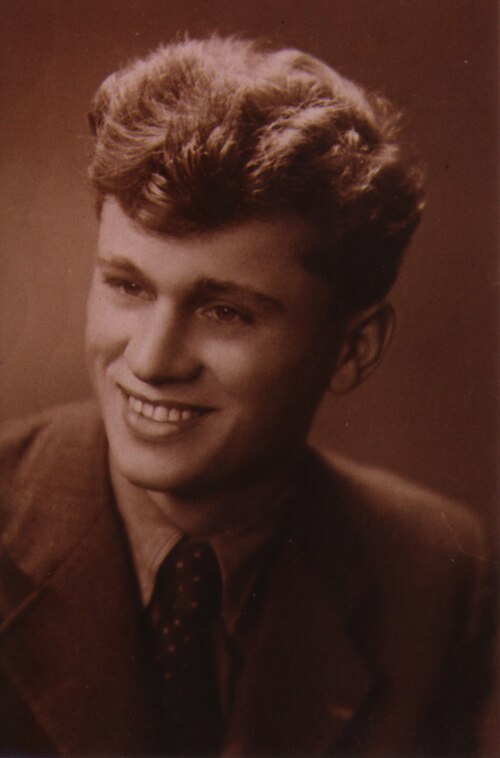
Together with his older brother Ctirad and other companions, he became a key figure in the resistance, whose bloody escape to the West has been permanently etched into history [21].
Their incredible story continues to spark enormous controversy to this day and deeply divides society into two irreconcilable camps [21].
Their Father’s Legacy
The reason why the young brothers decided to take up arms and fight against totalitarianism lies in their family history.
Their father was Josef Mašín Sr., a well-known Czechoslovak legionnaire, officer, and hero of the anti-Nazi resistance group “The Three Kings,” which also included Josef Balabán and Václav Morávek; none of them survived the war [22,23].
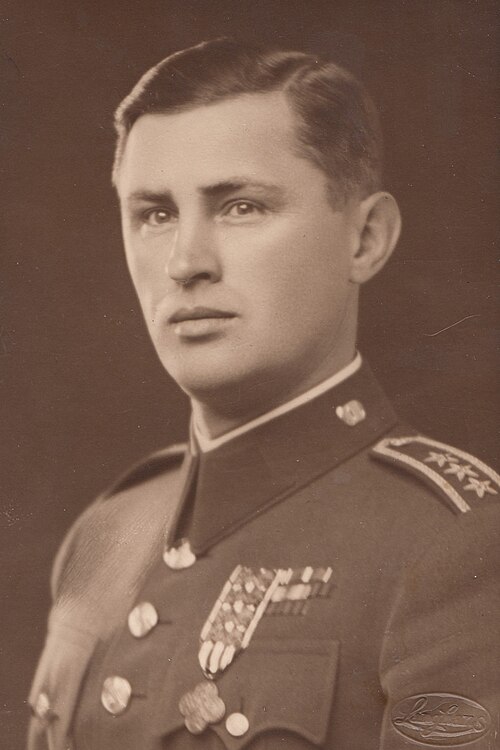
After severe torture, the Gestapo executed him in 1942, and in letters he wrote from prison, he left his sons a clear message never to succumb to evil [8,22].
Their father was a tremendous role model for the boys, and his legacy shaped their desire for justice and freedom [19,23]. They felt it was their moral duty to follow in his footsteps and defend their country against any dictator [1,11].
Therefore, after the Communist coup in February 1948, they formed a resistance group with the goal of actively undermining the new regime [2,21].
How to Obtain Weapons?
Their early activities took the form of minor acts of sabotage, such as smashing Communist propaganda boxes or damaging locomotives [23].
However, in order to properly arm themselves, in 1951 they raided National Security Corps (ZNB) stations in Chlumec nad Cidlinou and Čelákovice [4,23].
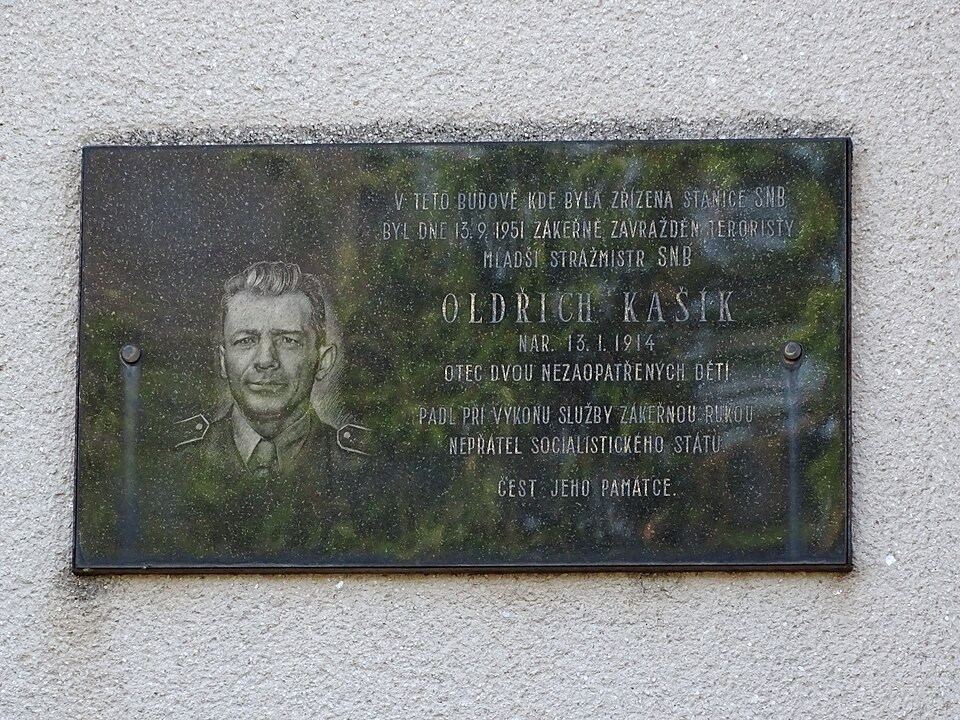
Both of these operations ended in bloodshed, with the brothers killing one police officer in each instance. In Chlumec nad Cidlinou, Jozef Mašín shot and killed Sergeant Kašík with two shots; Kašík had not been knocked out by Ctirad’s blow to the head with an iron bar and was reaching for his weapon [4].
The incident in Čelákovice continues to draw the most criticism to this day, as many consider it an act of extreme brutality.
There, Ctirad Mašín first knocked out a handcuffed and defenseless police officer with chloroform, then slit his throat with a Boy Scout knife [4,16].
The brothers later justified their actions by claiming that it was wartime and that the released police officer might have remembered their faces [4,12].
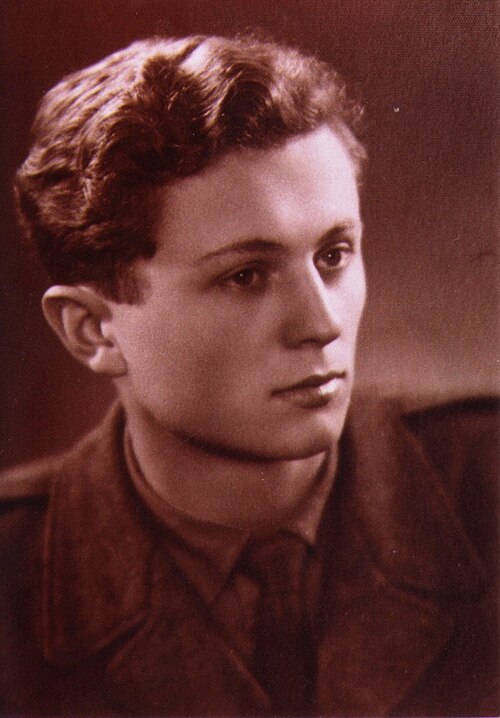
The resistance group also needed funds to operate, so in August 1952, they ambushed a vehicle transporting payroll for the Kovolis company.
During the skirmish, Josef Mašín shot and killed the armed cashier, Josef Rošický, and the group made off with hundreds of thousands of crowns [10,16].
Later, they also managed to steal 100 kilograms of Donarit explosives, which they planned to use to destroy a train carrying uranium or even President Klement Gottwald’s presidential train [14].
In addition to acquiring weapons and money, they also carried out sabotage activities directed specifically against the communist economy.
As part of a protest against the forced collectivization of agriculture, they began setting fire to haystacks in Moravia using timed explosives [6,14].
During one of these nighttime operations, they got into a scuffle with a volunteer firefighter, whom Ctirad Mašín shot and blinded in one eye [16].
An Escape Straight Out of a Movie
When they were in danger of being discovered by the authorities, in October 1953 the five-member group set out on a risky escape to West Berlin. The route led through East Germany, but what was supposed to take only a few days turned into a nearly month-long struggle for survival [7,23].
Thousands of East German police officers and Soviet soldiers were mobilized against the fugitives, resulting in the largest manhunt in modern history [1,13].
The group avoided major roads, navigated by the stars, and slept out in the freezing cold and rain.
The first fatal encounter with the police occurred at the Uckro train station, where a fierce shootout broke out after the ticket clerk reported them [2,23]. During the shootout, the brothers shot and killed two police officers, but in the ensuing chaos, Zbyněk Janata became separated from them and was captured by the authorities the next day [14,23].
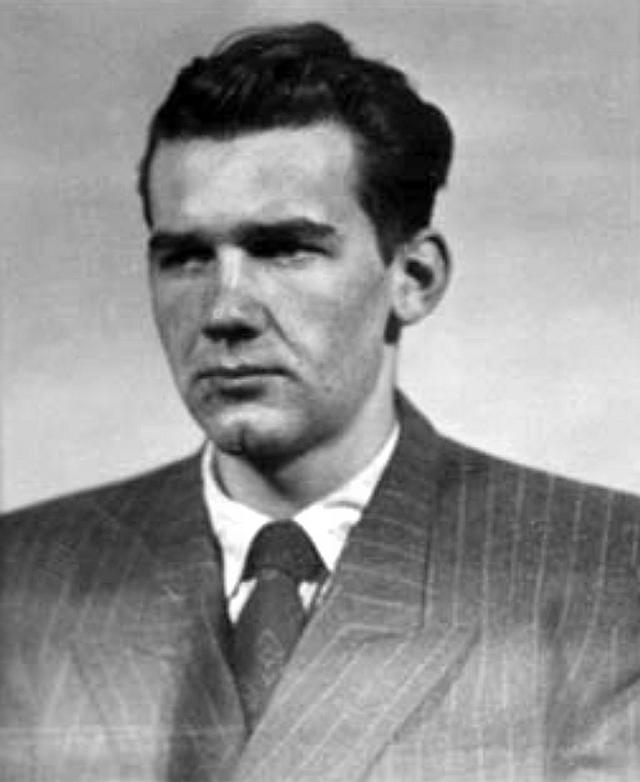
The remaining four continued their escape until they were surrounded by hundreds of pursuers near the village of Waldow. The Mašín brothers and Milan Paumer managed to break out of the encirclement at the cost of more lives, but they had to leave the seriously wounded Václav Švéda, whose forearm bone had been shattered by a bullet, behind [5,6].
The East German police found him lying in the woods the next day and handed him over to the communist judicial authorities in Czechoslovakia [14].
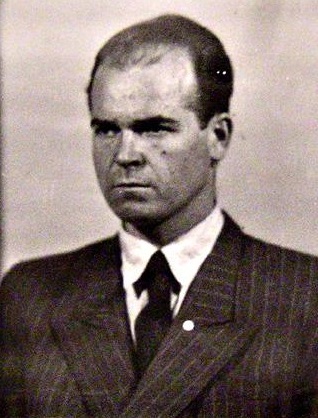
The following days were extremely critical for the exhausted trio, as they had to hide for days under piles of dry brush.
Police officers with search dogs came right up to their hiding place and even jumped directly onto the branches under which the fugitives were lying [2]. By an incredible stroke of luck, however, they were not discovered, and the trio was able to continue on toward the German capital [2,23].
Even the crossing into the western sector of Berlin was accompanied by gunfire, during which Milan Paumer was seriously wounded in the abdomen [2,14].
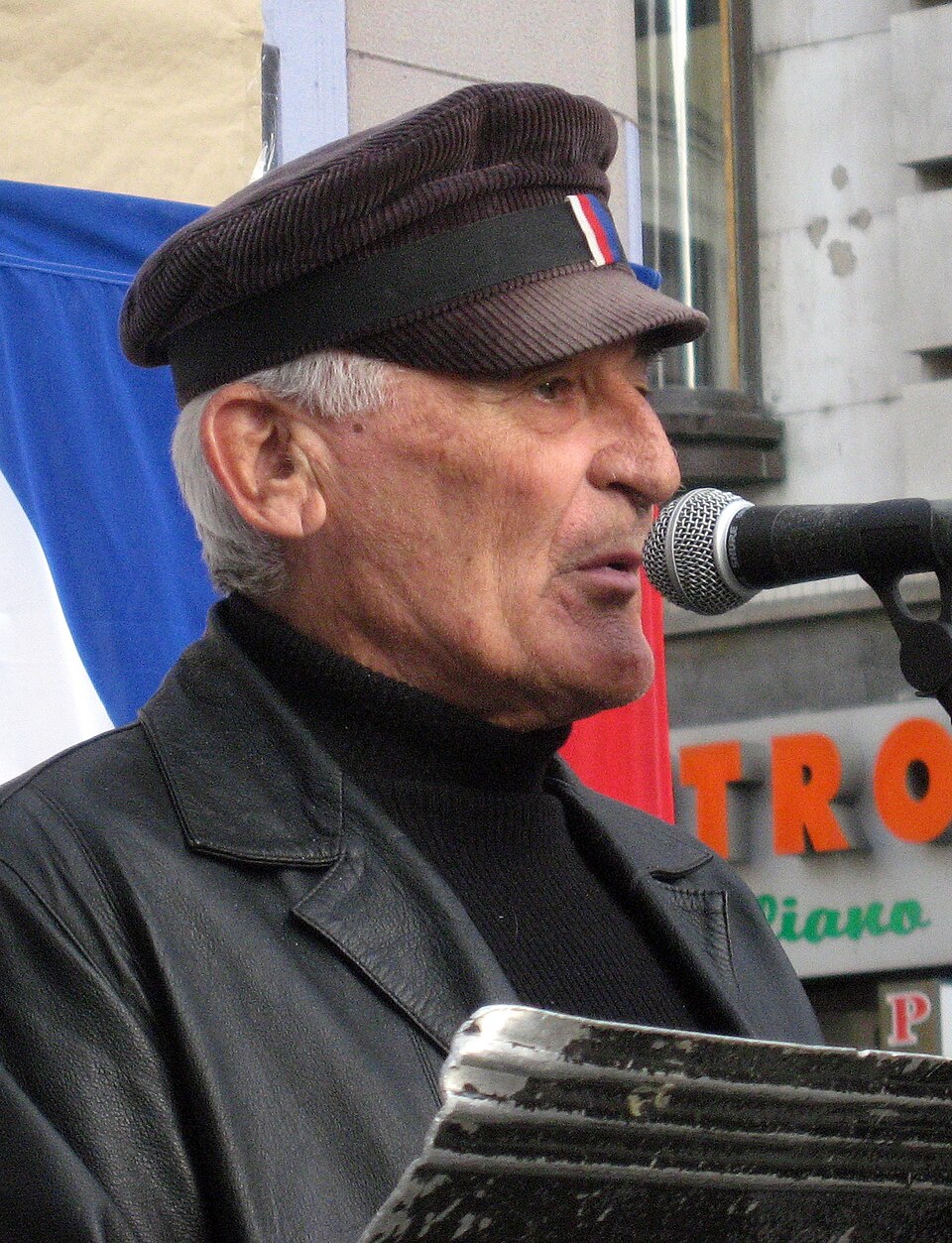
Despite this, Josef Mašín managed to carry him over the fences, and Ctirad reached safety by hiding on the brakes of a moving train [2,14].
At the turn of October and November 1953, the trio thus successfully reached their destination and surrendered to U.S. authorities [2,23].
The American Dream
After their successful escape, the brothers and Milan Paumer joined the U.S. Army without hesitation and underwent training in special forces.
They were convinced that the Cold War would soon escalate into a third world war, in which they wanted to fight for the liberation of Czechoslovakia [6,23].
However, when it became clear years later that no war was coming, they left the military and began building new lives as civilians [4,23].
Milan Paumer later drove a taxi in Florida, and after the fall of communism in 1989, he was the only one to return permanently to the Czech Republic [6,15].
Ctirad Mašín ran a business in Ohio, while Josef spent many years in Germany, where he owned a flight school, and eventually settled in sunny California [2,23].
The Mašín brothers refused to return to their homeland because they criticized the continuation of communist laws and the fact that the perpetrators had not been punished [2,3].
The Regime Shows No Mercy
While the brothers lived in safety in the U.S., the communist regime took out its anger on their family and friends who had remained at home.
The detained members of group, Václav Švéda, Zbyněk Janata, and the brothers’ uncle, Ctibor Novák, were sentenced to death and executed in 1955 [10,23].
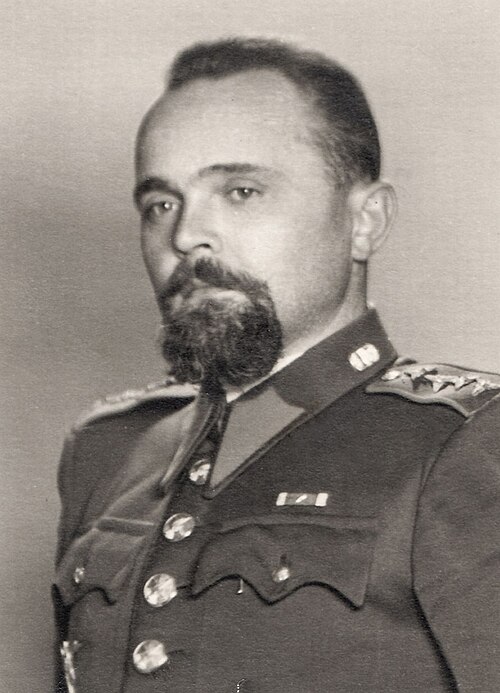
Their bodies were never returned to their families and were secretly buried in unmarked mass graves [5,14].
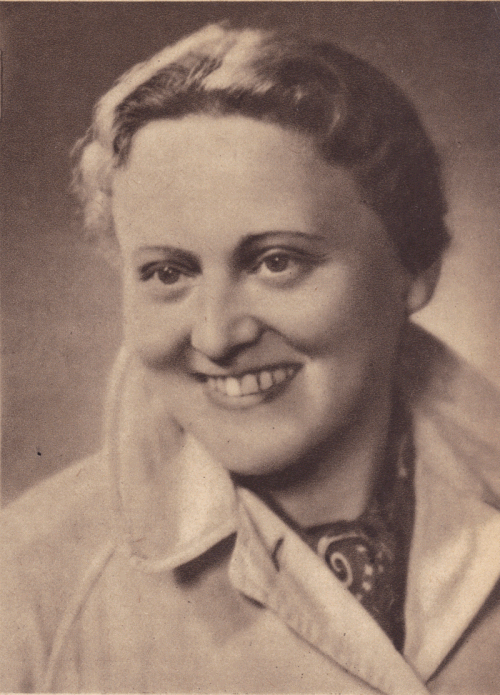
An even crueler fate befell the Mašín brothers’ mother, an educated and cultured woman whom the regime sentenced to a quarter-century behind bars [5,23].
The seriously ill woman was left to die slowly and without assistance from cancer on the concrete floor of her prison cell, where she breathed her last in 1956 [5,6].
Even their younger sister, Zdena, did not escape this vengeance; she was constantly monitored by the State Security and was allowed to perform only the most menial tasks [5,20].
A Divided Society
These dramatic events have led contemporary Czech and Slovak society to view the Mašín brothers in an extremely contradictory light. For one group of people, they are unquestionably heroes who, as among the few, found the immense courage to take up arms and resist a criminal dictatorship [3,17].
Their supporters emphasize that this was a legitimate struggle against a regime that did not hesitate to hang its own citizens and shoot them at the borders—a regime that had been illegitimate since the communist coup in February 1948 [4,18].
The second, much larger camp, however, condemns the brothers as mere murderers and terrorists. They are most heavily criticized for the cold-blooded slitting of the throat of a dazed police officer and the death of an innocent cashier who was merely protecting the money entrusted to him [6,21].
Various public opinion polls have long shown that more than half of those surveyed consider their violent methods unacceptable and criminal [14,23].
This extreme divide in opinions clearly illustrates how difficult it is for society to come to terms with reflecting on the entire communist era.
The Mašín brothers’ case, in fact, holds up an uncomfortable mirror to people and serves as a reminder that the vast majority of the nation passively conformed to totalitarianism out of fear or complacency [9,19].
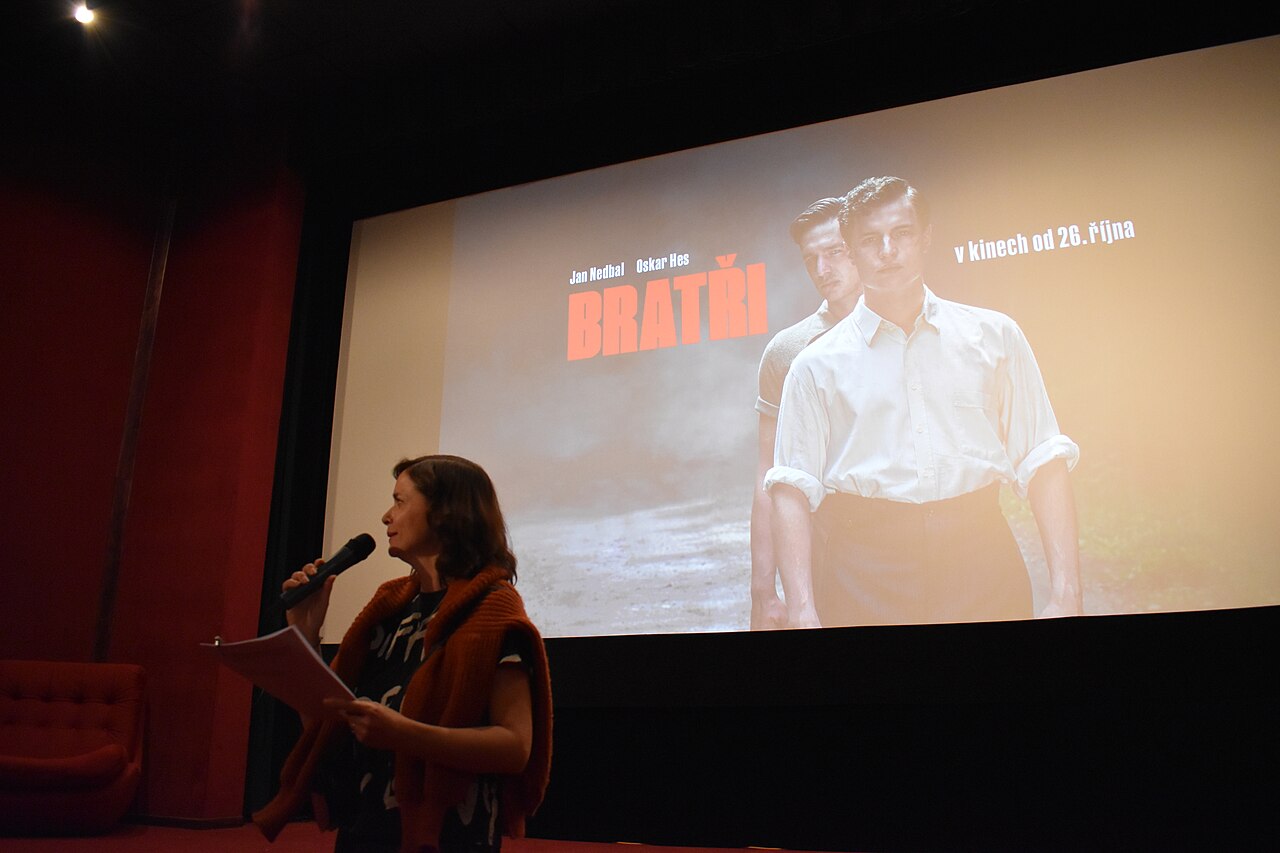
While others chose to turn a blind eye and remain silent, this small group decided to respond to the regime’s terror with equally brutal violence [2,18].
The ongoing debates over whether the brothers were heroes or villains will thus likely never have a clear winner [3].
Their armed resistance will forever remain one of the most sensitive chapters in modern history, one in which simple black-and-white answers are very hard to find [15,21].
The tragic story of the Mašín brothers thus serves as a constant reminder of an era in which the struggle for freedom demanded the bloodiest sacrifices [3,11].
List of References
[1] “We’ve Been Struggling to Get This Story Onscreen for 10 Years”: ‘THR Presents’ Q&A With the Director of ‘Brothers’ https://www.hollywoodreporter.com/movies/movie-features/thr-presents-with-director-of-czech-oscar-contender-brothers-1235709541
[2] Josef Mašín (1932 - 2026) https://www.pametnaroda.cz/cs/masin-josef-20210105-0
[3] Mašínovci. Príbeh, ktorý nemá víťazov https://www.pravda.sk/spravy/domace/clanok/171512-masinovci-pribeh-ktory-nema-vitazov
[4] Ctirad Mašín (1930 - 2011) https://www.memoryofnations.eu/en/masin-ctirad-1930
[5] Ctirad a Josef Mašínovi odešli, aby dále bojovali za svobodu https://www.armadninoviny.cz/ctirad-a-josef-masinovi-odesli-aby-dale-bojovali-za-svobodu.html
[6] The Mašín Gang: Heroes or villains – Prague Blog https://www.private-prague-guide.com/article/the-masin-gang-heroes-or-villains
[7] Joseph Masin · NCSML Digital Library https://ncsml.omeka.net/items/show/4102
[8] Zdena, sestra bratrů Mašínů - rozhovor - Medzi knihami - čerstvé informácie z diania v knižnom svete https://medziknihami.sk/clanky/zdena-sestra-bratru-masinu-rozhovor
[9] Bratia Mašínovci - príbeh živý aj po polstoročí - ZVJS https://www.zvjs.sk/en/blog/bratia-masinovci-pribeh-zivy-aj-po-polstoroci
[10] Vladimír HRADEC (*1931) https://tvare-vzdoru.vaclavhavel.cz/en/profile/79/vladimir-hradec-1931
[11] The Mašín Brothers’ Story in the Light of History. A Narratological Examination of the Historical Narrative | Slovo a Smysl http://slovoasmysl.ff.cuni.cz/node/336
[12] Italicized by J.Š.
[13] Brothers - The Avalon Theatre Project, Inc. https://www.theavalon.org/films/brothers
[14] Josef and Ctirad Mašín - Wikipedia https://en.wikipedia.org/wiki/Josef_and_Ctirad_Ma%C5%A1%C3%ADn
[15] Last member of famed Czech radical anti-communist trio dies | Macau Business https://macaubusiness.com/last-member-of-famed-czech-radical-anti-communist-trio-dies
[16] Bilance bratří Mašínů: zastřelení, podřezaný a rozdělená společnost - Novinky https://www.novinky.cz/clanek/domaci-bilance-bratri-masinu-zastreleni-podrezany-a-rozdelena-spolecnost-127581
[17] REKODIFIKOVANÝ TRESTNÝ ZÁKON A ... https://www.paneurouni.com/wp-content/uploads/2017/03/zbornik-rekod_2011_fin_web.pdf
[18] “I think they did the right thing,” says maker of new Mašín brothers doc https://english.radio.cz/i-think-they-did-right-thing-says-maker-new-masin-brothers-doc-8799601
[19] Pravdivý príbeh bratov Mašínovcov - Ivana Krekáňová - diskusia (blog.sme.sk) https://blog.sme.sk/diskusie/1945974
[20] Hrdina protikomunistického odboje Josef Mašín se dožívá v dobré kondici devadesáti let https://www.armadninoviny.cz/hrdina-protikomunistickeho-odboje-josef-masin-se-doziva-vc2a0dobre-kondici-devadesati-let.html
[21] Josef Rošický - Právě dnes https://pravednes.cz/RosickyJosef.profil
[22] Josef Mašín - Wikipedia https://en.wikipedia.org/wiki/Josef_Ma%C5%A1%C3%ADn
[23] Hrdinovia alebo zločinci? Pred 65 rokmi sa začal krvavý útek bratov Mašínovcov https://www.pravda.sk/spravy/domace/clanok/487130-hrdinovia-alebo-zlocinci-pred-65-rokmi-sa-zacal-krvavy-utek-bratov-masinovcov