Palestinian refugees under constant pressure. Not just today
The acquisition of Palestinian territories and the establishment of the State of Israel are among the most complex and controversial processes in modern history.
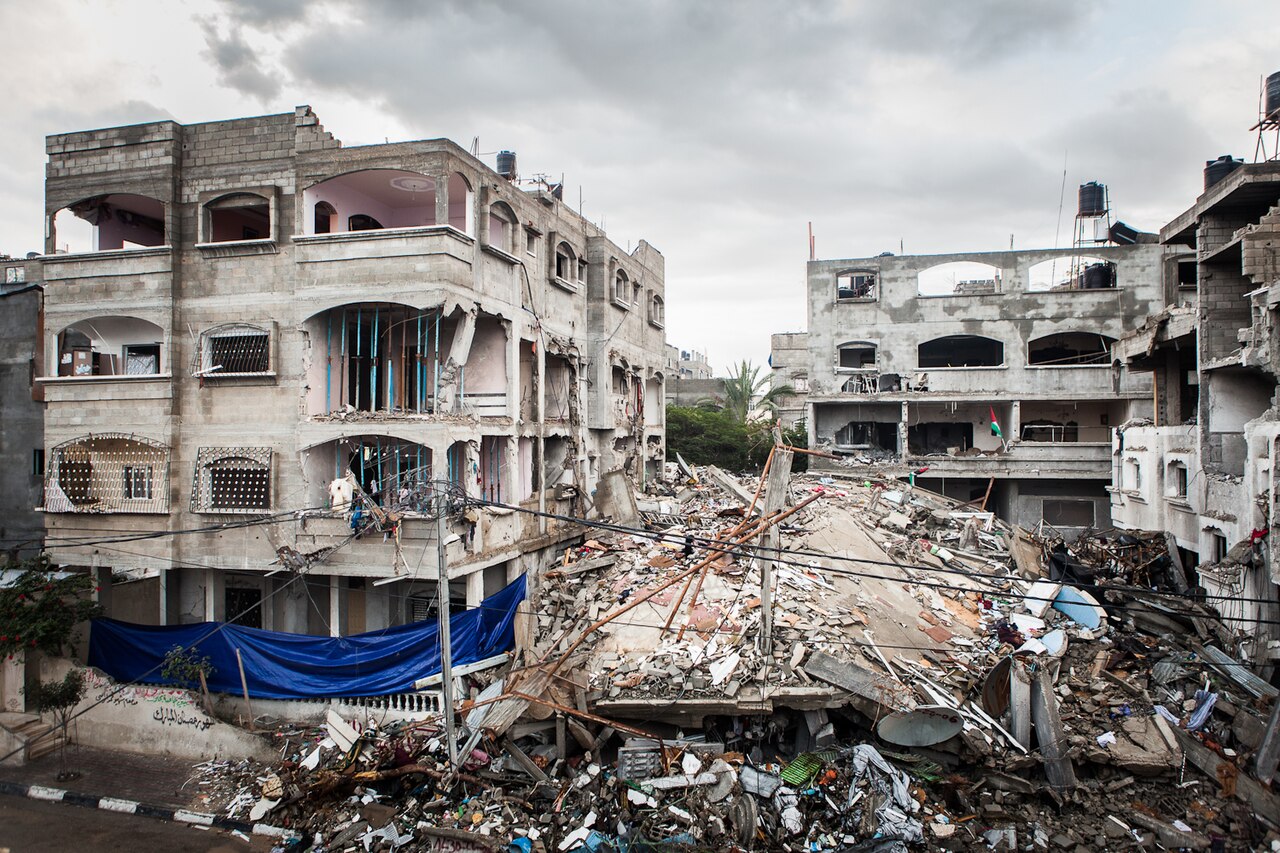
This historical development included an initial phase of legal land acquisitions, which later transitioned seamlessly into a phase of military conquest and mass displacement of the indigenous population. Historical, ethical, and legal debates regarding the legitimacy of these actions and their consequences continue within the international community to this day [5,25].
Land Acquisitions
In the decades prior to 1948, the Zionist movement acquired land in the region exclusively through purchases organized by institutions such as the Jewish National Fund (JNF) and the Palestine Jewish Colonization Association (PICA) [6,30,42].
The JNF was founded in 1901 with the clear goal of purchasing land for Jewish settlement; these purchases were legal and governed by the Ottoman and, later, British laws of the time [20,29,42].
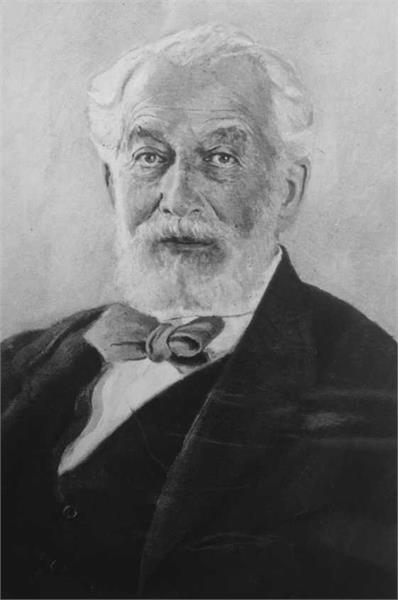
The funds came from private donors around the world, as well as from wealthy philanthropists such as Baron Edmond James de Rothschild [20,29].
The vast majority of these early purchases were made from large, often absentee Arab and Ottoman landowners who did not physically reside in Palestine [15,20,29].
These were primarily wealthy families from Beirut or Damascus who acquired this land as an investment following the enactment of the Ottoman Land Law of 1858 [20,29]. However, this method of acquisition often led to the immediate eviction of local Palestinian farmers, which sparked the first serious conflicts between Zionists and the indigenous population [15,20,24].
When land prices began to rise sharply and the British administration attempted to protect Arab farmers from losing their land, Jewish organizations developed sophisticated methods to circumvent these restrictions [21,30].
For example, they exploited incorrectly registered land or staged judicial foreclosures, in which the JNF acquired the land of debt-burdened Arabs following a “forced” auction [21,30].

Despite enormous efforts and hundreds of millions of dollars spent, Jews owned only approximately 5.67% to 7% of the total territory of Palestine on the eve of the war in 1947 [1,2,33].
The Fateful Declaration and Resolution
The legal and political framework for the establishment of Israel began to take shape after World War I, when the British government, through the Balfour Declaration of 1917, pledged support for the creation of a Jewish national home [6,23,31].
This imperial pledge was later incorporated into the British Mandate for Palestine, which was officially approved by the League of Nations in 1922 [15,31].

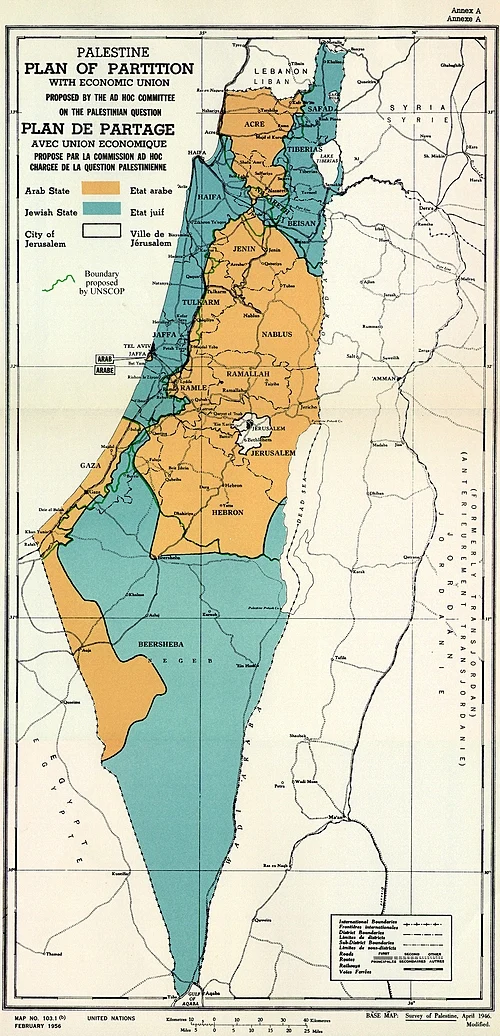
Ultimately, the key document was UN General Assembly Resolution No. 181 of November 29, 1947, which proposed the partition of Palestine into independent Jewish and Arab states [5,14,42].
The UN partition plan sparked immediate controversy because it allocated approximately 55% of the territory to the Jewish state, even though the Jewish community constituted only about one-third of the population and owned a minimal amount of land [19,33,42].
Arab leaders and Palestinian representatives rejected this plan as deeply unjust and in direct conflict with the indigenous population’s fundamental right to self-determination [22,25,34]. From the perspective of international law, the legitimacy of Resolution 181 was sharply questioned, with internal U.S. documents warning that imposing partition by force would directly violate the UN Charter [10,12].
A New State Goes to War
Despite diplomatic efforts to find alternative solutions, the Zionist leadership, under the direction of David Ben-Gurion, unilaterally declared the independent State of Israel on May 14, 1948 [5,11,42].
This act took place on the very day the British Mandate ended and was immediately followed by an invasion by the armies of neighboring Arab states, which unsuccessfully attempted to destroy Israel in its infancy [14,42].
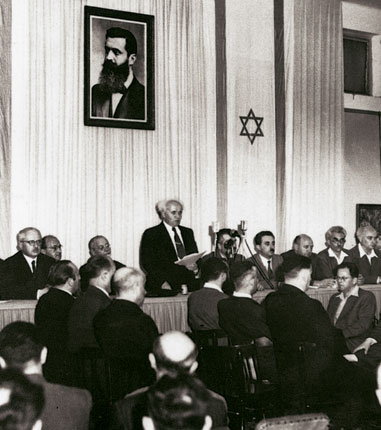
Although the Declaration of Independence formally promised equality for the Arab population, it deliberately failed to define the borders of the new state, thereby leaving Israel room to expand its territory through military force [42,43].
The Expulsion
The subsequent tragic events of 1947–1949 are known in Palestinian collective memory as the Nakba, which translates as “catastrophe” [14,28].
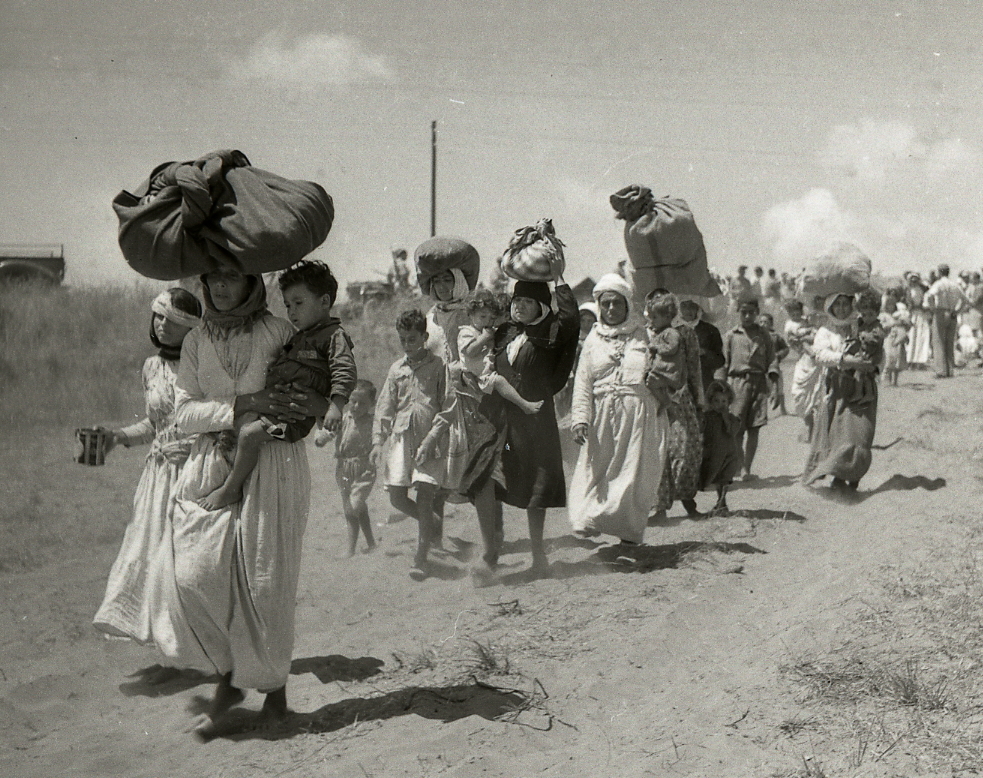
During this dark period, approximately 700,000 to 750,000 Palestinian Arabs—representing about half of the entire Arab population in the country—were expelled or forced to flee into exile [5,14,19]. This massive process led to the complete collapse of Palestinian society and constituted widespread ethnic cleansing of the vast majority of the indigenous population [3,14,22].
The displacement of the population was not merely an incidental consequence of military operations but was carried out on the basis of premeditated military strategies.
In March 1948, the Zionist leadership approved the so-called Plan Dalet (Plan D), which served as the main operational manual for the ethnic cleansing of Palestinian territories [14,35,42]. This document contained explicit orders to surround villages, systematically destroy homes, mine their ruins, and completely expel the population beyond the state’s borders in the event of any resistance [9,39,42].
While the official Israeli narrative has long claimed that the Arabs fled voluntarily in response to calls from their own leaders, modern historiography unequivocally rejects this version [17,19,41].
Declassified archives and the works of Israeli “new historians” indicate that radio appeals for evacuation were merely a propaganda myth and that the actual cause of the exodus was direct Israeli attacks [7,17,19].
A June 1948 report by the Haganah military intelligence itself unequivocally acknowledged that military operations and psychological warfare by Jewish forces caused as much as 73% of the departures of Palestinian refugees [5,7,41].
To accelerate the mass exodus, Zionist forces deliberately employed extensive psychological warfare, which included spreading panic, intimidation campaigns, and threatening announcements over loudspeakers [5,14,18].
There are also shocking documented cases of the use of biological weapons to poison water sources and local village wells [5,14,37]. In May 1948, such a covert operation caused a serious typhus epidemic in the city of Akko, which was a demonstrable attempt to weaken Arab resistance and drive the civilian population from their homes [5,14].
A New Order Is Born Out of Blood
However, the greatest fear and panic among the population were caused by the brutal massacres, of which, according to various sources, between 24 and 70 took place during the Nakba [38,42]. The definitive turning point was the infamous massacre in the village of Deir Yassin (Deir Yassin) on April 9, 1948, where extremist Jewish militias cold-bloodedly murdered more than a hundred unarmed men, women, and children [26,36,42].
News of this bloodshed spread like wildfire and triggered a mass, almost psychotic exodus of tens of thousands of Arabs from major cities such as Haifa and Jaffa [5,7,27].
The violent expulsions did not stop even after the official declaration of the State of Israel’s independence.
In July 1948, as part of Operation Dani, top officials David Ben-Gurion and Yitzhak Rabin ordered the mass expulsion of 50,000 to 70,000 Palestinians from the towns of Lydda and Ramla [5,19,42]. This apocalyptic event, known as the “Lydda Death March,” was accompanied by mass murder and looting, with hundreds of exhausted people dying of thirst along the way [7,41,42].
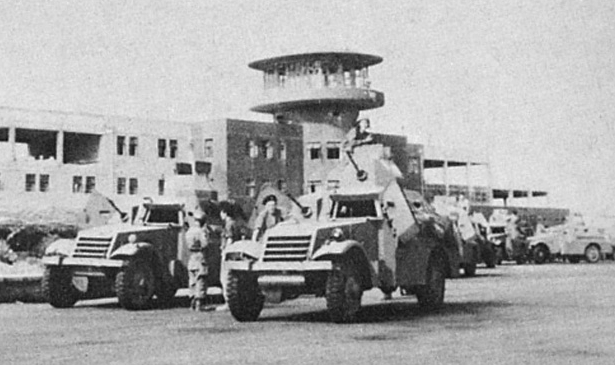
During the fall of 1948, further offensives took place in the north of the country, such as Operation Hiram, which drove more than 200,000 Palestinians from the Galilee region [5,41].
During this brutal period, Israeli forces carried out dozens of executions and mass killings in villages such as Safsaf, Saliha, and Dawayima [7,14,42]. During the massacre in the village of Dawayima in October 1948, soldiers killed dozens of civilians, with some elderly women blown up alive right in their homes [9,42].
To definitively prevent any return of refugees, the Israeli armed forces systematically destroyed all depopulated Arab settlements.
During the war, more than 500 Palestinian villages and towns were razed to the ground, with this devastation reaching nearly 100 percent in the areas around Jaffa and Tiberias [4,5,14,42]. In addition to the total demolition of homes, there was massive and uncontrolled looting of Palestinian private property, in which both Israeli soldiers and ordinary civilians actively participated [5,14,16].
Nothing New Under the Sun—Retroactive Legalization
The subsequent legalization of this massive expropriation took place through strictly purpose-built Israeli legislation designed to prevent retroactive restitution.
The Absentees’ Property Law of 1950 enabled the state to formally confiscate all land and real estate belonging to people who had fled the devastating conflict [5,6,16,42].
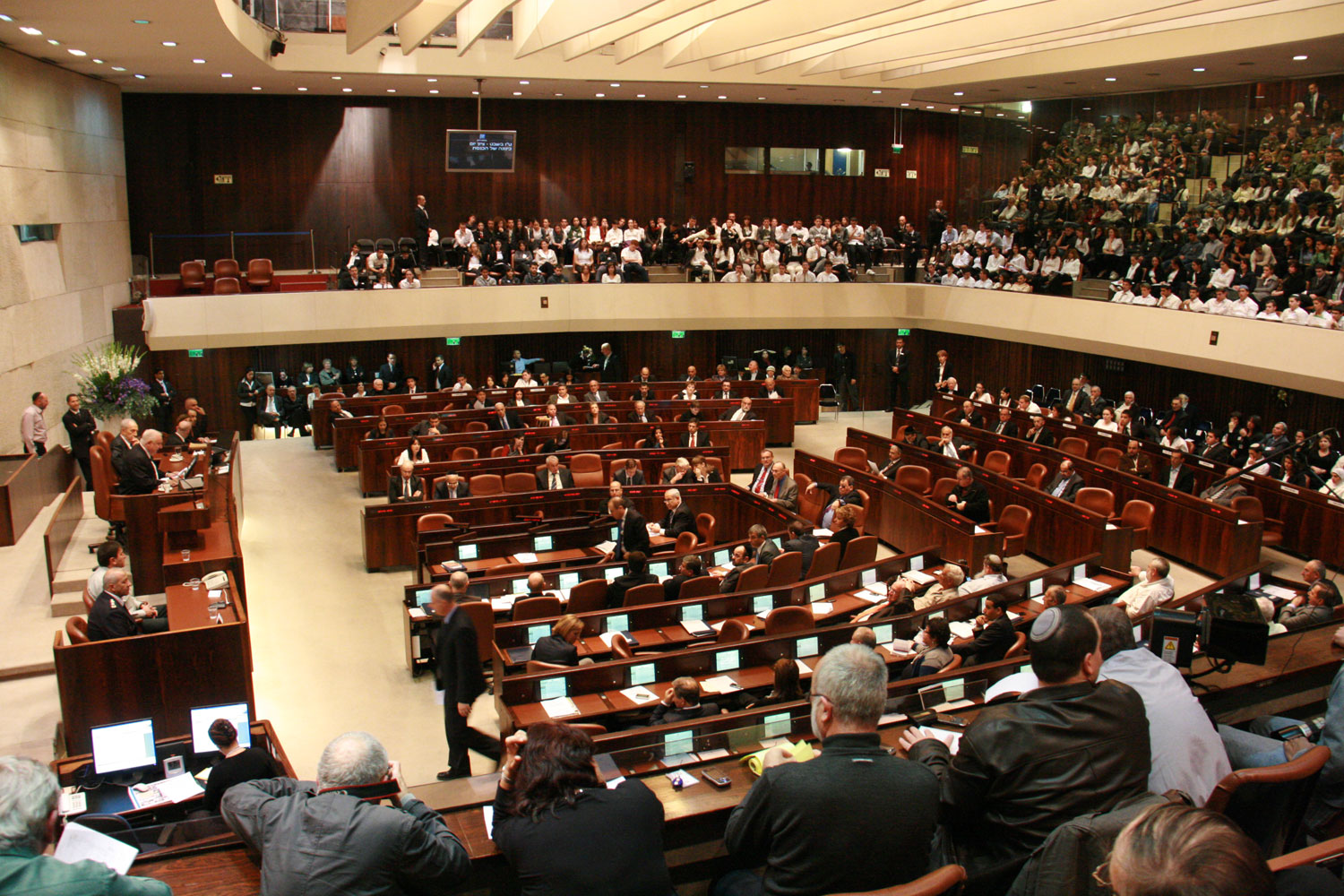
Israel thus administratively transformed its military control over the territory into legal ownership, while permanently preventing the refugees from returning and refusing to provide them with any fair compensation [5,6,42].
Historical and ethical debates regarding the founding of the State of Israel therefore remain fraught with profound contradictions to this day. While the Israeli national narrative views the events of 1948 as a just redemption and moral salvation of the Jewish people after the Holocaust, for Palestinians, it represents an original sin and an inexcusable theft of their homeland [8,14,25].
These heated debates reveal the uncomfortable fact that the democratic and socialist ideals of early Zionism were achieved only at the cost of ignoring and destroying the entire indigenous Arab society [17,43].
International law, however, views the situation of the displaced Palestinians strictly within the context of their inalienable and fundamental human rights. As early as December 11, 1948, the UN General Assembly adopted the historic Resolution 194, in which it explicitly demands that Palestinian refugees be allowed to return to their homes and be paid full compensation for their lost property [5,14,32,42].
Although Israel was later admitted to the UN precisely on the clear condition that it respect this resolution, to this day it categorically and uncompromisingly rejects the right of return [5,41,42].
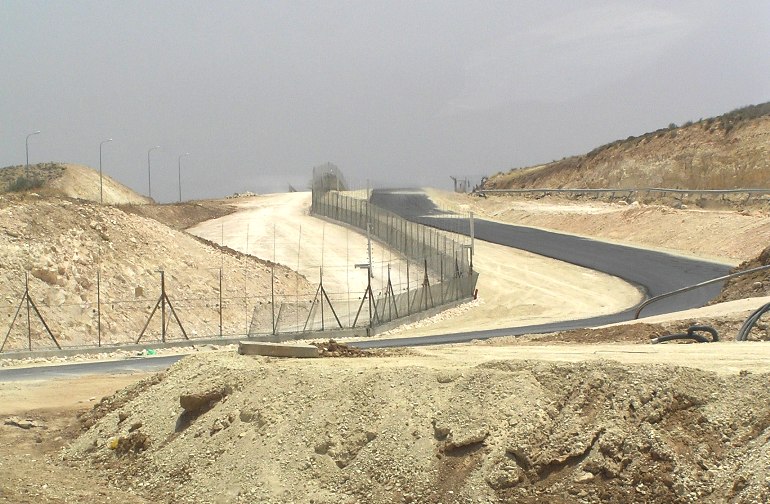
From the perspective of contemporary humanitarian and international criminal law, the mass forced displacement of 1948 is widely classified as ethnic cleansing and a clear war crime [5,13,19,40].
Furthermore, the fact that Israel guarantees the right of immigration to anyone of Jewish origin, while prohibiting the return of the original Arab inhabitants, reinforces the view of many experts that the state is implementing a regime of apartheid [5,42].
The tragic result of these long-standing policies is the world’s longest-lasting refugee crisis, which leaves millions of Palestinians without a state of their own and with a persistent sense of injustice [14,23].
List of References
[1] Al-Majdal https://badil.org/publications/al-majdal/issues/items/409.html
[2] https://oldwebsite.palestine-studies.org/resources/special-focus/zionist-settler-colonialism
[3] https://politicalviolenceataglance.org/2023/03/06/is-israel-on-the-precipice-of-genocide/
[5] 1948 Palestinian expulsion and flight - Wikipedia https://en.wikipedia.org/wiki/1948_Palestinian_expulsion_and_flight
[6] Acquisition of land in Palestine - the United Nations https://www.un.org/unispal/document/auto-insert-208638
[7] This article served as the basis for a presentation at a colloquium on “The History of Contemporary Palestine” held at the Institut du Monde Arabe on June 13, 1997. It is being expanded into a book to be published by Editions de l’Atelier in the spring of 1998.
[8] The analysis is obviously not limited to the first Arab-Israeli war. It also addresses the Zionist leadership’s attitude toward genocide (see in particular Tom Segev’s *The Seventh Million*, published in France by Liana Levi, Paris, 1992), and the nature of Jewish settlement during the British Mandate period. Similarly, Benny Morris has continued his exploration of the archives to shed light on Israeli expansionism during the 1950s (see “Israel’s Border Wars: Arab Infiltration, Israeli Retaliation, and the Countdown to the Suez War,” Clarendon Press, Oxford, 1993). It also extends into disciplines other than historiography, particularly sociology, and especially concerning the situation of Oriental Jews in Israeli society, from the early days to the present.
[9] Their most important publications are: Simha Flapan, “The Birth of Israel: Myth and Realities,” Pantheon Books, New York, 1987; Tom Segev, “1949: The First Israelis,” Free Press MacMillan, New York and London, 1986; Avi Schlaim, “Collusion across the Jordan: King Abdullah, the Zionist Movement, and the Partition of Palestine,” Clarendon Press, Oxford, 1988; Ilan Pappe, “Britain and the Arab-Israeli Conflict, 1948–1951,” Macmillan, New York, 1988, and “The Making of the Arab-Israeli Conflict, 1947–1951,” I.B. Tauris, London, 1992; and Benny Morris, “The Birth of the Palestinian Refugee Problem, 1947–1949,” Cambridge University Press, Cambridge, 1987, and “1948 and After: Israel and the Palestinians,” Clarendon Press, Oxford, 1990.
[10] The United Nations bears a huge responsibility for allowing the series of events to unfold that created the Palestinian refugee phenomenon, and, unfortunately, this responsibility is commonly misunderstood. For example, U.N. General Assembly Resolution 181, of November 1947, which proposed “partitioning” Palestine, not only had no basis in international law but, on the contrary, violated international law to a very significant degree. This is so because the “partition” of Palestine ran directly counter to the prior, legally vested national sovereignty rights of the Palestinian people in all of historic Mandate Palestine, as guaranteed to them by the Covenant of the League of Nations in 1919. See section 3.B.1 below for a discussion of the Palestinian people’s prior, legally vested national sovereignty rights throughout historic Mandate Palestine, which were conferred upon them by virtue of the Covenant of the League of Nations.
[11] See, e.g., Security Council Resolution 44 (April 1, 1948), in which the Security Council, at the urging of the United States, passed a resolution requesting the Secretary-General to convene a special session of the General Assembly to “consider further the question of the future government of Palestine,” and specifically the trusteeship agreement proposed by the United States for Palestine. Thus, the U.N. Security Council, the highest policy-making body of the United Nations, ultimately abandoned the partition plan proposed in Resolution 181. Instead, in 1948, the Security Council and the General Assembly jointly sought a peaceful solution that would not have violated the international norm prohibiting discrimination on racial, ethnic, religious, or political grounds, and that would also not have infringed upon the legal rights to self-determination of the indigenous Palestinian population, nor would it have to be imposed upon them against their will by force of arms. See also, S.C. Resolution 43 (April 1, 1948); S.C. Res. 46 (April 17, 1948); S.C. Resolution 48 (April 23, 1948).
[12] See, e.g., “Report by the Policy Planning Staff on the Position of the United States with Respect to Palestine,” January 19, 1948, 5 Foreign Relations of the United States 1948, 546, 549, 553 (1976) (in which the State Department’s policy planning staff reported to the U.S. Secretary of State in January 1948 that the imposition of the partition plan would appear to violate the Palestinians’ right to self-determination under international law).
[13] See Eric Rosand, “The Right to Return under International Law Following Mass Dislocation: The Bosnia Precedent?” 19 Michigan Journal of International Law 1091, 1117 (Summer 1998) (footnote omitted) [hereinafter Rosand, “Right to Return”]. The author is a legal advisor with the United States Department of State.
[14] Nakba - Wikipedia https://en.wikipedia.org/wiki/Nakba
[15] Land Ownership in Palestine, 1880–1948 | survival - myJLI.com https://lessons.myjli.com/survival/index.php/2017/03/26/land-ownership-in-palestine-1880-1948
[16] Bar-Zohar describes it as the first operational plan of the IDF, even though it predated the establishment of the state. Ben-Gurion, vol. 2, 703–4. This material does not appear in the English version.
[17] [PDF] The Palestinian Exodus of 1948 - Palestine-studies.org https://www.palestine-studies.org/sites/default/files/attachments/jps-articles/exodus.pdf
[18] Benny Morris, “The Causes and Character of the Arab Exodus from Palestine,” Middle Eastern Studies 22, no. 1 (January 1986): 9–11.
[19] Causes of the 1948 Palestinian expulsion and flight - Wikipedia https://en.wikipedia.org/wiki/Causes_of_the_1948_Palestinian_expulsion_and_flight
[20] Zionist land purchases in Mandatory Palestine before 1947: r/IsraelPalestine https://www.reddit.com/r/IsraelPalestine/comments/1dkq9jo/zionist_land_purchases_in_mandatory_palestine
[21] [PDF] The Land Controversy: the 94% myth - Center for Israel Education https://israeled.org/wp-content/uploads/2013/02/themes-land-issue-2-22-13.pdf
[22] Palestinian Displacement and Resistance: The Nakba of 1948 ... https://ncheteach.org/resource/complex-world-palestinian-displacement-and-resistance-the-nakba-of-1948-continues
[23] The Nakba: All you need to know explained in five maps and charts | Middle East Eye https://www.middleeasteye.net/news/israel-palestine-nakba-ethnic-cleansing-explained-five-maps-charts
[24] Maxime Rodinson, Israel: A Colonial-Settler State? (New York: Monad Press, 1973), p. 30.
[25] [PDF] The Alienation of a Homeland: How Palestine Became Israel* https://cdn.mises.org/5_4_2_0.pdf
[26] Michael Bar-Zohar, Ben-Gurion: A Biography (New York: Delacorte Press, 1978), pp. 107–108.
[27] Menachem Begin, The Revolt (Tel Aviv: Hadar, 1964), pp. 162–64.
[28] Fourth Annual Symposium on Pop Culture and International Law: Understanding the Nakba through Arab Drama—Documentation and Symbolism in al-Taghreba al-Falastinya—Opinio Juris http://opiniojuris.org/2024/10/30/fourth-annual-symposium-on-pop-culture-and-international-law-understanding-the-nakba-through-arab-drama-documentation-and-symbolism-in-al-taghreba-al-falastinya
[29] What the 1945 JNF map reveals about the Israel partition plan https://unpacked.media/did-jews-steal-the-land-in-israel-what-the-1945-jnf-map-reveals-about-the-partition-plan
[30] K. Stein, *The Land Question in Palestine, 1917–1939* (The University of North Carolina Press, 1984), p. 141.
[31] The full text of the Mandate for Palestine (2022) is available at digitallibrary.un.org/record/829707?ln=en.
[32] The Palestinian Refugees: History & Overview https://www.jewishvirtuallibrary.org/history-and-overview-of-the-palestinian-refugees
[33] Toward the De-Arabization of Palestine/Israel 1945–1977. Nijim, Basheer K. (ed.). Dubuque, Iowa: Kendall/Hunt Publishing Company, 1984, p. 10. Because of the reliance on agriculture, the impact of the loss of land went far beyond the amount of land lost to Zionist colonization during this period. Palestinian land ownership declined by approximately 4% as a result of land sales, primarily by large absentee landlords. Khalidi, Rashid, *Palestinian Identity: The Construction of Modern National Consciousness*, New York: Columbia University Press, 1997, pp. 113–114. A smaller number of Palestinian Arab farmers lost their land due to financial insolvency.
[34] Ibid., paragraph 176.
[35] “Plan Dalet: Master Plan for the Conquest of Palestine,” Khalidi, Walid. Journal of Palestine Studies, (Fall 1988), p. 8.
[36] Leaders of Zionist militia organizations at the time reported that 245 people had been killed in the village. These reports were broadcast by Arab and foreign media. For a study of the massacre, see Khalidi, Walid, Dayr Yassin: Friday, April 9, 1948 [Arabic], Beirut: Institute for Palestine Studies, 1999.
[37] “Traces of Poison: Israel’s Use of Biological Weapons,” Salman Abu Sitta, Al Ahram Weekly, Feb. 27–March 6, 2003, no. 627.
[38] Abdel Jawad, S., 2007, “Zionist Massacres: the Creation of the Palestinian Refugee Problem in the 1948 War,” in Benvenisti, E., Gans, C., and Hanafi, S., Israel and the Palestinian Refugees, Berlin, Heidelberg, New York: Springer, pp. 59–127.
[39] For a full English translation of Plan D, see Ibid., pp. 4–20.
[40] Methods of population transfer may include financial subsidies, planning, public information, military action, recruitment of settlers, legislation or other judicial action, and the administration of justice. The Human Rights Dimensions of Population Transfer, Including the Implantation of Settlers, Preliminary Report prepared by A. S. al-Khawasneh and R. Hatano. Commission on Human Rights, Sub-Commission on the Prevention of Discrimination and Protection of Minorities, Forty-fifth Session 2, August 27, 1993, Item 8 of the provisional agenda, E/CN.4/Sub.2/1993/17, July 6, 1993, at paras. 15 and 17.
[41] Palestinian right of return - Wikipedia https://en.wikipedia.org/wiki/Palestinian_right_of_return
[42] Timeline: The Palestinian Nakba (Catastrophe) & Establishment of Israeli Apartheid | The Nakba | Resources | The Institute for Middle East Understanding (IMEU) https://imeu.org/resources/the-nakba/timeline-the-palestinian-nakba-catastrophe-establishment-of-israeli-apartheid/146
[43] Interactive Encyclopedia of the Palestine Question – Palquest | Israel’s Nation-State Law, 2018 https://www.palquest.org/en/highlight/33418/israels-nation-state-law-2018