Munich was a betrayal that must never be repeated
The anniversary of the Munich Conference, which began on September 29, 1938, reminds us of one of the darkest chapters in modern European history.
Ultimately, this event represented a meticulously planned act of aggression by Nazi Germany, carried out through seemingly peaceful means [1].
In the interest of maintaining an illusory European peace, a sovereign state was then forced, under the threat of military attack, to make enormous concessions and suffer political and power-related degradation [1].
The Road to Catastrophe
The prelude to this conference was the escalating Sudeten crisis, which gradually became a fundamental issue in European politics, culminating in a choice between war and peace [1].
After the annexation of Austria in the spring of 1938, Adolf Hitler began systematically demanding that Czechoslovakia cede the Sudeten border region—home to a large German minority—to Germany [21]. In doing so, the Nazi leader purposefully sought to perpetuate the illusion that this was the last major political problem, the resolution of which would ensure peaceful development on the continent [1].
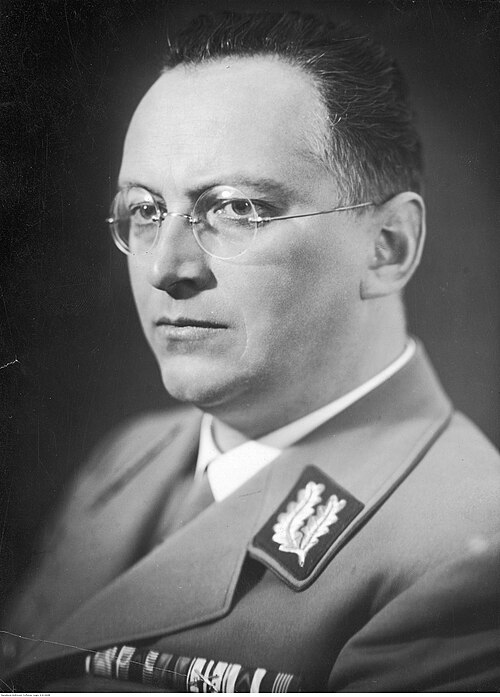
Representatives of Great Britain and France were unwilling to enter into open war over the territorial integrity of Czechoslovakia [10].
Fearing a new global conflict, both of these Western powers sought to satisfy Nazi demands through a policy of concessions, known as appeasement, and their behavior was largely shaped by the trauma of the world war they had experienced twenty years earlier [1,12].
Moreover, British Prime Minister Neville Chamberlain wanted to show the world how a successful revision of treaties could be achieved directly at the negotiating table without bloodshed [1].
As diplomatic pressure reached its peak, Italian dictator Benito Mussolini proposed, at Chamberlain’s request, to convene an international conference that would defuse the situation [4,11]. Subsequently, on September 28, 1938, Hitler invited the heads of government of Great Britain, France, and Italy to Munich [12].
The aim of this unprecedented meeting was to definitively resolve the Sudeten issue and formally preserve peace in Europe [13].
The Fateful Conference
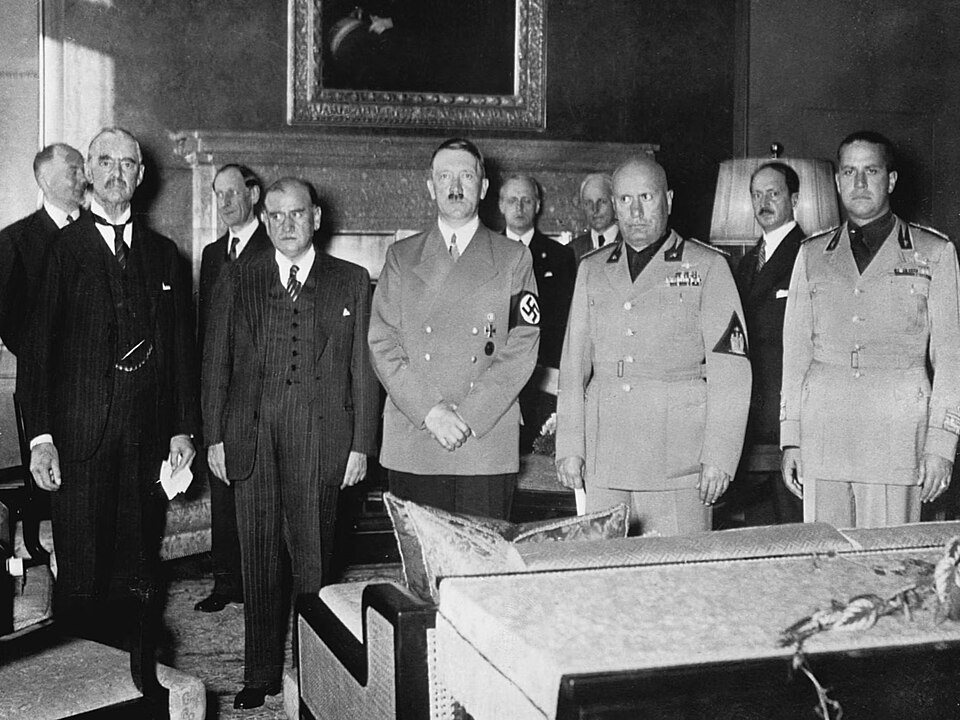
Four leading European statesmen gathered at the Munich talks: Adolf Hitler, Benito Mussolini, Neville Chamberlain, and Édouard Daladier [13].
Tragically, however, the fate of Czechoslovakia was decided entirely without the presence of its representatives, just as the Soviet Union had not been invited either [12,13].
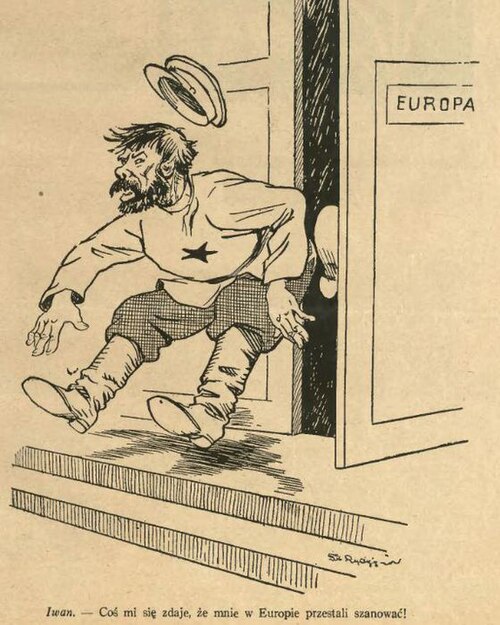
Hitler thus managed, without much difficulty, to prevent Czechoslovak diplomats from actively participating in the negotiations among the great powers [2].
Only at Chamberlain’s request were the Czechoslovak representatives Hubert Masařík and Vojtěch Mastný granted permission to travel to Munich, and then only as part of the British delegation [6].
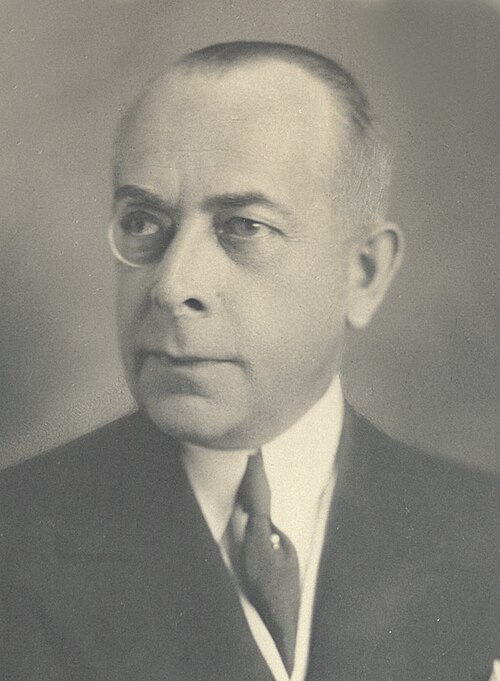
However, the representatives of the Czechoslovak government were forced to wait in the lobby of the Hotel Regina, where the Gestapo had escorted them directly from the airport—a situation that made an exceptionally humiliating and disheartening impression [7,13].
Czechoslovakia thus found itself from the outset in a position of unacceptable coercion, and its diplomats were not even allowed inside the conference itself [2,32].
The negotiations themselves, which began on the afternoon of September 29, were marked by a lack of time and, from the outset, proceeded in a spontaneous, at times even chaotic manner [5].
The basis for the discussions was a proposal submitted by Mussolini, which had in fact been drafted in advance by the Germans and secretly discussed with Hitler [5,19].
From the outset, all participants proceeded from the unjust premise that Czechoslovakia must cede part of its territory, and the only issues left to resolve were how much and when [2].
The talks did not focus on international law, but rather on threats, with Hitler clearly expressing his readiness to invade Czechoslovak territory [32]. The Führer was prepared for war, correctly calculating that he currently held the upper hand in military strength over the unprepared France and Great Britain.
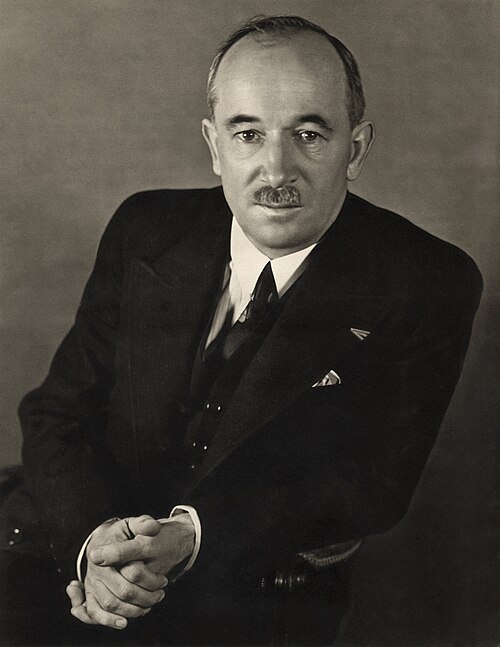
France did nothing to defend the vital interests of its treaty ally, and Western leaders discussed with the dictators only the procedural arrangements for what they had already accepted in advance [2].
Shortly after midnight, in the early hours of September 30, 1938, the infamous Munich Agreement was finally formally signed [8,11].
To accept or not to accept?
It was not until around half past one in the morning that Mastný and Masařík were summoned to the conference room, where an exceptionally oppressive and depressing atmosphere prevailed [7]. British Prime Minister Chamberlain, yawning constantly, dryly announced the result to them, and the French representatives told them outright that they no longer expected any response from the government in Prague [7,33].
The verdict meant that if the Czechoslovak government refused to comply, it would be exposed to a German attack without any assistance from the Western powers [19].
The consequences of this document for Czechoslovakia were immediate and utterly devastating. The country lost nearly 30 percent of its territory, home to approximately five million people, including 800,000 Czechs [10,14].
The new, unnatural border rendered the fortified defense system ineffective, severed important transportation arteries, and deprived the republic of 70 percent of its electricity production and steel industry [14,23].
The Munich Agreement marked the de facto end of interwar Czechoslovakia, which had been built on democratic principles [9].
President Edvard Beneš submitted to the diktat because, facing international isolation, he considered surrender without a fight to be the most responsible solution to save the nation from extermination [10]. As early as October 5, 1938, Beneš, weighed down by the events, resigned from office and later went into exile in London [9,14].
Another direct consequence was that the Munich Agreement laid the groundwork for further ruthless territorial divisions of the weakened republic. Hitler also demanded the immediate satisfaction of Poland’s and Hungary’s territorial claims against Czechoslovakia [3,12].
Poland subsequently annexed the Cieszyn region and certain areas of Spiš and Orava, thereby definitively closing the encirclement around the paralyzed state [3,12,14].
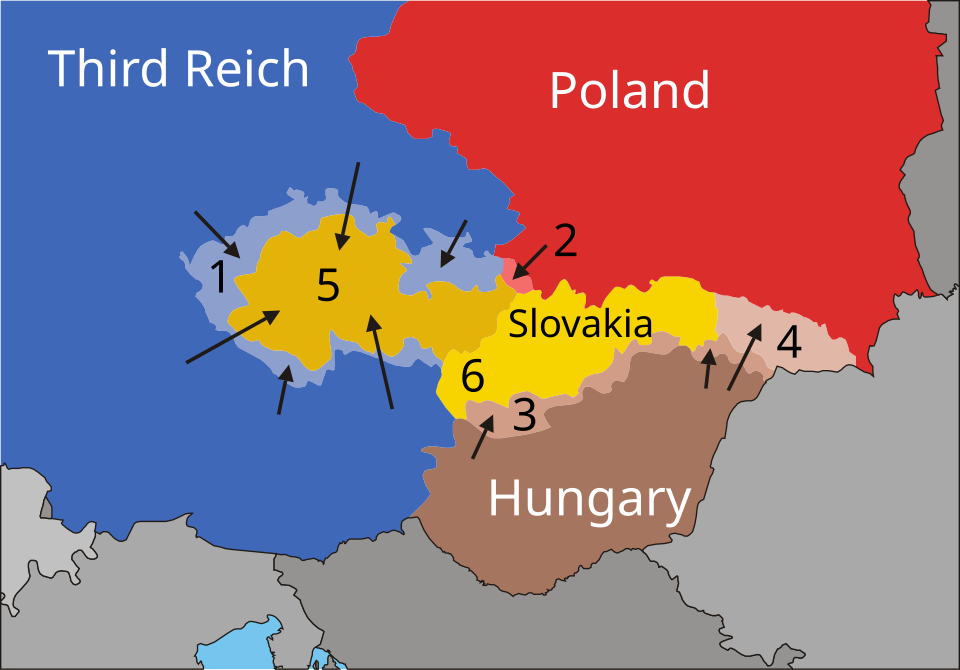
The issue of the Hungarian minority in the south was resolved on November 2, 1938, by the so-called First Vienna Arbitration, orchestrated by Germany and Italy [15]. Under its terms, Czechoslovakia was forced to cede vast territories in southern Slovakia and Subcarpathian Rus to Hungary [12,17].
The weakened state thus lost its most fertile agricultural regions, and its economic system was fatally crippled overall [12,16].
Occupation
Domestic political changes in the republic were not long in coming amid this crisis. Hlinka’s Slovak People’s Party exploited the complex power vacuum and, on October 6, 1938, pushed through the declaration of Slovak autonomy in Žilina [18,22].
This was followed by a brief period of the Second Republic, which was marked in both Slovakia and Bohemia by a transition to an authoritarian system and intensifying German pressure across all spheres of society [9,20].
However, the Munich Agreement was by no means the end of Nazi aggression against Czechoslovakia. Hitler soon broke his promises to respect the new borders and, in March 1939, completely destroyed what remained of the weakened state [24].
On March 14, Slovakia was forced to declare independence under German tutelage, and the very next day the Wehrmacht marched into Prague, thereby establishing the Protectorate of Bohemia and Moravia [9,22,31].
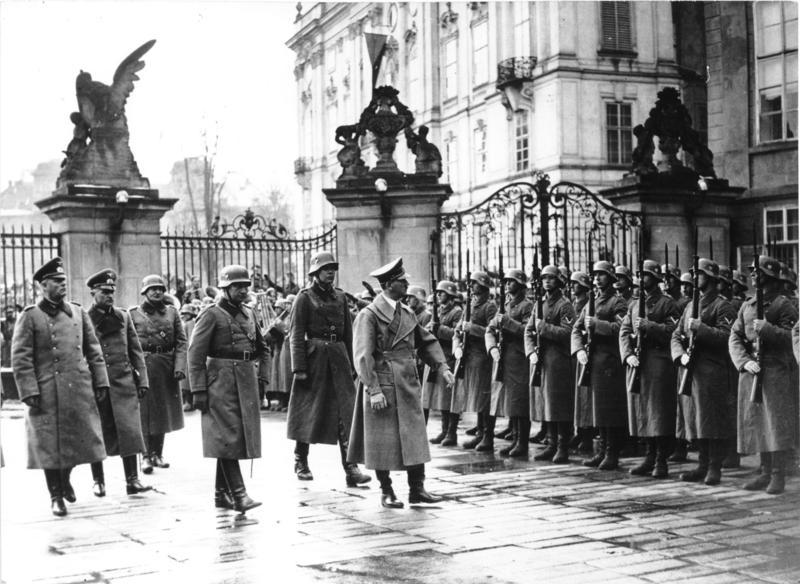
For Nazi Germany, this represented a massive material gain for its further global expansion.
By occupying Bohemia and Moravia, the Germans acquired the entire arsenal of the Czechoslovak Army, including hundreds of modern tanks, thousands of artillery pieces, and millions of rounds of ammunition [25].
These captured weapons subsequently constituted a significant portion of Germany’s arsenal at the outbreak of World War II and greatly aided the Wehrmacht in its invasion of France [25].
National Trauma
Contemporary society in the Czech Republic and Slovakia perceives the events associated with the year 1938 as a symbol of profound national humiliation. Many Czechs and Slovaks refer to this pact as the “Munich Dictate” or the “Munich Betrayal,” since the alliance with France proved to be completely useless [26].
The popular slogan of the time, “About us, without us!” still accurately sums up the feelings of the citizens of both nations toward the arrogance of the Western powers [26].
This historical event deeply traumatized society and permanently shaped its subsequent political stance.
Historians and eyewitnesses agree that the betrayal by the Allies and the subsequent surrender without a fight broke the spirit of both the Czechs and the Slovaks and later thrust them into the embrace of the totalitarian ideology of the Communist bloc [33].
In Slovakia, moreover, the Munich Betrayal is closely linked to the lingering trauma of the Vienna Arbitration and the painful loss of southern territories to Hungary [16].
From the perspective of German society and its politics, the reflection on the Munich Agreement has undergone a long and inevitable historical evolution.
In fact, the Federal Republic of Germany did not formally and explicitly recognize the invalidity of this occupation treaty until the Treaty on International Relations of 1973 [12,13,16].
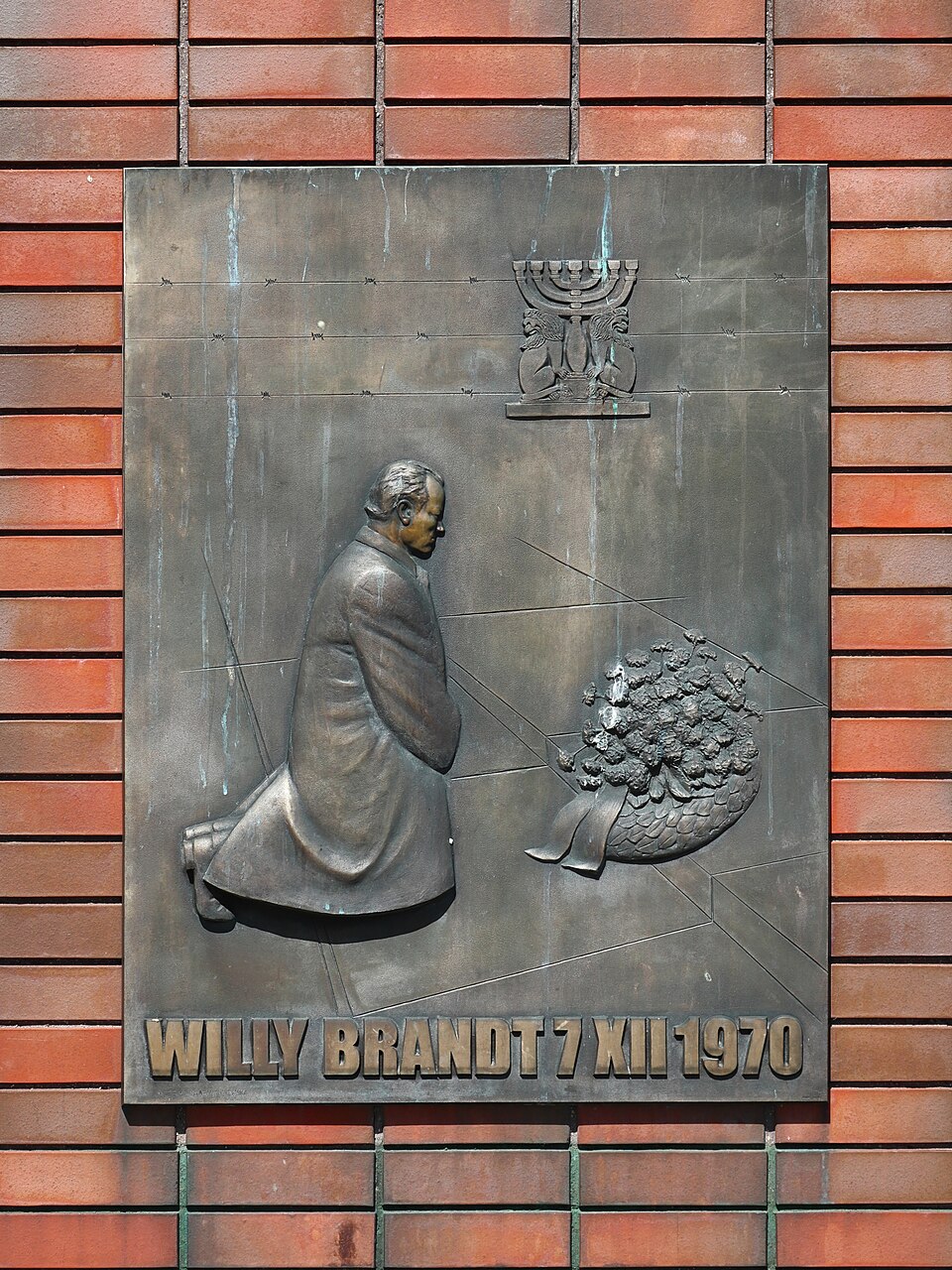
Under current international law, both the Munich Agreement and the Vienna Arbitration are considered invalid from the very beginning, as they were concluded unlawfully through the use of brute force [14].
A particularly interesting manifestation of the current good German-Czech relations was a recent symbolic gesture by German diplomacy.
After a long time, the German Foreign Ministry decided to lend the original Munich Agreement to the Czech Republic for an exhibition at the National Museum [10].
This diplomatic gesture—even though Berlin had previously feared damage to the rare document—underscores the current positive cooperation and reconciliation between the two countries [10].
The Lesson?
The historical message of the Munich Conference for today’s Western civilization is exceptionally clear and cautionary.
The key lesson for the future is the indisputable fact that war simply cannot be prevented by constantly yielding to an aggressor [2,17].
On the contrary, a short-sighted policy of concessions toward dictators has historically always led only to far greater global suffering and to the emboldening of totalitarian forces [16,17].
The word “Munich” has thus become, especially in the Anglo-Saxon world, a direct synonym for geopolitical naivety, weakness, and the utter futility of the policy of appeasement.
To this day, it signifies the cowardly sacrifice of a weaker nation’s vital interests in exchange for empty promises of peace from hostile regimes [27,29].
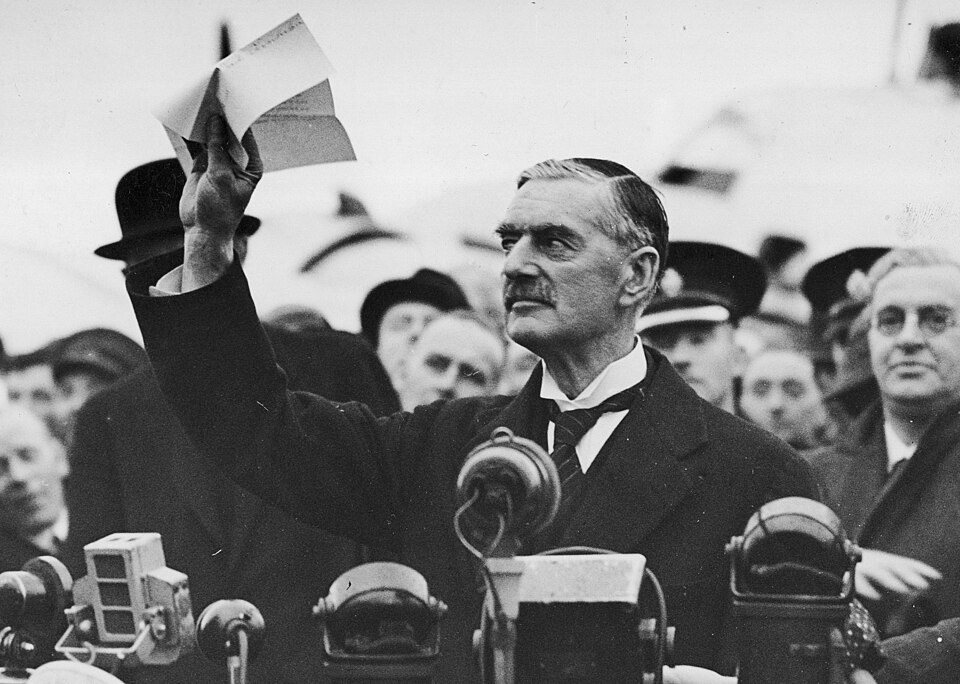
Politicians therefore often cite this event as a cautionary precedent when emphasizing the need for decisive action rather than futile negotiations in resolving global crises [28].
Ultimately, the Munich Agreement serves as a moral lesson for our civilization and a reminder of the tragic failure of the West at that time.
It reminds us that not even the smallest sovereign state must be left at the mercy of secret agreements among great powers that brazenly violate international law [20,32].
It thus remains a lasting point of reference when considering power, security, adherence to alliances, and the inviolability of borders in contemporary Europe [30].
List of References
[1] Lemberg, H. (1993). “Munich 1938” and the Long-Term Consequences for Czech-German Relations. In: The Shipwreck of Coexistence. Eds. J. K. Hoensch, D. Kováč. Prague, p. 236.
[2] From Autonomy to the Establishment of the Slovak State. http://www.history.sav.sk/eknihy/Valerian-Bystricky_Od-autonomie-k-vzniku-Slovenskeho-statu.pdf
[3] Dejmek, J. (1998). Kamil Krofta: A Historian at the Helm of Diplomacy. Prague, p. 321.
[4] Slovenský deník, September 29, 1938.
[5] LAFFAN, R.D.G. *Survey of International Affairs 1938*, Volume II: *The Crisis over Czechoslovakia: January to September 1938*. London, New York, Toronto: Oxford University Press, 1951, pp. 430–431.
[6] “The president sought to ensure that at least the most suitable representative of Czechoslovakia would be present in Munich… The options were Jan Masaryk or Ambassador Osuský. However, after bitter experiences with both British and French diplomacy—which had left them standing at the door—both refused to travel to Munich. Ultimately, it was decided that Ambassador Dr. Mastný would go there with Dr. Masaryk.” DRTINA, Prokop. Czechoslovakia, My Destiny. Melantrich: 1991, p. 1030.
[7] “Contrary to all international custom, we were greeted at the airport—amid the shouts of a hostile crowd chanting ‘The Czechs have arrived’ (‘Die Tschechen kommen’”—by the German police and the Gestapo alone and exclusively...A police officer informed us that he had orders to take us not to the conference venue—the Brown House—but only to the Regina Hotel, reserved for the English delegation... At the hotel, the police escorted us all the way to our rooms. Members of the police or the Gestapo then took their seats in front of our doors. We were, in effect, interned.” MASAŘÍK, Hubert. In the Transformations of Europe: Memoirs of a Czechoslovak Diplomat. Prague: Paseka, 2002, p. 241.
[8] GRONSKÝ, Ján. Annotated Documents on the Constitutional History of Czechoslovakia I. 1914–1945. Prague: Karolinum, 2005, p. 265.
[9] From the Anschluss to Munich https://svusav.sk/storage/uploads/publikacie/pdf/od-anslusu-po-mnichov.pdf
[10] Victory Without a Fight https://www1.pluska.sk/spravy/zo-zahranicia/vitazstvo-bez-boja
[11] September 30, 1938 – The Munich Agreement - Institute for the Memory of the Nation https://www.upn.gov.sk/sk/30-september-1938-%E2%80%93-mnichovska-dohoda
[12] Munich Agreement | Ťaháky-referáty.sk https://referaty.aktuality.sk/mnichovska-dohoda/referat-2732
[13] Munich Agreement - Wikipedia https://sk.wikipedia.org/wiki/Mn%C3%ADchovsk%C3%A1_dohoda
[14] Munich ’38: Betrayal Breeds Further Betrayal. Pravda.sk, September 30, 2018. Available online, accessed September 30, 2018.
[15] The Establishment of the Slovak State – Wikipedia https://sk.wikipedia.org/wiki/Vznik_Slovensk%C3%A9ho_%C5%A1t%C3%A1tu
[16] Soňa Valovičová: The Betrayal of Munich https://davdva.sk/sona-valovicova-mnichovska-zrada
[17] Today We Commemorate the 87th Anniversary of the Munich Agreement (September 29, 1938) - pribehy20storecia https://www.pribehy20storocia.sk/2025/09/29/today-we-commemorate-the-87th-anniversary-of-the-Munich-Agreement-September-29-1938
[18] REVIEW https://www.vhu.sk/data/att/ed3/20176.129672.pdf
[19] Munich 1938 and Its Two Contemporary Forms | Logos | Milost.sk https://www.milost.sk/logos/clanok/mnichov-1938-a-jeho-dve-sucasne-podoby
[20] Southern Slovakia after the Vienna Arbitration, 1938–1945 https://www.upn.gov.sk/publikacie_web/zbornik-juh-slovenska-po-viedenskej-arbitrazi.pdf
[21] The Pontificate of Pius XII and the Vatican Archives VI – The Years 1939–1945, The Slovak State and the Slovak Republic – Prometheus Society https://prometheus.sk/pontifikat-pia-xii-a-archivy-vatikanu-iv-roky-1939-1945-slovensky-stat-a-slovenska-republika
[22] The Prologue to War – 1939 https://referaty.aktuality.sk/vojnovy-prolog-1939/referat-30362
[23] Jesenský, Marcel (2014). The Slovak–Polish Border, 1918–1947. Palgrave Macmillan. ISBN 9781137449641. pp. 88–89.
[24] Kafkadesk Prague (March 14, 2021). "On this Day, in 1939: Slovakia declared its independence to side with Nazi Germany – Kafkadesk." kafkadesk.org. Retrieved October 4, 2021.
[25] Motl, Stanislav (2007). Where Did the Republic’s Golden Treasure Disappear To? (in Czech) (2nd ed.). Prague: Rybka Publishers.
[26] “Czech Republic: Past Imperfect – 64 Years Later, Munich ‘Betrayal’ Still Defines Thought (Part 5)”. Radio Free Europe/Radio Liberty. July 19, 2002.
[27] "Munich Agreement"
[28] Yuen Foong Khong (1992). *Analogies at War: Korea, Munich, Dien Bien Phu, and the Vietnam Decisions of 1965*. Princeton UP. pp. 4–7. ISBN 0691025355.
[29] Logevall, Fredrik; Osgood, Kenneth Alan (2010). "The Ghost of Munich: America's Appeasement Complex". *World Affairs*. 173 (2): 13–26. ISSN 1940-1582. Wikidata Q125208142.
[30] The Munich Agreement without Czechoslovakia’s Participation (1938) — SwingPuzzles https://swingpuzzles.com/sk/days/sk/20260929
[31] Autonomy '38: Further from Prague, Closer to Berlin - Unknown History - News - pravda.sk https://www.pravda.sk/news/unknown-history/article/486901-autonomy-38-further-from-prague-closer-to-berlin
[32] The Munich Agreement:... - History Essay https://lumila.sk/dejepisna-slohova-praca/stredne-skoly/419330/mnichovska-dohoda-kuueovy-moment-a-jeho-dopad-na-d
[33] Exhibition panels from the 1938 exhibition “The Munich Betrayal” https://www.ustrcr.cz/data/pdf/vystavy/panely-mnichov38.pdf