Havel to the Castle!
We commemorate what would have been Václav Havel’s 90th birthday; he was born on October 5, 1936, in Prague.
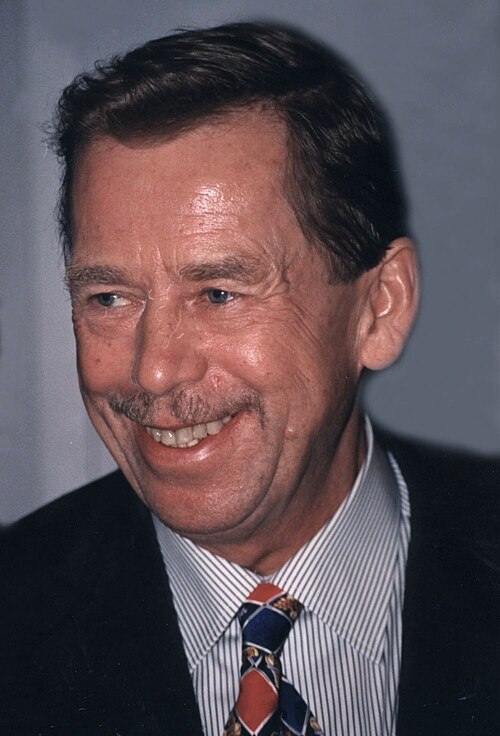
He came from a prominent family of businesspeople and intellectuals that was closely connected to Czech cultural and political life [10,11,19].
An Influential and Wealthy Family
His maternal grandfather was a respected diplomat, and his paternal grandfather, the well-known occultist Václav Havel, built the famous Lucerna Palace in Prague [10,13].
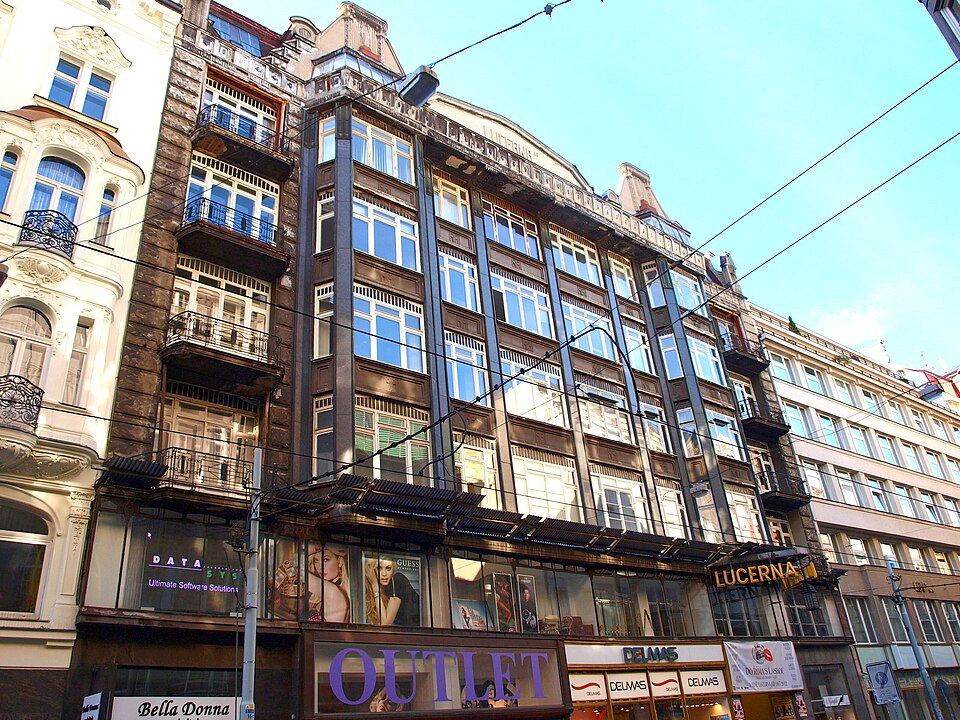
Furthermore, his influential uncle Miloš founded the famous Barrandov Film Studios [6,10,11]. However, this boy’s carefree childhood came to an abrupt end after the Communists came to power in 1948 [20].
Youth
The Communists confiscated the family’s property, and because of his “bourgeois” background, young Václav was unable to pursue higher education in the humanities [2,11,20]. The regime labeled him a class enemy, and as a result, he was forced to train only as a chemical laboratory technician [2,10,20].
While working in a factory, he diligently attended night school and successfully graduated from high school in 1954 [10,19,20].
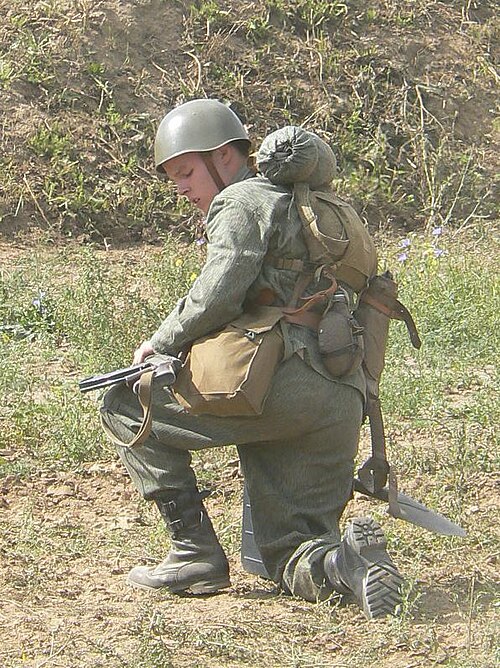
Since the admissions committee repeatedly rejected his applications to the film academy of his dreams, he began studying at the Faculty of Economics at the Czech Technical University in Prague [2,10,19]. However, this technical program did not fulfill him, and after two years he voluntarily withdrew [19,23]. Later, from 1957 to 1959, he completed his basic military service [11].
Success in the Theater
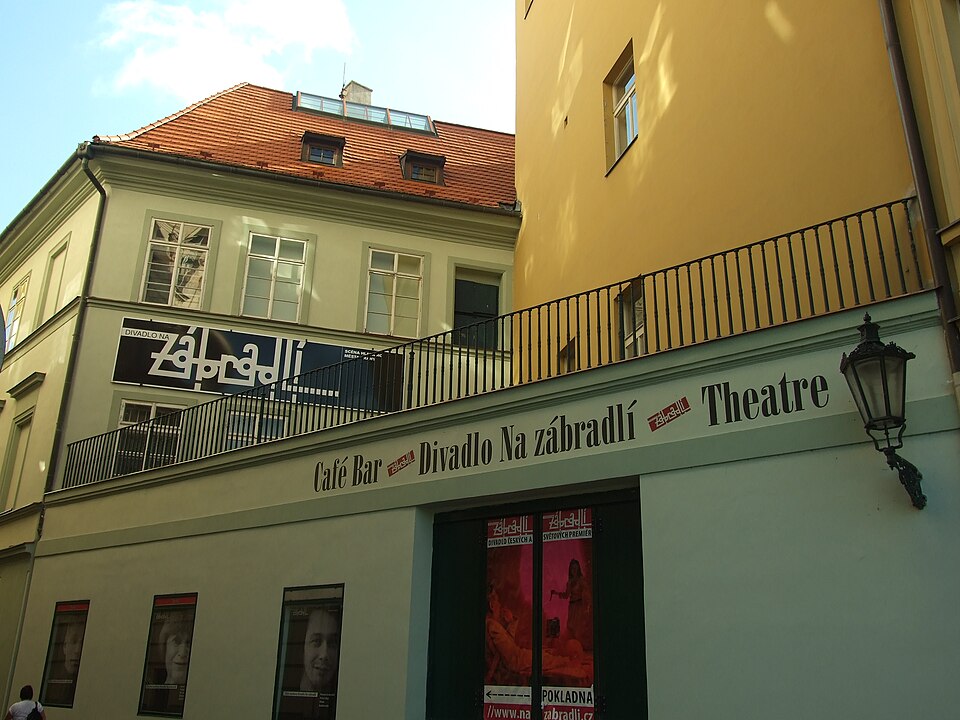
After his military service, he began working as a stage technician, first at the ABC Theater and then, starting in 1960, at the Na zábradlí Theater in Prague [2,11,19].
During the more liberal 1960s, he managed to earn a degree in dramaturgy from DAMU through distance learning while working [2,10,11]. He thus rose relatively quickly from technician to assistant director, dramaturg, and later to an acclaimed playwright [2,19].
From the age of twenty, he actively contributed to several literary magazines and became a leading figure in the theater of the absurd [2,10,11]. His first major play, titled *Zahradní slavnost* (*The Garden Party*), had a successful premiere in 1963 [10,19,23].
For him, theater and politics were never far apart, as he used language as a deliberate tool to expose the mechanisms of political manipulation [20].
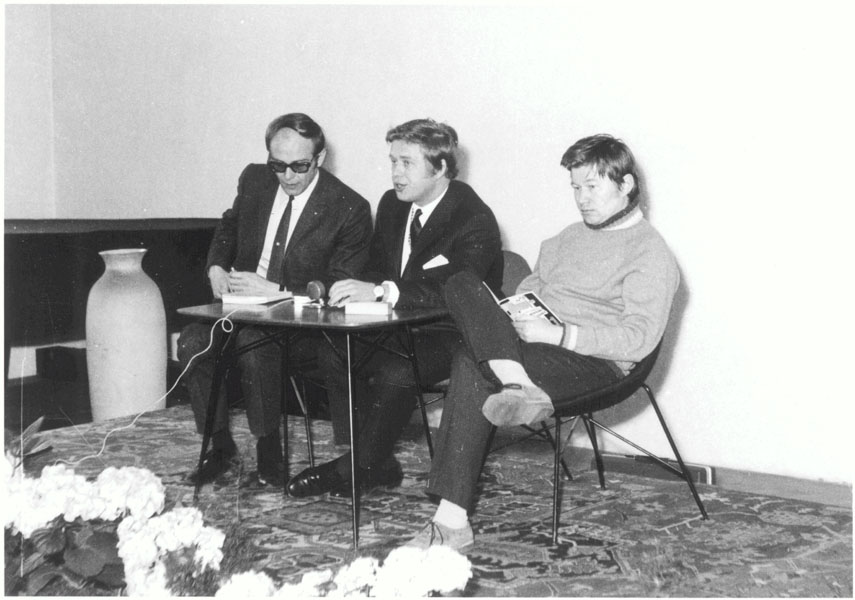
As a gifted playwright, he was deeply influenced by the works of world-renowned authors such as Samuel Beckett and Eugène Ionesco [20]. Numerous international awards brought him global recognition abroad, but at home he faced a completely different reality [10,19].
The better his reputation among the intelligentsia, the more he attracted the attention of the censors, until the regime finally banned his work in 1971 [20].
The Pursuit of a Life of Truth Is Punished
Havel’s strong political commitment was already fully evident during the Prague Spring of 1968, when he was active in the Club of Committed Non-Party Members [2,11]. After the shameful invasion by Warsaw Pact troops, he courageously sided with the resistance and refused to flee the country [2,20].
The emerging normalization regime immediately barred him from working in the theater, so in 1974 he took a job as a laborer at the Trutnov brewery [2,11].
It was precisely the harsh environment of the brewery that inspired him to write the famous play *Audiencia*, in which his peer, actor, and good friend Pavel Landovský shone alongside him [2].
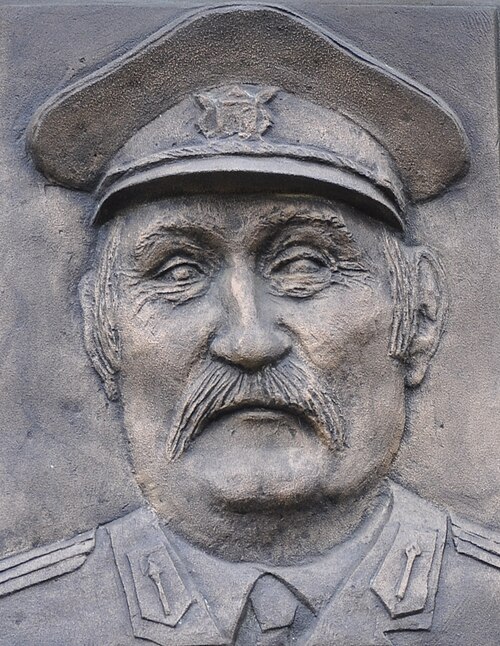
In 1975, he broke his silence and wrote an open letter to President Gustáv Husák, in which he sharply criticized the lack of democracy in “normalized” society [2,10,19].
Charter 77
His dissident resistance activities then culminated in early 1977 with the public release of Charter 77 [10,11,19].
Václav Havel was one of the founders of this influential civic initiative and, together with the philosopher Jan Patočka and Jiří Hájek, served as its first spokesperson [10,11,20].
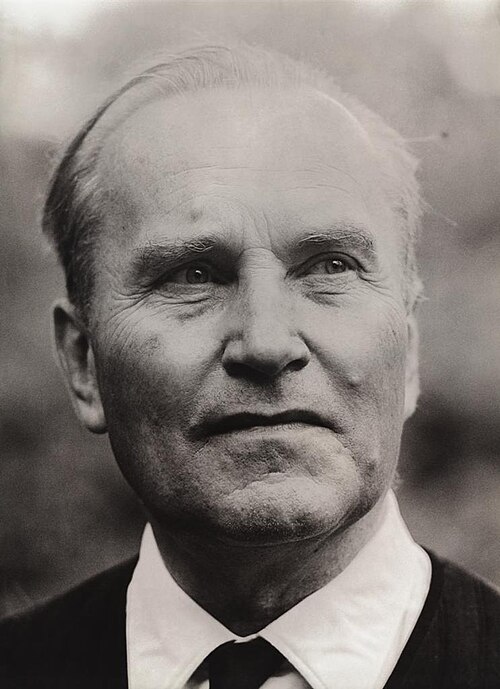
He tirelessly advocated for the observance of human rights, and in April 1978 he co-founded the Committee for the Defense of the Unjustly Prosecuted [10,19,21]. The regime retaliated against him for this audacity with brutal persecution and a series of politically motivated arrests [2,10,20].
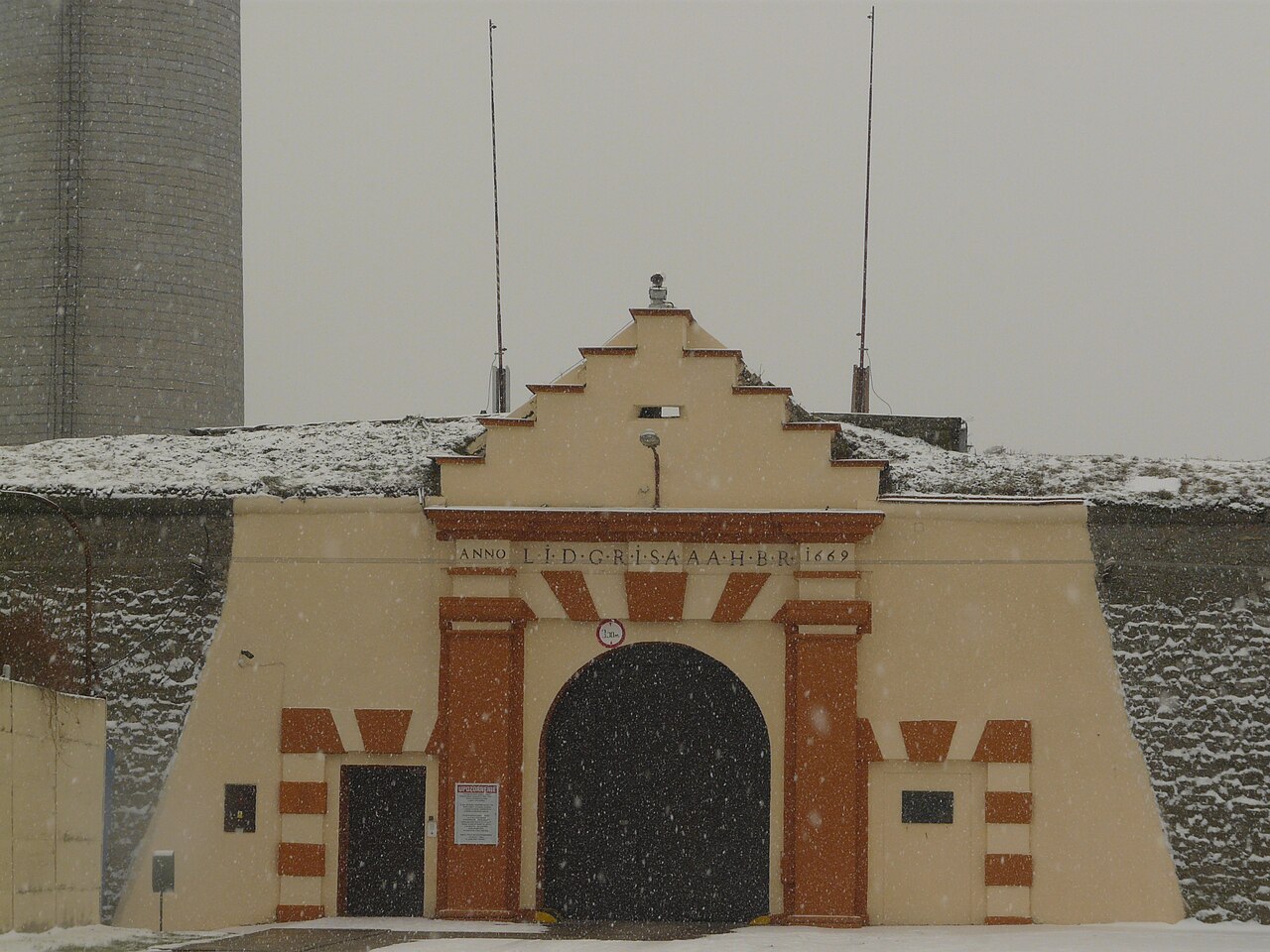
During the “normalization” period, he was imprisoned a total of three times for political reasons and spent nearly five years behind bars [2,19,23].
His long stay in poor conditions and untreated bouts of pneumonia permanently undermined his health [10,19]. At the same time, however, an extraordinary international wave of solidarity incredibly boosted his prestige among both the domestic and global public [10].
The revolution calls for “Havel to the Castle!”
In the pivotal month of November 1989, the dissident Havel took a leading role in the Velvet Revolution and became a co-founder of the Civic Forum [8,10,11].
His impassioned speeches from the balcony of the Melantrich publishing house on Wenceslas Square drew huge crowds and reawakened a long-forgotten hope among the people [2,10,20].
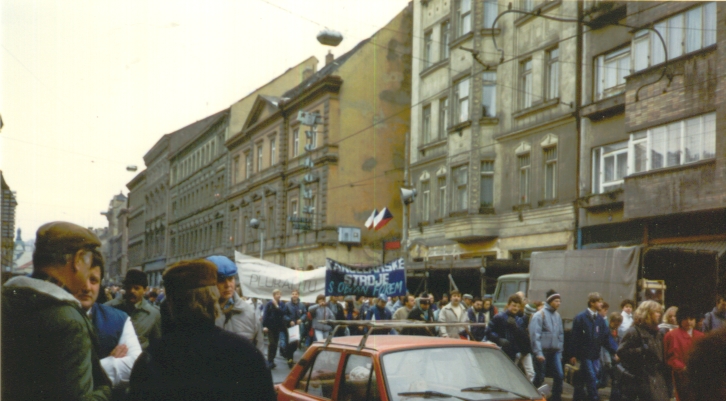
He quickly transformed from a fledgling intellectual into a courageous politician who began to confidently express his desire to run for the office of president [3].
In late December 1989, the still-Communist Federal Assembly unanimously elected him as the first non-Communist president of Czechoslovakia [11,25].
The then-Communist Prime Minister Marián Čalfa played a pivotal role in this historic step, successfully persuading the deputies to support Havel’s candidacy [2,3].
In return, a political agreement was reached that Alexander Dubček, the hero of the Prague Spring, would become the speaker of parliament [3].
In his famous inaugural address, he promised to lead the country to free elections, a promise he indeed fulfilled in the spring of 1990 [19]. As head of state, he wanted to preserve the federation of the two nations, but during his term, insurmountable constitutional disputes grew between Czech and Slovak politicians [11,23]. After the 1992 elections, Slovak members of parliament refused to re-elect him as president in protest [9,11,12].
In July 1992, the Slovak National Council adopted the Declaration on the Sovereignty of Slovakia [9,24]. Václav Havel responded by resigning prematurely on July 20, 1992, as he was no longer able to prevent the peaceful dissolution of the joint state [11,12,24]. In his resignation speech, he stated that he did not wish to be an obstacle to historical progress or a mere official serving out his term [12,26].
The Women Who Shaped His Life
Throughout this turbulent life full of trials, he was accompanied by his first wife, Olga Šplíchalová [11,18]. The couple met in 1953 at the Slavia café and were married at the Žižkov Town Hall in 1964 [10,13]. She stood by his side during his persecution, imprisonment, and the fall of the regime, and he dedicated his famous *Letters to Olga* to her from his prison cell [7,18].
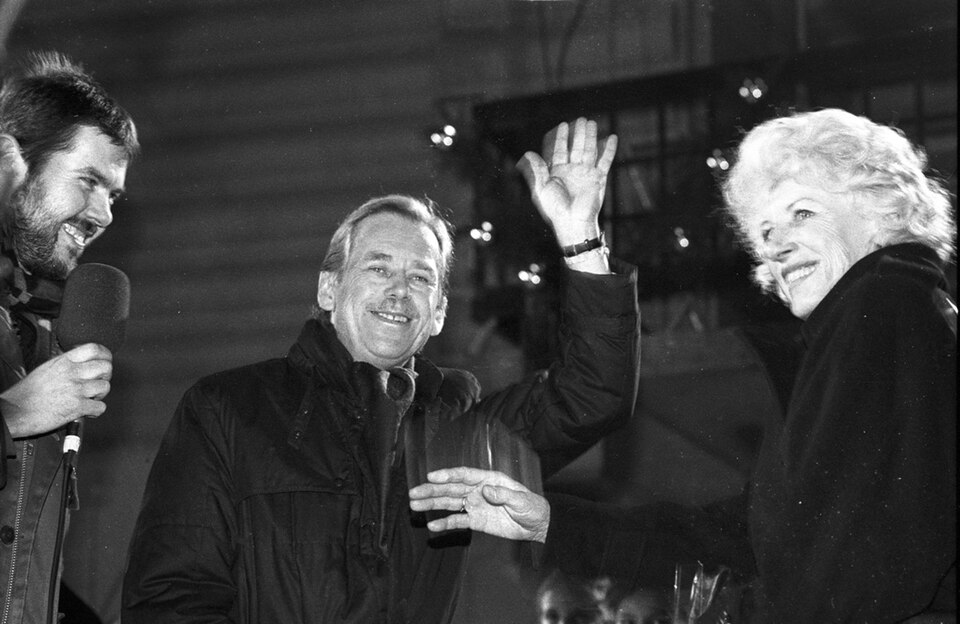
Although she became the respected “first lady” of the dissident movement and later of the Prague Castle, she never sought fame and devoted herself primarily to charitable work [11,14,18]. They were married for more than thirty years, until Olga tragically succumbed to a serious cancer in January 1996 [10,13,19].
After losing this lifelong pillar of support, Havel surprisingly married actress Dagmar Veškrnová in early 1997 [10,13,18].
His second wife, Dagmar, devotedly cared for him during his most difficult moments, when he himself was battling cancer and other critical health complications [2,10,14].
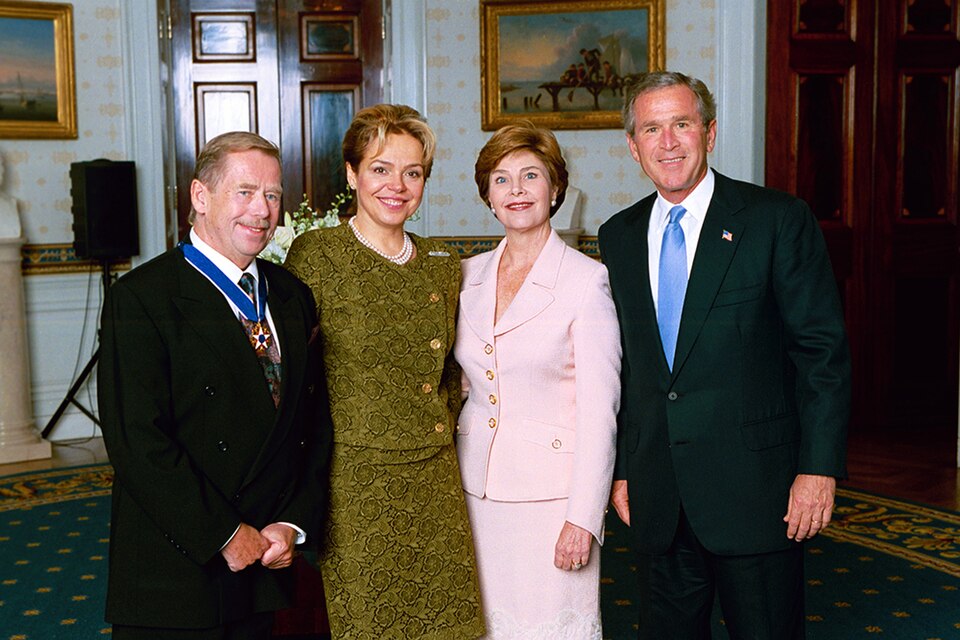
Despite his strong marital bond, however, Havel had a lifelong passion and an unrelenting weakness for other women [13]. As psychologist Ivan Douda noted, although he did not physically resemble a typical cowboy, he evoked in women an instinctive need to protect him, thereby creating an almost paradoxical erotic appeal [13].
Strengths and Controversies
This weakness of his had previously manifested itself in the fact that his marriage to Olga nearly fell apart due to an affair with the ex-wife of his friend Pavel Kohout [13].
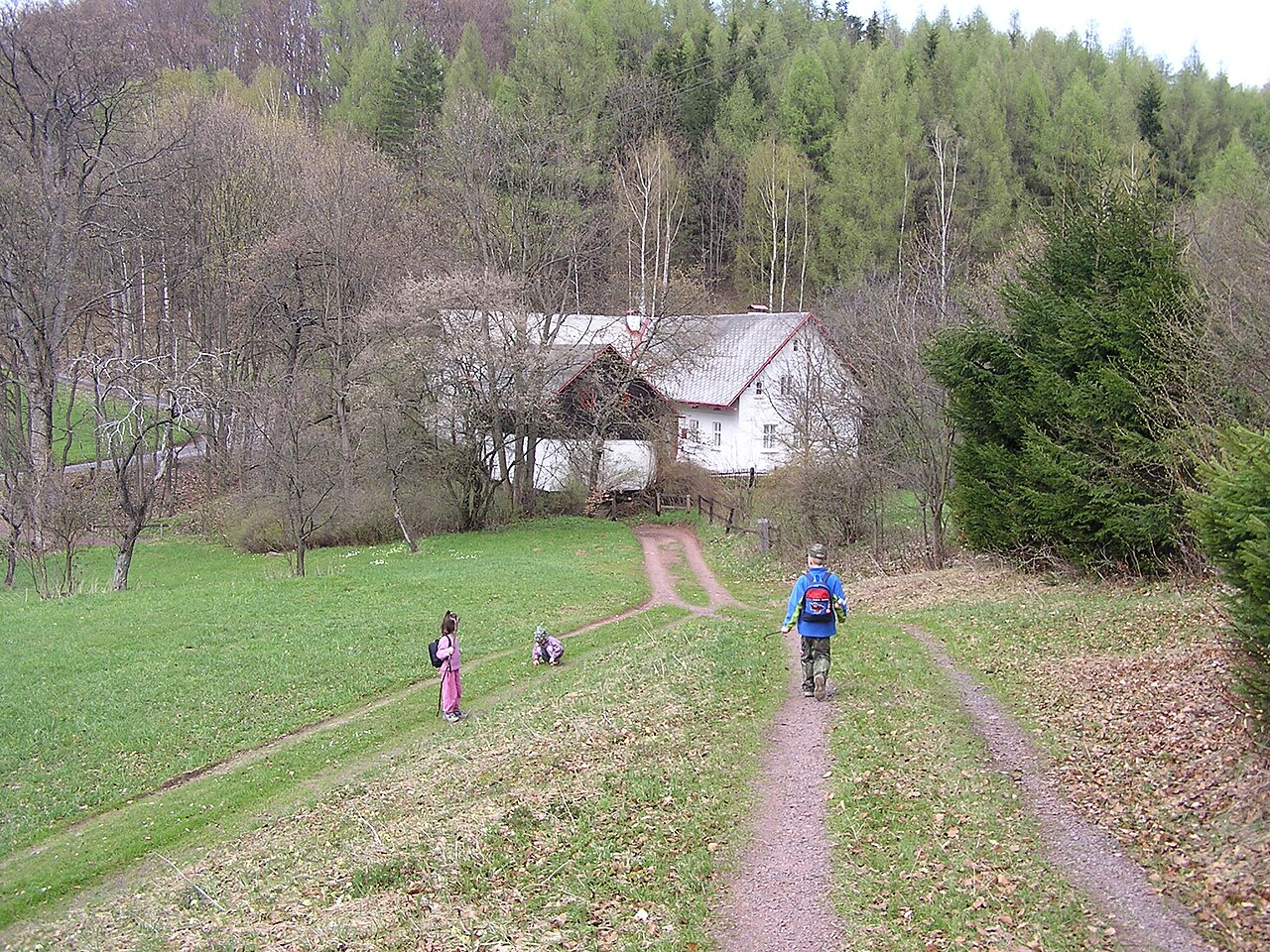
The celebration of his 75th birthday was later marred by another scandal when the writer Irena Obermannová published a book and publicly claimed that they had had a secret affair [5]. Toward the end of his life, he tried to atone for these sins inwardly and spent the moments leading up to his big birthday celebration alone, examining his conscience at his beloved cottage in Hrádeček [5].
Heavy smoking contributed to his lung problems, and it was no secret that the last president was also a fan of alcoholic beverages of all kinds, though this was simply part of the bohemian milieu in which he moved.
In addition to women, he liked to surround himself in his free time with intellectuals and artists from around the world.
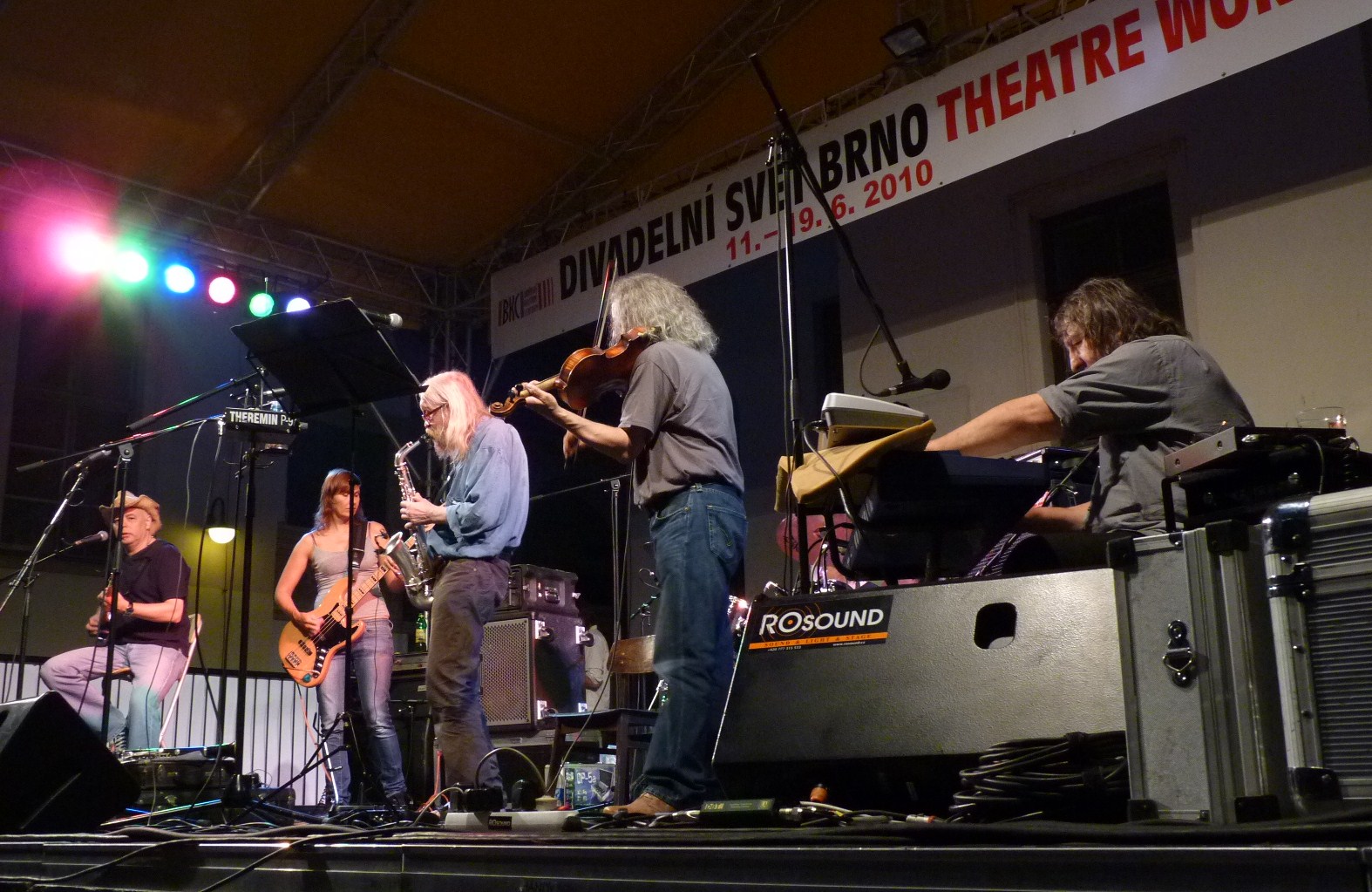
Among his closest friends over the years were actor Pavel Landovský, musicians from the underground band The Plastic People of the Universe, as well as billionaire Zdeněk Bakala and architect Bořek Šípek [2,5,10,20].
On the international stage, he maintained close ties with the Dalai Lama and U.S. Secretary of State Madeleine Albright, a native of Prague [2,5].
Among his greatest civic virtues was undoubtedly his courage to defend human rights at a time when they were being systematically suppressed [1].
He considered collaboration with totalitarianism to be utterly repugnant and firmly believed that hope is always stronger than any wall [1]. Thanks to his visionary leadership and immense respect, he served as the republic’s finest positive ambassador in the democratic world [1,2].
During his time in politics, he clearly steered Czechoslovakia—and later the Czech Republic—from the Eastern Bloc toward the modern West [2,10].
He played a significant role in the dissolution of the Warsaw Pact and contributed greatly to the Czech Republic’s pivotal accession to NATO and the European Union [10]. For many European statesmen, he was a shining symbol of perseverance, unity, and the ultimate victory of democracy [20].
Despite worldwide admiration, however, he was not without flaws and faced a justified wave of criticism for many controversial political decisions [2,11]. One of his most controversial moves was the sweeping amnesty in 1990, which released even perpetrators of serious crimes, leading to a riot in Leopoldov and a sharp rise in crime [10,11].
Opponents also harshly criticized the many individual presidential pardons he granted—nearly 2,000 in total—some of which directly interfered with the trials of his acquaintances [10,11].
His domestic popularity was also temporarily diminished by his unexpectedly hasty marriage to actress Dagmar Veškrnová following the death of his first wife [11].
Furthermore, political opponents led by Václav Klaus accused him of excessive interference in day-to-day government policy, backroom deals, and covert support for parties aligned with the president’s office [10,11,22]. He showed a certain departure from his pacifist ideals when, as a loyal ally of the U.S., he openly supported the military bombing of Yugoslavia and the subsequent invasion of Iraq [2,10,11].
Czech Republic versus Slovakia
It is interesting to note that perceptions of Havel’s personality in the Czech Republic and Slovakia have differed since the very first days of the revolution. When a new president was being considered in late 1989, he himself admitted his concern that the Slovaks would likely not support him, because they more regarded as their hero Alexander Dubček [3].
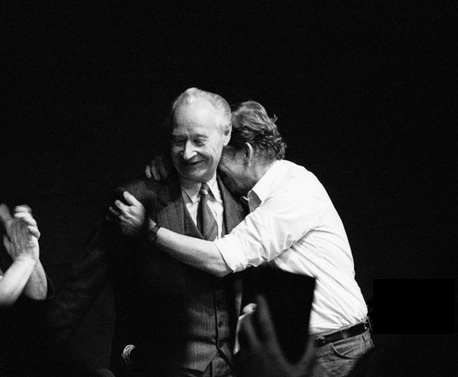
Later, many in Slovakia unjustly held the breakup of the federation against him, even though he personally had always been in favor of preserving the unified state [4,23].
However, critical voices in Slovakia also came from well-known figures in post-November politics. Longtime Prime Minister Robert Fico, for example, publicly and falsely accused him of deliberately destroying and dismantling the Slovak arms industry [17]. Ján Budaj, a well-known leader of the revolution, in turn, criticized him for his close cooperation with the communists and behind-the-scenes power deals just before the free elections [16].
While his aura in domestic politics gradually waned over time and part of the public viewed him with extreme ambivalence, his immense reputation abroad remained intact [11,15]. As U.S. diplomat Madeleine Albright aptly put it, thanks to him, the words “Czech” and “Havel” mean exactly the same thing in the free world [15]. It is no exaggeration to say that, unfortunately, independent Slovakia has never had a president of Havel’s stature, and even in the Czech Republic, none of his successors has yet come close to him.
Even fifteen years after his death on December 18, 2011, Václav Havel remains forever an inspirational statesman who proved to the world that truth and love must triumph over lies and hatred [2,21].
List of References
[1] Česko dalo Václavovi Havlovi posledné zbohom - SITA.sk https://sita.sk/cesko-dalo-vaclavovi-havlovi-posledne-zbohom
[2] Z disidenta prezidentem. Před 10 lety zemřel Václav Havel - Novinky https://www.novinky.cz/clanek/historie-z-disidenta-prezidentem-pred-10-lety-zemrel-vaclav-havel-40381520
[3] Komentár: Ako sa z Václava Havla stal prezident https://www.aktuality.sk/clanok/266490/komentar-ako-sa-z-vaclava-havla-stal-prezident
[4] Spomienky tých, čo boli pri delení Česko-Slovenska https://hnonline.sk/style/vikend/436821-spomienky-tych-co-boli-pri-deleni-cesko-slovenska
[5] Takto oslavoval Václav Havel okrúhle narodeniny (foto) https://hnonline.sk/svet/493574-takto-oslavoval-vaclav-havel-okruhle-narodeniny-foto
[6] https://cs.wikipedia.org/wiki/Milo%C5%A1_Havel
[7] https://cs.wikipedia.org/wiki/Olga_Havlov%C3%A1
[8] https://www.britannica.com/event/Velvet_Revolution
[9] Česko-Slovensko sa rozpadlo pred 15 rokmi https://www.sme.sk/domov/c/cesko-slovensko-sa-rozpadlo-pred-15-rokmi
[10] Václav Havel – Wikipedie https://cs.wikipedia.org/wiki/V%C3%A1clav_Havel
[11] Václav Havel (1936 – 2011) https://www.zones.sk/studentske-prace/dejepis/13416-vaclav-havel-1936-2011
[12] Poslední československý prezident - ČT edu - Česká televize https://edu.ceskatelevize.cz/namet/vaclav-havel-rozdeleni-csr
[13] Osudové ženy Václava Havla: Jediná milenka otriasla jeho manželstvom, ďalšia odmietla život v trojici! | Koktejl.sk https://koktejl.azet.sk/clanok/PgH2E4r/osudove-zeny-vaclava-havla-jedina-milenka-otriasla-jeho-manzelstvom-dalsia-odmietla-zivot-v-trojici
[14] Ivan Medek (stránka neexistuje)
[15] Václav Havel: Politická tragédie v šesti dějstvích
[16] Ján Budaj
[17] Robert Fico
[18] Manželka ... Dobré ránko – citáty, príbehy, fotografie https://www.dobreranko.sk/manzelka-7
[19] FOTO: Pred troma rokmi zomrel Václav Havel, symbol nežnej revolúcie https://www.teraz.sk/magazin/pred-troma-rokmi-zomrel-vaclav-havel/111158-clanok.html
[20] vaclav-havel-bench-jean-monnet-house_sk.pdf https://historicalarchives.europarl.europa.eu/files/live/sites/historicalarchive/files/Havel_documents/vaclav-havel-bench-jean-monnet-house_sk.pdf
[21] Václav Havel - Cena Slobody Antona Srholca https://cenaantonasrholca.sk/laureati/vaclav-havel
[22] Patočka, Jakub: Václav Havel byl součástí odvěkého lidského snažení o lepší svět. In: http://www.jetotak.sk/editorial/vaclav-havel-byl-soucasti-odvkeho-lidskeho-snazeni-o-lepsi-svt
[23] Václav Havel - Prague Castle https://www.hrad.cz/en/president-of-the-cr/former-presidents/vaclav-havel
[24] Václav Havel komentuje výsledky voleb r. 1992 - ČT edu - Česká televize https://edu.ceskatelevize.cz/video/467-vaclav-havel-komentuje-vysledky-voleb-r-1992
[25] Od Nežnej revolúcie uplynie 36 rokov. Spustil ju násilný zásah proti študentom, priniesla demokraciu a slobodu https://www.aktuality.sk/clanok/ayFXA00/brutalny-zasah-na-studentskej-demonstracii-odstartoval-neznu-revoluciu-zasluzila-sa-o-pad-komunizmu-v-ceskoslovensku