
Will we be able to unclog one of the arteries of the global economy?
Recently, the world has been watching with concern the developments in the Bab el-Mandeb Strait, which is a key artery for global trade and oil transportation.
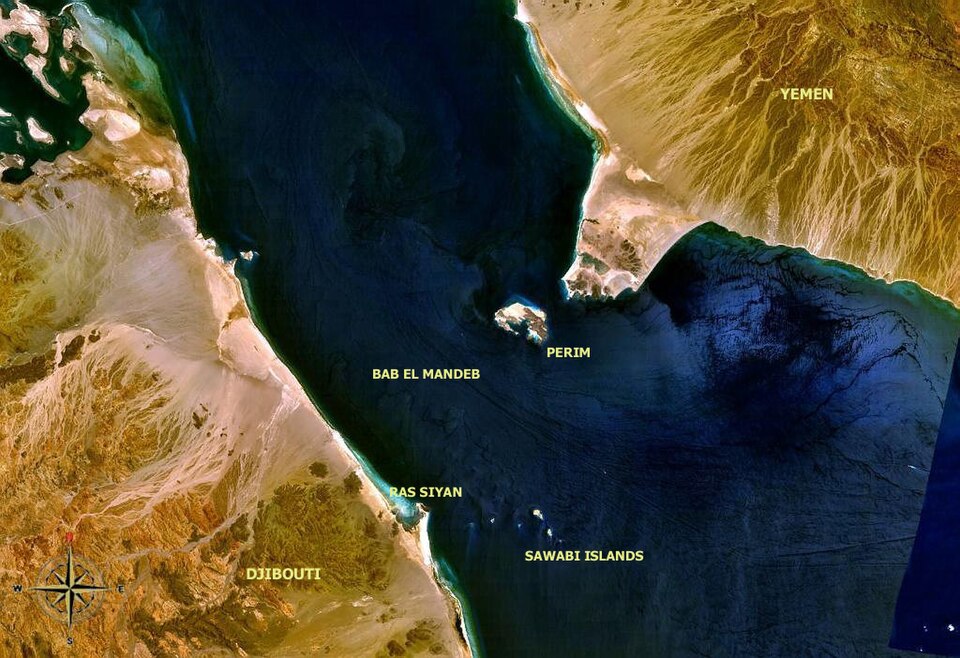
Behind the disruption of this important maritime route is a Yemeni rebel group known as the Houthis, which is attacking commercial vessels with unexpected force. These events once again threaten to drive energy prices to dizzying heights and raise logical questions about who these militants actually are [16].
Radicals
The Houthi movement, also officially known as Ansar Allah, emerged in the 1990s in the mountainous province of Saada in northwestern Yemen [2].

It was a political-religious group rooted in the Zaidi branch of Shia Islam, which had continuously dominated the region for centuries [3]. The movement’s members were driven primarily by deep frustration over the loss of their historical right to rule following the fall of the Zaidi imamate and by a desire to actively combat state corruption [2].
This local group was formed by the charismatic politician and cleric Hussein Badr al-Din al-Husi with the aim of reviving Zaidi traditions and countering the growing influence of foreign ideologies [15].
He was responding primarily to the activities of state-funded Salafist preachers, who were building a strong base in Zaidi areas with the tacit support of neighboring Saudi Arabia [15].
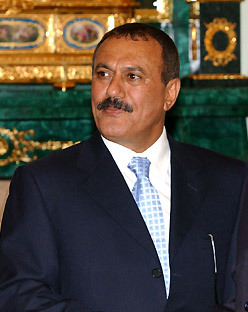
At the same time, he sharply criticized the then-Yemeni President Ali Abdullah Saleh for his alliance with the United States and Israel [15].
The movement’s definitive radicalization was accelerated by the U.S. invasion of Iraq in 2003, which sparked a wave of anti-Western sentiment across the entire Arab world [19].
In direct response, the Houthis began chanting en masse their well-known slogan calling for “Death to America, Death to Israel, and Victory for Islam” [24].
When President Saleh cut off government funding and later attempted to arrest Hussein al-Houthi, an open and bloody uprising broke out in 2004 [15].
An Alliance of Arch-Enemies
Although Hussein was killed by Yemeni security forces shortly after the fighting began, his followers did not give up, and the movement permanently adopted his name [15].
Under the leadership of a new commander, the Houthis launched six wars against government forces, which lasted until 2010 and honed their tactical and military capabilities [2]. What began as a small regional uprising thus gradually evolved into a massive military resistance movement against the unpopular central government [15].
The real turning point, however, came after the events of the Arab Spring in 2011, which toppled the long-time autocrat Saleh and completely destabilized the entire country.
The Houthis masterfully exploited the political vacuum and, in the fall of 2014, rapidly seized the capital, Sana’a [5]. They forced the new president, Hadi, into exile and confidently declared themselves the legitimate government of Yemen [25].

An interesting historical paradox of this campaign was that, in seizing power, the rebels pragmatically allied themselves with their arch-enemy, former President Saleh.
However, their uneasy alliance ended very bloodily in 2017, when the Houthis mercilessly murdered Saleh after he expressed a willingness to negotiate with Saudi Arabia [22].
Although the rebels currently control only about one-third of Yemeni territory, as much as 70 to 80 percent of the country’s total population lives there [6].
The Iranian Connection
The rebels’ success would be absolutely unthinkable without massive support from abroad, with Iran serving as their primary and most important patron from the very beginning.
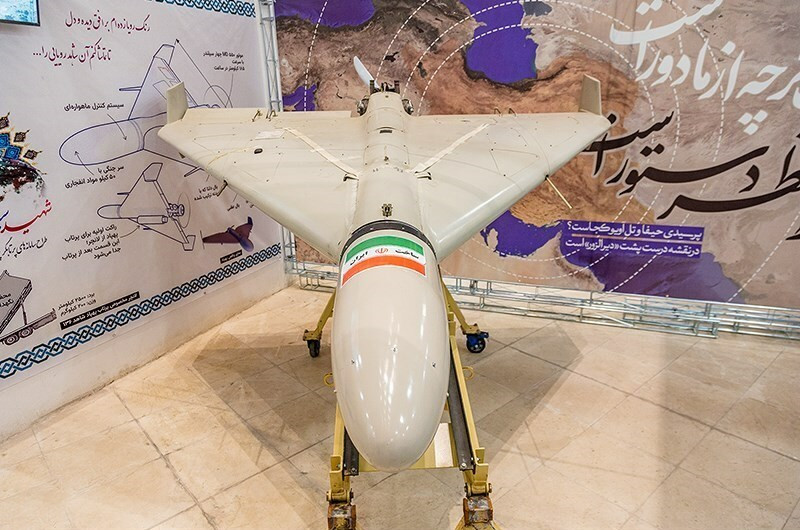
The Iranian Revolutionary Guard not only provides them with diplomatic cover and funding but, above all, an advanced arsenal that includes ballistic missiles and explosive drones [19].

Valuable assistance also comes from the Lebanese Hezbollah movement, whose elite commanders reportedly operate directly in Yemen as military advisers and help plan complex attacks [8].
In addition to support from Iran, the Houthis also acquire specialized equipment through extremely complex supply networks and the black market.
In an effort to diversify their sources and circumvent sanctions, they are even seeking components and technical assistance from powers such as China and Russia [9].
Furthermore, analysts point out the shocking fact that, paradoxically, certain factions of the Yemeni Sunni Islah Party have also begun quietly supplying them with some material aid in the form of weapons [1].
The Coalition
The Houthis face an immensely powerful coalition on both the domestic and international fronts, composed of neighboring states and various domestic factions. In 2015, Saudi Arabia entered the conflict with direct support from the United Arab Emirates and the United States, with the aim of restoring President Hadi to power in Sana’a—an effort that ultimately failed [4].
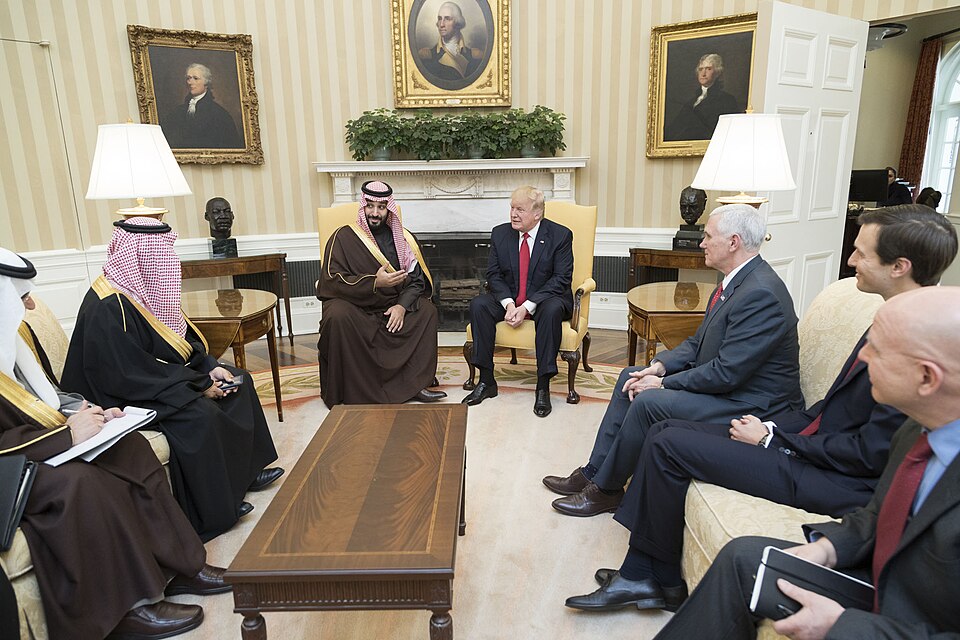
Saudi Arabia was extremely concerned about the constant shelling of its border and sought to decisively eliminate Iranian influence in its own backyard through a swift military campaign [23].
On the ground, in addition to Yemeni government forces fighting the rebels, the Southern Transitional Council (STC) was formed, which receives military and financial support from the Emirates [26].
Although serious political disagreements often arise among the coalition allies, their common military goal remains the expulsion of the Houthis from key areas [25].
Furthermore, the Houthis are engaged in a bloody struggle against Sunni extremists from al-Qaeda and the Islamic State, who carry out devastating suicide attacks against them, targeting both civilian and military sites [15].
Humanitarian Crisis
In the course of the ongoing civil war, Yemen has become the scene of one of the most horrific and complex humanitarian crises in modern history.
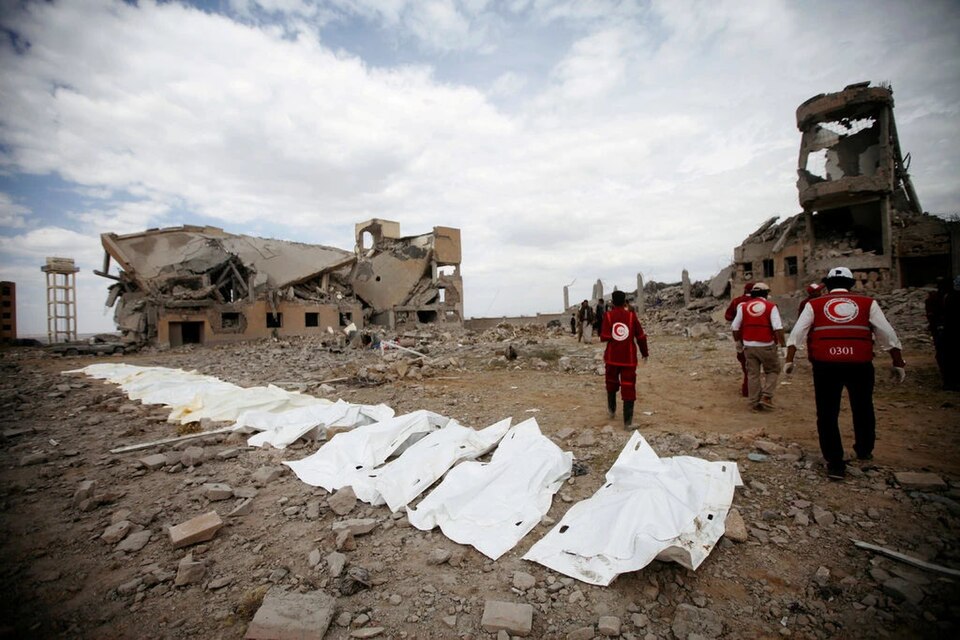
Years of fighting, strict naval blockades, and extensive airstrikes have led to mass starvation, the destruction of civilian infrastructure, and the mining of vast areas [7]. Although a fragile UN-brokered ceasefire finally took hold in 2022, this peace process continues to be overshadowed by the threat of further missile attacks by the rebels [15].
The rebels once again drew massive international attention toward the end of 2023, when they shifted their combat operations directly to the waters of the Red Sea.
They began firing drones and missiles at ships passing through the strategic Bab el-Mandeb Strait, claiming that this was an act of support for the Palestinians in the Gaza Strip [26].
The Houthis confidently announced that they would not allow any vessels associated with Israel to pass through until the military aggression in the Palestinian enclaves ended [19].
Blackmail Through a Blockade
Behind the lofty facade of Arab and Islamic solidarity, however, lie highly calculated strategic and domestic political objectives.
The naval attacks have helped the Houthis rapidly increase their domestic and regional popularity, thereby skillfully diverting the population’s attention from their own inability to govern and properly pay government salaries [20].
They also serve as an extremely effective lever in secret negotiations with Saudi Arabia, from which the rebels seek to secure significant economic concessions and official political recognition [14].

Nor should one underestimate the extremely lucrative financial motive behind this well-planned and dangerous naval blockade. The money that the Houthis unofficially collect from shipping companies—under threat of force—in exchange for safe passage reportedly amounts to hundreds of millions of dollars [10].
According to estimates, this new flow of money could double their annual government revenue, representing a vital infusion for a regime devastated by a long war [11].
The Strait of Hormuz Was Not Enough
However, the blockade of the Bab el-Mandeb Strait is ruthlessly choking the global economy and causing justified panic in international oil markets.
The volume of commercial traffic in this area has plummeted, and rerouting massive ships around the African continent is delaying deliveries by weeks [13].
Shipping companies are thus facing enormous additional costs for fuel and war risk insurance, which the average consumer will ultimately pay for through increased inflation [17].
Energy analysts are openly warning that a prolonged Houthi blockade could soon trigger a massive shock to global oil supplies and the continuity of oil deliveries.
If access to oil via the Red Sea were to remain restricted, prices for “black gold” could, according to forecasts, skyrocket to between $115 and $120 per barrel [18]. This would significantly undermine the already fragile stability of the global economy and greatly increase the risk of a new global recession [16].
To protect key shipping lanes and avert an economic catastrophe, the international community had to take decisive military action.
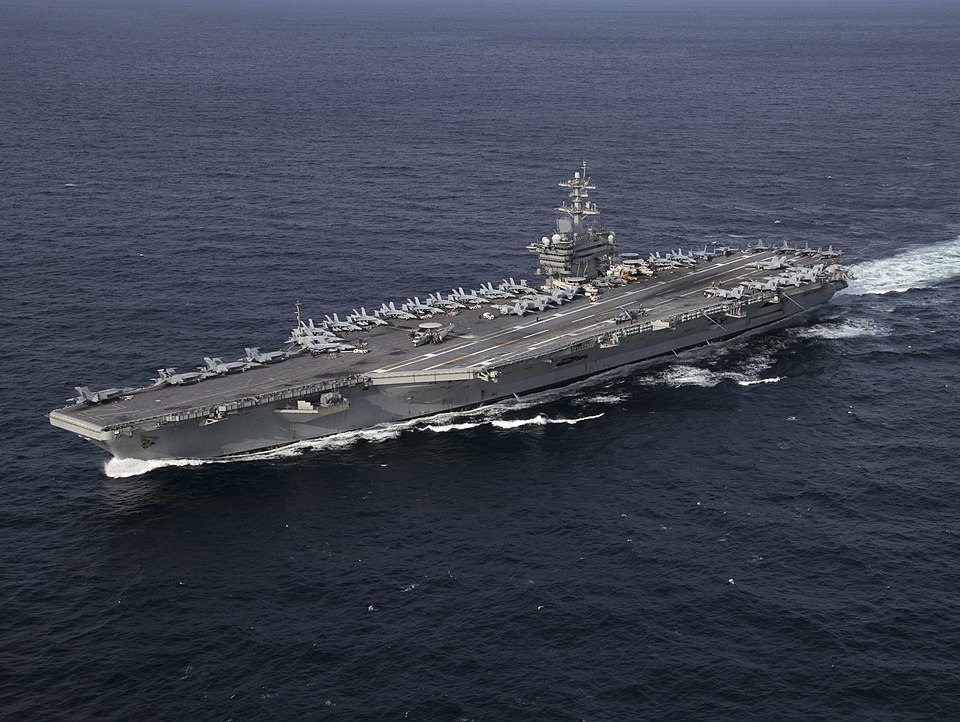
The United States and the United Kingdom formed a coalition called Prosperity Guardian, whose primary mission is to escort and protect commercial vessels from aerial threats [12]. The European Union subsequently joined this vital effort to ensure the safety of unimpeded shipping with its own defensive naval mission, code-named Aspides [13].
However, defensive protection of ships alone was not enough, and Western powers eventually launched a direct military offensive against the rebels. U.S. and British forces launched repeated airstrikes on Yemeni military installations, targeting primarily radar systems and depots housing dangerous unmanned drones [26].
Surprisingly, Israel also joined the fierce retaliation, responding to a deadly attack on Tel Aviv with a targeted and massive bombing of the Houthi port of Hodeidah [22].
Will the strait be opened?
The key question today remains whether modern international forces will be able to successfully stop these tenacious insurgents and drive them out of the coastal region. While airstrikes are gradually limiting the Houthis’ military capabilities, experts say they cannot completely and permanently stop the Houthis’ sophisticated attacks using low-cost drones and hidden naval mines [1].
These fighters have a long history of putting up fierce resistance and have successfully repelled the armies of the Ottoman Empire, Egypt, and modern-day Saudi Arabia in the past [1].
Large-scale military operations by the West inevitably carry significant and difficult-to-predict political risks for the entire region.
Attacks by foreign troops risk further cementing the Houthis’ power and legitimacy in the eyes of the Yemeni people as heroic fighters against hated imperialism [1].
A genuine resolution to this dangerous crisis will thus likely require much more than a display of brute force and repeated bombing of port infrastructure [23].
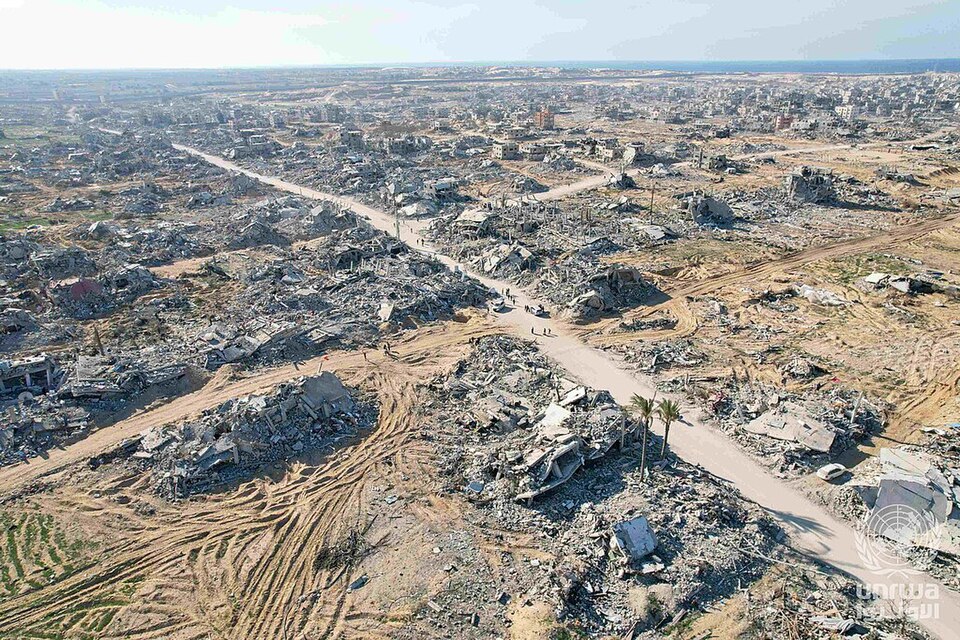
Experts and political analysts point out that sustainable peace on the waters of the Red Sea is very closely linked to the overall diplomatic order in the turbulent Middle East. If a lasting ceasefire were to be established in the Gaza Strip, the rebels would, overnight, lose their main ideological justification for aggressively attacking Western ships [23].
However, Iran continues to play a key role here, because without its political pressure and willingness to halt missile shipments, the Houthis will remain a threat to global trade for years to come [23].
At the same time, the economic impacts of the entire conflict are multiplying as the rebels directly target Saudi Arabian oil infrastructure in an effort to force the desired peace concessions.
Recently, for example, they struck important oil facilities in the cities of Jizan and Yanbu, thereby directly threatening their neighbor’s key export corridors [21]. By blocking these ports, Riyadh loses its only viable option for safely bypassing the dangerous Strait of Hormuz, which, understandably, is causing extreme anxiety in global markets [21].
Moreover, the cost of active military operations against the Houthis is simply astronomical for Western democracies and unsustainable in the long term.
For example, the Americans deployed two full aircraft carrier strike groups in retaliatory strikes, which, according to conservative estimates, cost them over one billion dollars [21].
Even after such a massive demonstration of firepower, the rebels have at most promised not to attack American vessels directly; however, ships associated in any way with Israel remain their primary target [21].
List of References
[1] Houthis now drawing support from former enemies in Yemen | Responsible Statecraft https://responsiblestatecraft.org/houthis-support-middle-east-yemen
[2] https://sanaacenter.org/files/Entrenched_Power_The_Houthi_System_of_Governance_en.pdf
[3] https://www.rand.org/pubs/monographs/MG962.html
[4] https://www.cfr.org/global-conflict-tracker/conflict/war-yemen
[5] https://www.bbc.com/news/world-29380668
[6] https://www.state.gov/reports/2022-report-on-international-religious-freedom/yemen
[7] https://www.unrefugees.org/emergencies/yemen/
[11] https://www.newarab.com/analysis/how-houthis-created-alternative-economy-yemen
[13] Update on Operation ASPIDES in the Red Sea area | IUMI https://iumi.com/newsletter-march-2025/update-on-operation-aspides-in-the-red-sea-area
[14] The Houthis have just announced a blockade of Saudi Arabia. What does it mean for the global economy? - Atlantic Council https://www.atlanticcouncil.org/dispatches/the-houthis-just-announced-a-blockade-on-saudi-arabia-what-does-it-mean-for-the-global-economy
[15] Who are Yemen's Houthis? - Wilson Center https://www.wilsoncenter.org/article/who-are-yemens-houthis
[16] Houthi Red Sea blockade would lift oil prices, but workarounds could limit impact | Reuters https://www.reuters.com/business/energy/houthi-red-sea-blockade-would-lift-oil-prices-workarounds-could-limit-impact-2026-07-20
[17] Gulf Research Center | GRC https://www.grc.net/single-commentary/335
[18] Houthi Red Sea blockade could trigger a surge in crude oil ... https://bworldonline.com/world/2026/07/21/764955/houthi-red-sea-blockade-could-trigger-surge-in-crude-oil-prices
[19] Houthis | Counter Extremism Project https://www.counterextremism.com/threat/houthis
[20] Houthi strikes threaten to pull Yemen into a Middle East war https://www.dw.com/en/houthi-strikes-threaten-to-pull-yemen-back-into-full-scale-war/a-78497448
[21] Preventing Iran's Weaponization of the Bab el-Mandeb Strait - JINSA https://jinsa.org/jinsa_report/preventing-irans-weaponization-of-the-bab-el-mandeb-strait
[22] Houthi Movement (Ansar Allah) | Yemen, Religion, History, Red Sea ... https://www.britannica.com/topic/Houthi-movement
[23] Blowback From Gaza: Geopolitics of the Houthi Red Sea Campaign | Baker Institute https://www.bakerinstitute.org/research/blowback-gaza-geopolitics-houthi-red-sea-campaign
[24] Lucas Winter, “Conflict in Yemen: Simple People, Complicated Circumstances,” Middle East Policy 18, no. 1 (2011), pp. 102–120.
[25] Yemen’s Houthi Movement, History & Ideology | Study.com https://study.com/academy/lesson/houthi-movement-yemen-overview-leader-goals.html
[26] Red Sea Hostilities: Local, Regional, and International Implications | Carnegie Endowment for International Peace https://carnegieendowment.org/sada/2024/01/red-sea-hostilities-local-regional-and-international-implications