Arch-Friends: The Special Relationship Between the U.S. and the U.K.
April 28, 2026, marked a historic diplomatic moment when King Charles III of the United Kingdom addressed both houses of the U.S. Congress [21]. This was a state visit marking the 250th anniversary of the founding of the United States, and Charles III was the first British monarch to address Congress in this manner since Queen Elizabeth II’s speech in 1991 [11,20]. In his speech, the monarch emphasized that although the British-American partnership was born out of a historical conflict, today it represents one of the most important alliances in human history [21].
A Difficult Start
When the Americans and their allies won the War of Independence in 1783, relations between the two nations were, understandably, at a freezing point [18]. However, as early as 1785, John Adams—the first U.S. ambassador to Britain and later the second U.S. president—approached King George III with a desire to restore the good old relations based on a shared language, religion, and blood [25]. The British monarch, moved by this, agreed and declared that he would be the first to welcome the friendship of the United States as an independent power [25].
Although the Americans had originally leaned more toward France, the unexpected bloody terror and executions of aristocrats during the French Revolution turned them away from this European ally [18]. The United States took a neutral stance toward the long-standing dispute between France and Britain, which opened the door to a gradual American-British reconciliation [18]. Thanks to the adopted English legal system, a common language, and ongoing trade, these two nations slowly became natural partners [18].
Contributing to this rapprochement were not only the unceasing migration and the lucrative trade in Southern cotton and Midwestern grain, but also the prevailing trend of wealthy American heiresses marrying British aristocrats. Another quiet step toward cooperation was the famous Monroe Doctrine of 1823, which, although proclaimed by the Americans themselves, was in fact enforced with the help of the powerful British Royal Navy. These long-standing economic and cultural ties meant that the relationship between ordinary people was strengthening much faster than official government diplomacy.
The Burning White House
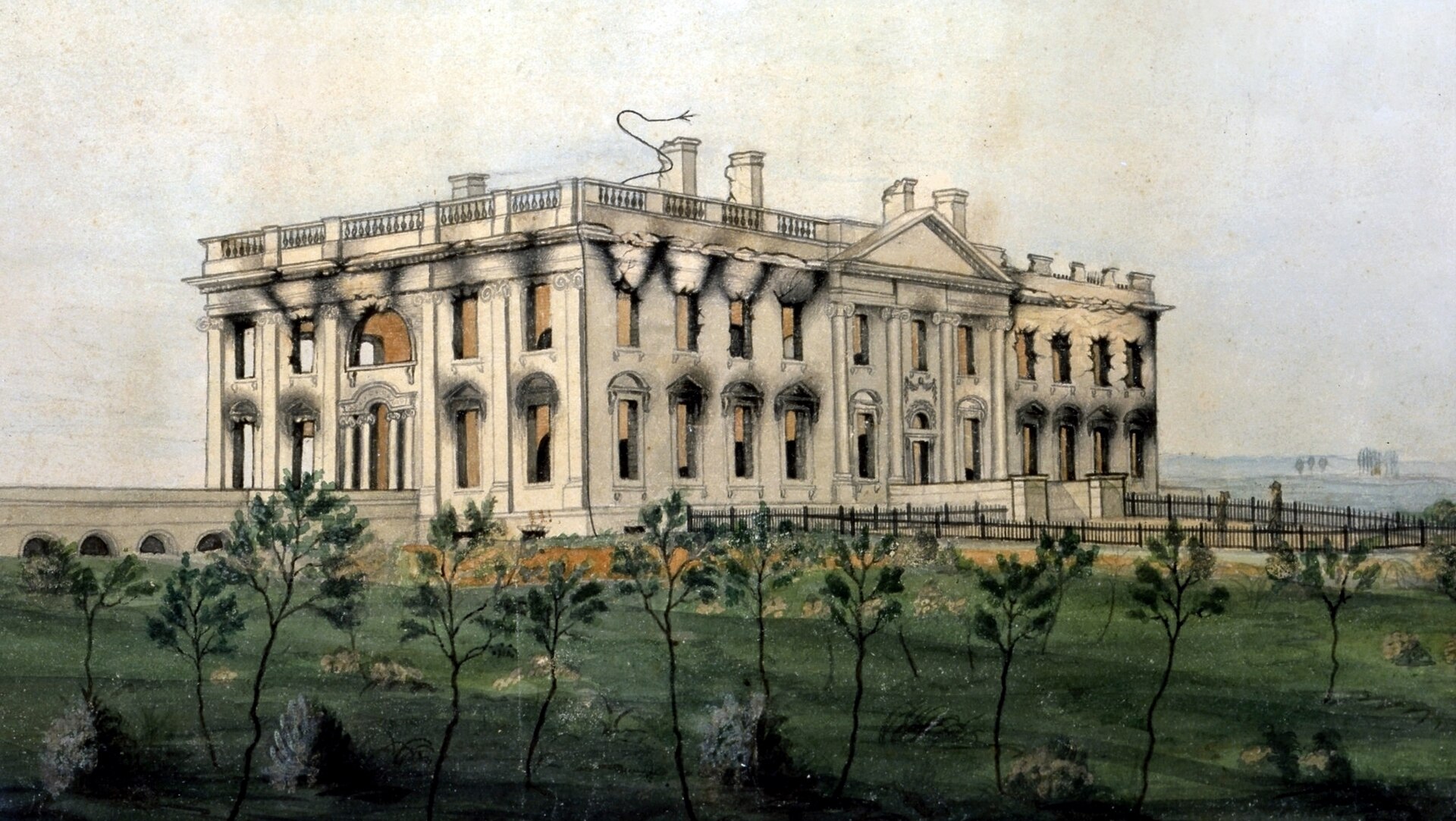
The path to today’s alliance, however, was by no means straightforward and had to endure several exceptionally harsh historical trials. A major test was the second (and last) war between Britain and the U.S. from 1812 to 1815, which reached its peak in 1814 when British forces captured Washington and set fire to the White House and the Capitol building [18]. Later, in the 1830s and 1850s, relations cooled again due to several bizarre border disputes between the US and Canada, such as the so-called Aroostook War and the Pig War.
Enormous political tension also prevailed during the American Civil War from 1861 to 1865. Although Britain remained officially neutral, the so-called Trent Affair triggered serious diplomatic crises when the U.S. Navy arrested Confederate diplomats on a British ship, which nearly led to British military intervention. The Americans, in turn, were enraged when British shipyards secretly built ships for the Southern Confederacy, which led to the famous demands for reparations; while the U.S. initially demanded the annexation of Canada as punishment, it ultimately settled for a financial settlement.
Winners of the War
The real turning point and the birth of the modern alliance did not occur until the turn of the 19th and 20th centuries. The British realized at that time that they could no longer compete at sea with the growing power of the U.S. Navy (since their Royal Navy had to cover nearly the entire globe), and therefore chose to change their military doctrine and withdraw their fleets from the Caribbean. At the same time, Germany’s influence began to grow in Europe, forcing the United Kingdom to seek natural allies across the ocean who had no colonial interests in Africa or Asia.
This relationship took on a whole new dimension during World War II, when the cooperation between President Franklin D. Roosevelt and Prime Minister Winston Churchill changed the course of history. Although Anglo-American relations had been rather cool before the war, Churchill made a tremendous effort to build them, which ultimately helped win the war, even though it cost Britain its empire, as the war had financially exhausted the country [3]. A key moment was the signing of the U.S. Lend-Lease Act in March 1941, under which the U.S. supplied the British with weapons even before entering the war [5].
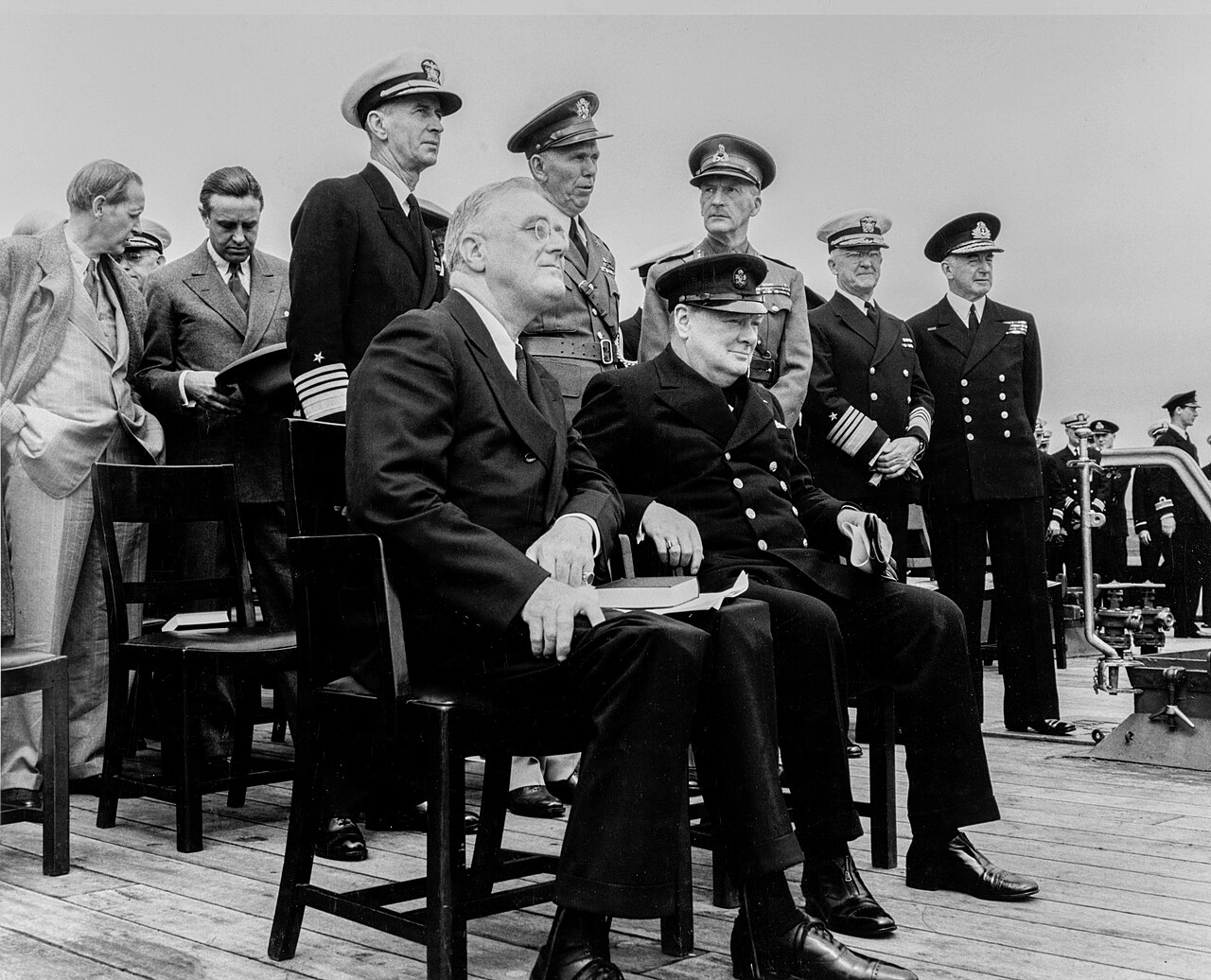
The leaders gradually forged an unprecedented partnership based on the sharing of classified information, such as the Enigma code-breaking project or collaboration on the Manhattan Project to develop the atomic bomb [7]. They became very close personally, spending long nights together planning strategy over more than a few drinks and agreeing on the priority military strategy of “Germany first” [5,18]. The practical aspects of the alliance were also excellently facilitated by the excellent personal relationships between military commanders such as Field Marshal John Dill and General George Marshall [3].
The friendship between these statesmen is also linked to a famous humorous anecdote from Christmas 1941, when the British Prime Minister was spending time at the White House. Roosevelt happened to walk into the guest room just as Churchill was stepping out of the bathtub completely naked and unprepared [18,25]. Churchill did not lose his composure and declared with a smile that the Prime Minister of Great Britain had absolutely nothing to hide from the President of the United States [18,25].
Special Relationships
It was Winston Churchill who introduced the legendary term “Special Relationship” into the vocabulary of international diplomacy. He first used it in a speech as early as 1945 and subsequently, in 1946, used it to describe the special ties between the U.S. and the English-speaking countries of the British Commonwealth [2]. This powerful term became firmly established in politics and was later used extensively, for example, to describe the exceptionally close bond between Harold Macmillan and John F. Kennedy [1].
After the war, however, the alliance also faced serious crises when the ideals and interests of both countries diverged dramatically. The absolute low point was the Suez Crisis in 1956, when President Dwight Eisenhower was furious that the British had not informed him of a military attack on Egypt, as he feared Soviet involvement in the conflict [5]. Washington then threatened to cut off crucial financial aid, forcing the British (and their allies France and Israel) to cease fire, which permanently destroyed the confidence of many British conservatives in any special relationship with the U.S. [1,5].
The President and the Prime Minister
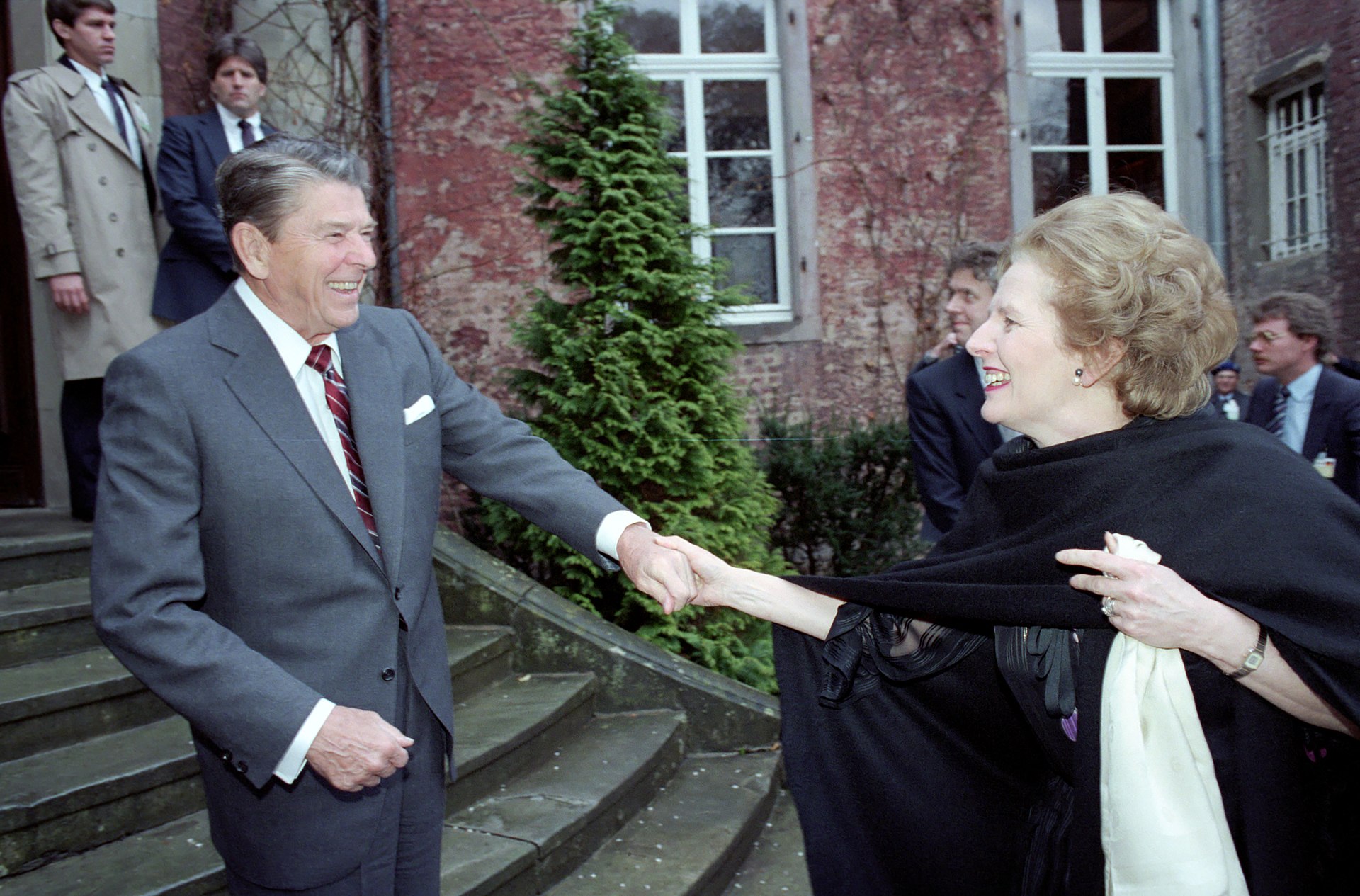
The clearest and most famous embodiment of the golden age of this political alliance was the phenomenal collaboration between Ronald Reagan and Margaret Thatcher in the 1980s [14]. Both were originally considered political outsiders—he a mere actor and she a woman in a man’s world—but driven by their own energy, they sought to save their countries from decline [13]. When Reagan took office in January 1981, the special relationship with Britain entered its absolute best phase in history [1].
They were, quite literally, political and philosophical kindred spirits, united by a strong belief in the free market, low taxes, a limited role for the state, and a strong military [7,9]. Thatcher admired Reagan for his charm and lack of doubt, feeling that she had found a man who instinctively thought exactly as she did [4,8]. Their admiration was mutual; while the British Prime Minister considered him the second most important man in her life, Reagan spoke of her as “the best man in England” [19].
They also shared an uncompromising stance toward their common enemy at the time, thanks to which they rejected a policy of concessions and together helped bring the Cold War to its bloodless yet victorious end: the collapse of the Soviet Union [3,4,9,22]. It was Thatcher who very quickly recognized Mikhail Gorbachev’s potential and convinced Reagan that the new Soviet leader could be trusted [14]. Together, they changed the world map and defined an era that is still referred to today as the golden age of conservatism [14].
Despite their deep friendship, their relationship also had to weather some harsh clashes of opinion. In 1982, Reagan initially asked Thatcher for concessions and negotiations during the Falklands War, which she firmly rejected and sharply complained that Britain had to fight entirely on its own [4,5,19]. A real shock for her, however, was the unexpected U.S. military invasion of the Caribbean island of Grenada in 1983, about which the Americans, for tactical reasons, did not inform her in advance at all, leaving the Prime Minister literally appalled and deeply disappointed [1,4,10,14].
Heated exchanges of views also accompanied the unveiling of Reagan’s “Star Wars” defense strategy and the U.S. bombing of Libya in 1986, which Reagan wanted to launch from British bases [14,25]. Thatcher managed to give the American president a good “piece of her mind” in private, as she did regarding his efforts toward nuclear disarmament at the summit in Iceland [10,14]. However, Reagan respected the British prime minister so much and admired her feminine nature that he refused to argue with her and often simply could not say no to her [10].
Warmth and Coldness
History clearly shows, however, that not every political duo managed to establish such a friendly and functional bond. For example, Woodrow Wilson and British Prime Minister David Lloyd George had nothing that could be called a special relationship [3]. Lyndon Johnson and Harold Wilson also treated each other coldly, especially after the British refused to send their military troops to the conflict in Vietnam [3,6]. Richard Nixon also experienced major awkward moments with his British colleagues; he was downright horrified when Prime Minister Wilson suggested they drop the formal “Mr.” and address each other informally [23].
It was an awkward paradox that Margaret Thatcher herself did not get along at all with Reagan’s predecessor, Jimmy Carter. The longest-living U.S. president viewed her as a domineering and dogmatic politician whom he found entirely unsympathetic [1,15]. Historical documents even show that after their meeting, Carter ordered his staff never to schedule any further negotiations with this British leader [15].
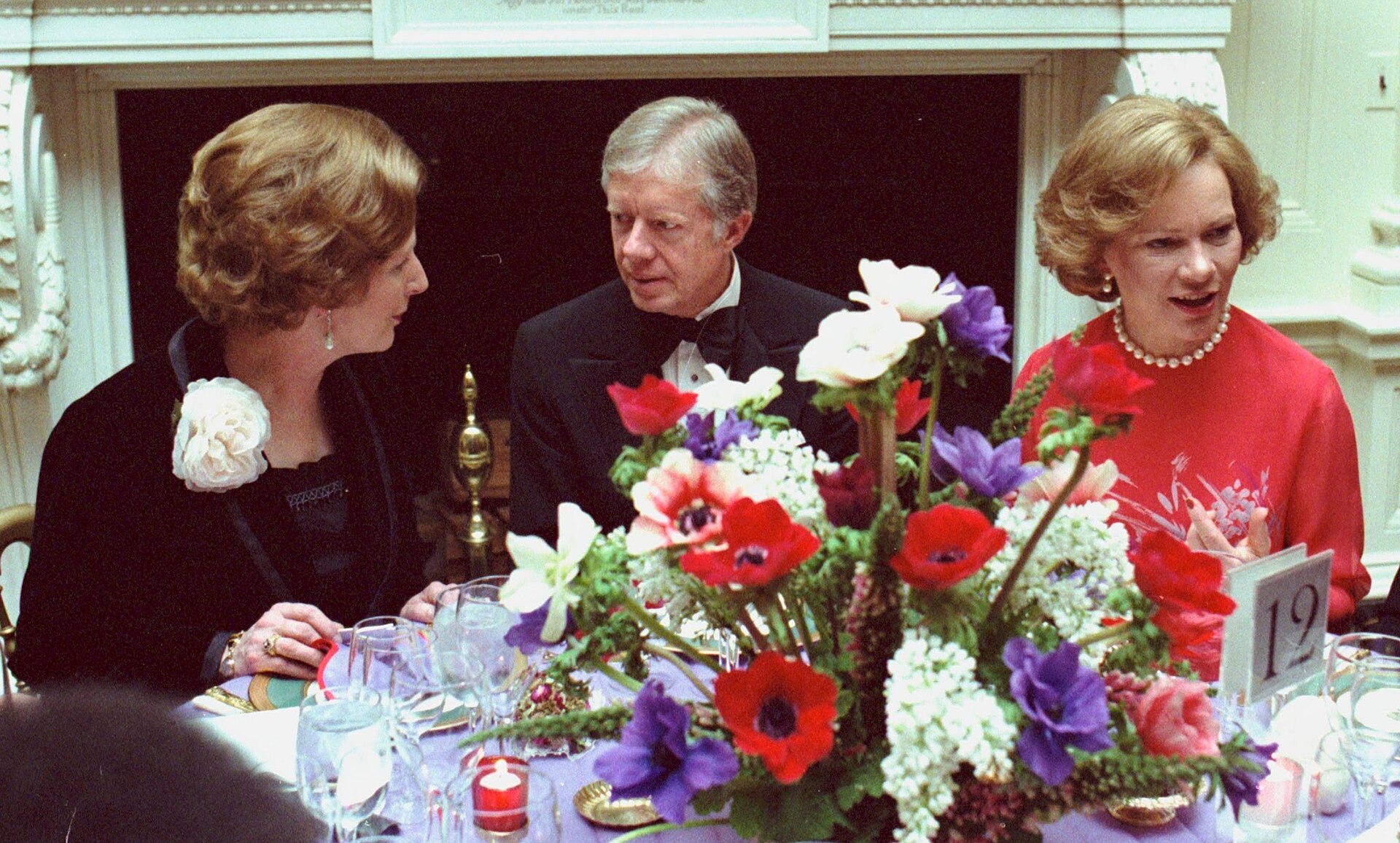
However, the tenure of Bill Clinton and British Prime Minister John Major in the 1990s is considered one of the worst periods. It all began with suspicions that Major’s Conservative government had had Clinton’s student records from his time at Oxford searched to assist Republican opponents, for which the British prime minister later had to personally apologize [3,15,26]. The rift definitively came to a head in March 1995, when Clinton granted an entry visa to Irish leader Gerry Adams (who was accused of being a member of the IRA), whereupon an offended Major angrily refused to answer Clinton’s phone calls for several weeks [3,5,15].
However, the situation on the diplomatic front changed radically and positively in 1997 when Tony Blair took the prime minister’s seat. When this bold and eloquent politician entered the international stage, his collaboration with Bill Clinton on foreign policy made them look like a perfect political pair made in heaven [15,17]. However, the reputation of this strong alliance later suffered significantly when Tony Blair decided to follow George W. Bush into the controversial war in Iraq at any cost, which left deep scars on British politics [1,6].
The crisis of personal rapport returned in full force when Gordon Brown replaced Blair. Brown received a disastrous reception from George W. Bush, who canceled the joint photo op in front of the flags after their meeting, and things were no better with Barack Obama [15]. Obama actively avoided Brown and, in New York, rejected an incredible five requests for a bilateral meeting [15]. Obama later failed to find common ground with David Cameron as well, publicly accusing him of losing interest in further strategic solutions following the military intervention in Libya [5].
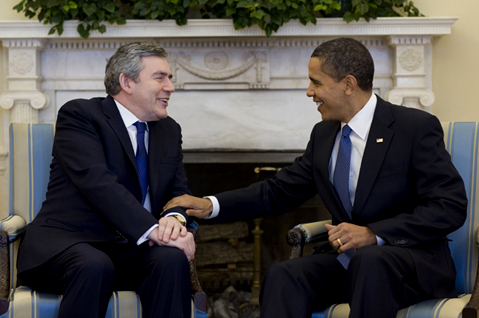
However, the approval of Brexit and the election of Donald Trump as president marked a truly dark period and a critical crossroads for the special relationship [6,7]. Trump made no secret of his deep antipathy toward then-Prime Minister Theresa May; he publicly criticized her strategy toward the EU, suggested she sue Europe, and even declared that he would pay to avoid having to listen to her speech at all [15]. Significant ideological and ideological differences made their relationship the exact opposite of the once-harmonious cooperation between Reagan and Thatcher [15].
A Royal Visit
Currently, British-American diplomatic relations are at an all-time low. President Trump has consistently and publicly criticized current British Prime Minister Keir Starmer for his lack of support for the U.S. military offensive against Iran [5,16]. Trump accuses him of unwillingness to help reopen the strategic Strait of Hormuz and even mocked him with disdain by declaring that Starmer is certainly no Winston Churchill [5].
Adding fuel to the fire of this already immense tension was the leak of a secret audio recording from February 2026. In the recording, British Ambassador to Washington Christian Turner criticizes the term “special relationship” as highly nostalgic and burdened by a great deal of unnecessary historical baggage [12]. Turner literally stated that the United States today likely has a special relationship with only one country in the world, and that is Israel [12,16].
It is precisely in this exceptionally tense context, full of recriminations and disagreements, that King Charles III of the United Kingdom enters the scene with his state visit. His important April 2026 address to Congress served as a brilliant diplomatic offensive aimed at breaking the ice and easing existing tensions [24]. The monarch skillfully leveraged his non-partisan position, elevated above everyday squabbles, and instead of political bickering, offered a diplomatic perspective on the long-standing alliance between America and Britain [11].
In his message, the King did not hide the fact that the world faces enormous uncertainty and tension in the Middle East and Europe [21,24]. However, he very assertively emphasized the necessity of defending the shared values of democracy, protecting citizens, and warned against the threat of growing isolationism [21]. In response to Trump’s recent threats regarding a possible U.S. withdrawal from the alliance, the monarch diplomatically emphasized the irreplaceable importance of NATO and the need to assist Ukraine, which is under attack [11,16].
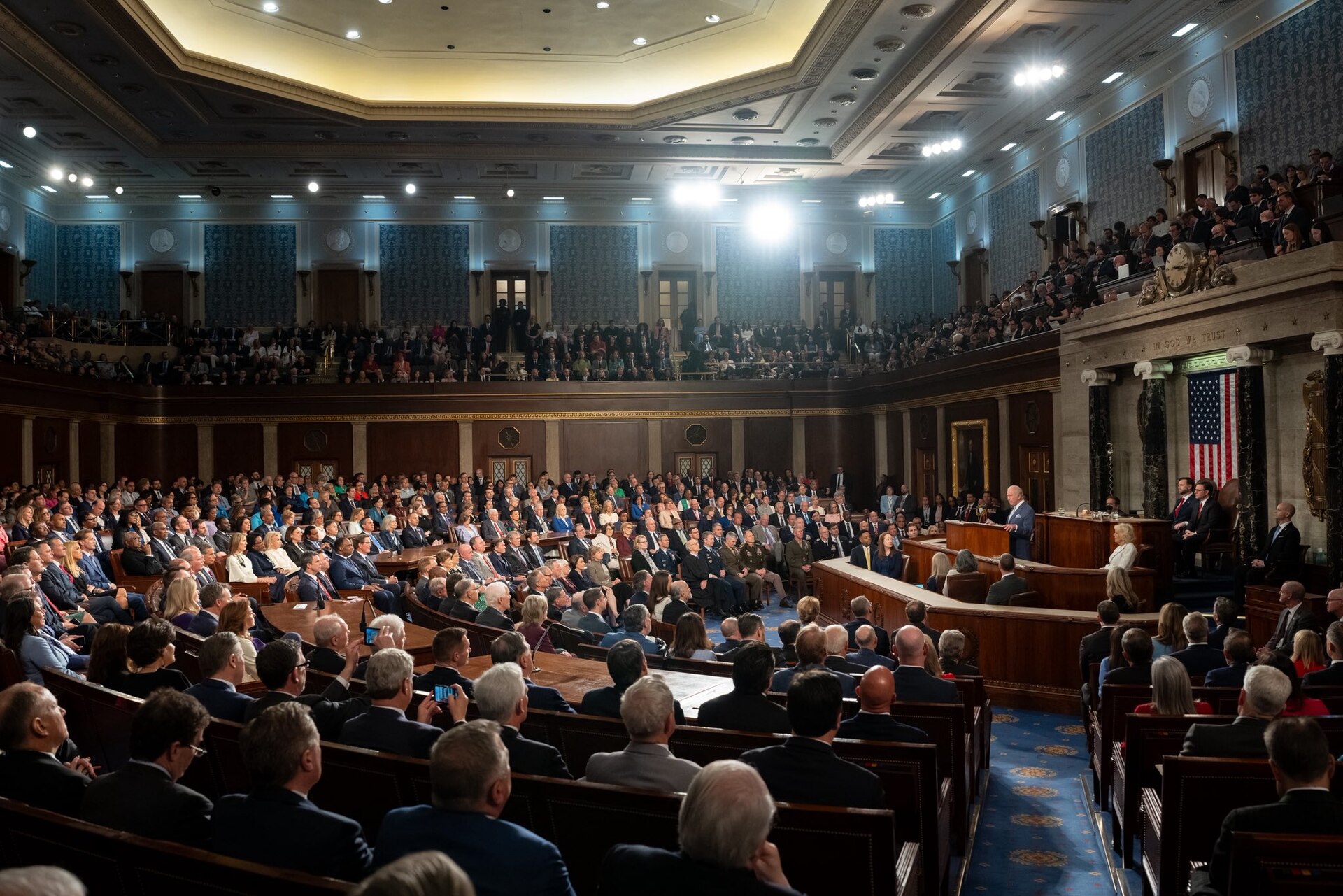
However, to ensure that the special relationship does not appear stuck in the past, King Charles III also charted a course toward modern visions for the future. He announced that both governments are working on groundbreaking agreements regarding the development of artificial intelligence, the search for new medicines, discoveries in quantum computing, and the development of nuclear fusion, which could save countless lives [21]. At the same time, he called for shared responsibility toward nature, whose critical systems are collapsing, threatening the very foundation of our national prosperity and security [21].
What does the future hold?
The outlook for the coming decades is thus fraught with extremely difficult challenges for this historic relationship. America is increasingly turning its gaze toward the developing Pacific, while Britain often becomes almost obsessively entangled in the problems of a Europe that remains militarily impotent [1]. Moreover, if Britain permanently cuts off its access to the European market as a result of Brexit, this could fatally damage substantial American investments in the British Isles [7]. Another critical issue is the massive cuts to the British defense budget, which have left the country economically and militarily weaker than before—a stark contrast to the ever-increasing investments by the U.S. military [7,17].
The survival of this unique British-American alliance therefore no longer rests solely on the shoulders of capricious politicians or prime ministers, who struggle to find common ground. Keeping this alliance alive must fall primarily to the experts working behind the scenes—the intelligence services linked in the famous “Five Eyes” network, military experts, bureaucrats, and leaders of international trade [7].
As King Charles III aptly summarized in his memorable address to Congress, this exceptional partnership must not be based solely on past successes, but must form a solid foundation upon which both nations can build a secure future [21].
List of References
[1] The myth of the "special relationship" | United States Studies Centre https://www.ussc.edu.au/the-myth-of-the-special-relationship
[2] Wen, Xianjuan. (2003). On British-American Relations during the Suez Canal Crisis. [Online] Available: http://scholar.ilib.cn/Abstract.aspx?A=lsjx200310011, p. 3.
[3] [PDF] On British-American Special Relations through 9/11 https://ccsenet.org/journal/index.php/ass/article/download/6556/5141
[4] Reagan and Thatcher, political soul mates https://www.nbcnews.com/id/wbna5145739
[5] Timeline: The highs and lows of the US-UK ‘special relationship’ | Politics News | Al Jazeera https://www.aljazeera.com/news/2026/4/27/timeline-the-highs-and-lows-of-the-us-uk-special-relationship
[6] For the text of the 145-page Executive Summary, see The Report of the Iraq Inquiry: Executive Summary, July 6, 2016, www. iraqinquiry.org.uk/media/247921/the-report-of-the-iraq-inquiry_executive-summary.pdf. See also “Chilcot Report: Findings At-a-Glance,” BBC News, July 6, 2016, www.bbc.com/news/ uk-politics-36721645
[7] The US-UK “special relationship” at a critical crossroads - Atlantic Council https://www.atlanticcouncil.org/in-depth-research-reports/issue-brief/the-us-uk-special-relationship-at-a-critical-crossroads-2/
[8] Morality and Foreign Policy: Reagan and Thatcher - Imprimis https://imprimis.hillsdale.edu/morality-and-foreign-policy-reagan-and-thatcher/
[9] The Iron Lady's American obsession: Thatcher and Reagan's desperate political alliance - Salon.com https://www.salon.com/2014/06/22/the_iron_ladys_american_obsession_thatcher_and_reagans_desperate_political_alliance/
[10] Thatcher/Reagan showed how a true trans-Atlantic friendship can dominate world politics https://uk.news.yahoo.com/thatcher-reagan-showed-true-trans-121058738.html
[11] How King Charles won over anti-monarchists and haters in less than twenty minutes | The Independent https://www.independent.co.uk/news/world/americas/king-charles-speech-congress-anti-royalist-reaction-gen-z-b2968254.html
[12] State visit by Charles III to the United States - Wikipedia https://en.wikipedia.org/wiki/State_visit_by_Charles_III_to_the_United_States
[13] Reagan and Thatcher: The Friendship that Changed the World https://reagan.artifacts.archives.gov/exhibitions/183/reagan-and-thatcher-the-friendship-that-changed-the-world
[14] Reagan and Thatcher: ‘Political soulmates’ | CNN Politics https://www.cnn.com/2013/04/08/politics/thatcher-reagan
[15] 5 awkward encounters between UK prime ministers and US presidents – POLITICO https://www.politico.eu/article/5-awkward-encounters-between-uk-prime-ministers-us-presidents/
[16] April 28, 2026: King Charles’ historic speech to Congress and state dinner with Trump | CNN https://www.cnn.com/2026/04/28/us/live-news/king-charles-queen-camilla-us-visit
[17] The British Prime Minister Is Coming to America - Newsweek https://www.newsweek.com/british-prime-minister-coming-america-63655
[18] When did the Brits and Yanks become allies again after the Revolutionary War? | Live Science https://www.livescience.com/when-did-uk-us-become-allies.html
[19] Thatcher and Reagan: A look back at one of the world's most powerful political alliances https://theweek.com/articles/465811/thatcher-reagan-look-back-worlds-most-powerful-political-alliances
[20] King Charles III to meet Trump in the Oval Office, address Congress to highlight the US-UK bond | Live Updates from Fox News Digital https://www.foxnews.com/live-news/king-charles-queen-camilla-us-state-visit-day-two-trump-congress-april-28
[21] King Charles' speech to Congress — Read the full transcript https://www.usatoday.com/story/entertainment/celebrities/2026/04/28/king-charles-speech-congress-transcript/89844483007/
[22] Introduction: Reagan, Thatcher & the “Special Relationship” - The New Criterion https://newcriterion.com/article/introduction-reagan-thatcher-the-aoespecial-relationshipa/
[23] First meetings: US presidents and UK prime ministers - BBC News https://www.bbc.com/news/uk-politics-38720850
[24] Five takeaways from the King's historic address to the US Congress https://www.bbc.com/news/articles/c8jvl3x19v9o
[25] Prime Ministers and Presidents: special relationships – History of government https://history.blog.gov.uk/2012/07/01/prime-ministers-and-presidents-special-relationships/
[26] Clinton, Bill (2005) My Life, London, Arrow Books, Paperback Edition.