A Great Movie Buts History: *Braveheart* According to Mel Gibson
Along with *Titanic* and *Gladiator*, *Braveheart* is one of the most popular historical films of all time. But to what extent do the epic narrative and actual history align in this case?
Cult Film
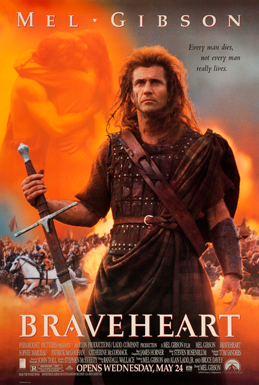
On the occasion of actor and director Mel Gibson’s 70th birthday (born January 3, 1956, in New York State), it’s the perfect time to look back at what is arguably his best and most beloved work—the historical epic Braveheart. When this film hit theaters in 1995, it became a phenomenon. With a budget of roughly $70 million, it grossed an impressive $209 million worldwide [16]. Moreover, out of ten Academy Award (Oscar) nominations, it won five statuettes, including the most prestigious ones for Best Picture and Best Director for Gibson himself, while also triumphing in the categories of cinematography, sound editing, and makeup [16].
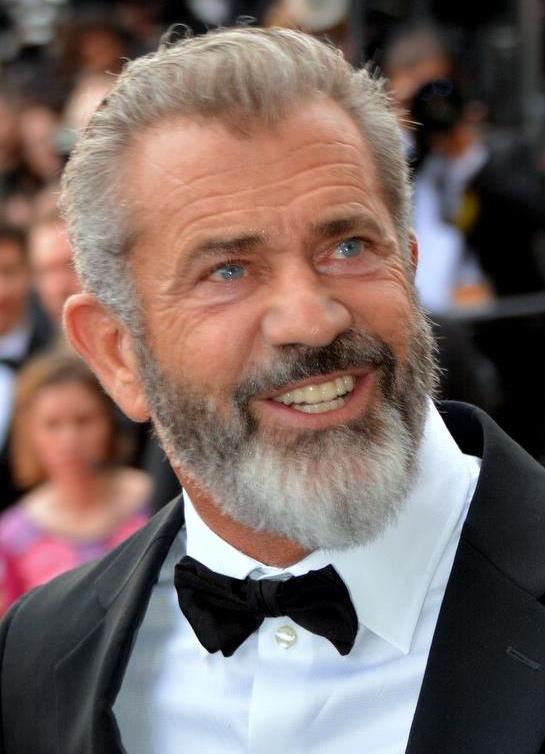
For millions of viewers, this story of the Scottish struggle for independence has become a beloved classic. But how does this cinematic gem fare when faced with the harsh realities of history? Experts agree that it does not fare very well. Historians describe Braveheart as one of the most historically inaccurate modern films ever made [16]. In 2009, for example, The Times ranked it second on its list of the most historically inaccurate films [16]. Historical accuracy was almost entirely sacrificed in favor of an epic adventure [16]. Mel Gibson himself admitted in the DVD audio commentary that he was aware of the historical inaccuracies, but defended his directorial decisions by stating that he adapted the events in the film to make them “more cinematically compelling” than actual history [16].
The Real William Wallace: No Poor Peasant
The film centers on the character of William Wallace. The film portrays him as a likable, poor peasant from the Highlands whose father and brother were killed by the English during his childhood, and who enters the war out of a pure desire for revenge after his beloved wife is murdered. The reality, however, was more prosaic. William Wallace was the younger son of a Scottish gentry family [3,4,16]. He was educated; as an adult, he even had his own chaplain, and later conducted diplomatic correspondence with Hanseatic cities such as Hamburg and Lübeck [16]. By the time he came into conflict with the English, he was already a grown man, and neither his father nor his brother had fallen in battle against the English during their childhood [4].
Although Wallace did indeed murder the English sheriff of Lanark [16], his motives for the widespread rebellion were primarily political—he rejected the invasion of Scotland by the English King Edward I, who was attempting to unite the two countries by force [4]. The Hollywood myth of the lone avenger also clashes with the fact that Wallace did not lead the rebellion alone. The key organizer of the resistance was Andrew de Moray. However, he died from injuries sustained in the successful Battle of Stirling Bridge, making him uninteresting to filmmakers (he doesn’t even appear in the film), and all the glory fell to Wallace [4,13]. Incidentally, the film’s title “Braveheart” never actually belonged to Wallace. The Scottish people used this nickname posthumously to refer to King Robert Bruce, whose heart his friends took in a small casket to the battle in the Holy Land [2,4,5].
The film also almost completely erased the moral gray areas of the war at that time. While on screen Wallace fights for lofty modern ideals of democracy and freedom [2], in reality it was a power struggle among the elites. Director Gibson, for example, omitted the well-documented fact that Wallace instituted strict conscription and did not hesitate to hang those who refused to serve in his army [16]. Likewise, after the Battle of Stirling Bridge, he did not plunder the city of York, as the film depicts—York was too strong a fortress, although Wallace did indeed carry out border raids into England [6,13].
Blue Faces, Missing Bridges, and Anachronistic Kilts
If we look at the visual and tactical aspects of the film, Braveheart has created iconic yet completely inaccurate notions of medieval Scotland around the world. The most glaring example is the Scottish kilt. These did not become a common part of Scottish attire until the 16th or 17th century, that is, hundreds of years after Wallace’s death [3,4,5,12]. In the 13th century, Scottish warriors did not wear kilts at all, but like the English, they were clad in chain mail or simple tunics [3,13,16]. Historians liken this to an absurd notion. One of them even concluded that Wallace running in a kilt 500 years earlier and with his face painted blue 1,000 years later is a complete farce [16]. Blue war paint (woad) was used by the ancient Picts in their battles against the Romans a millennium before Wallace; by the 13th century, it no longer made any sense [2,3,4,5].
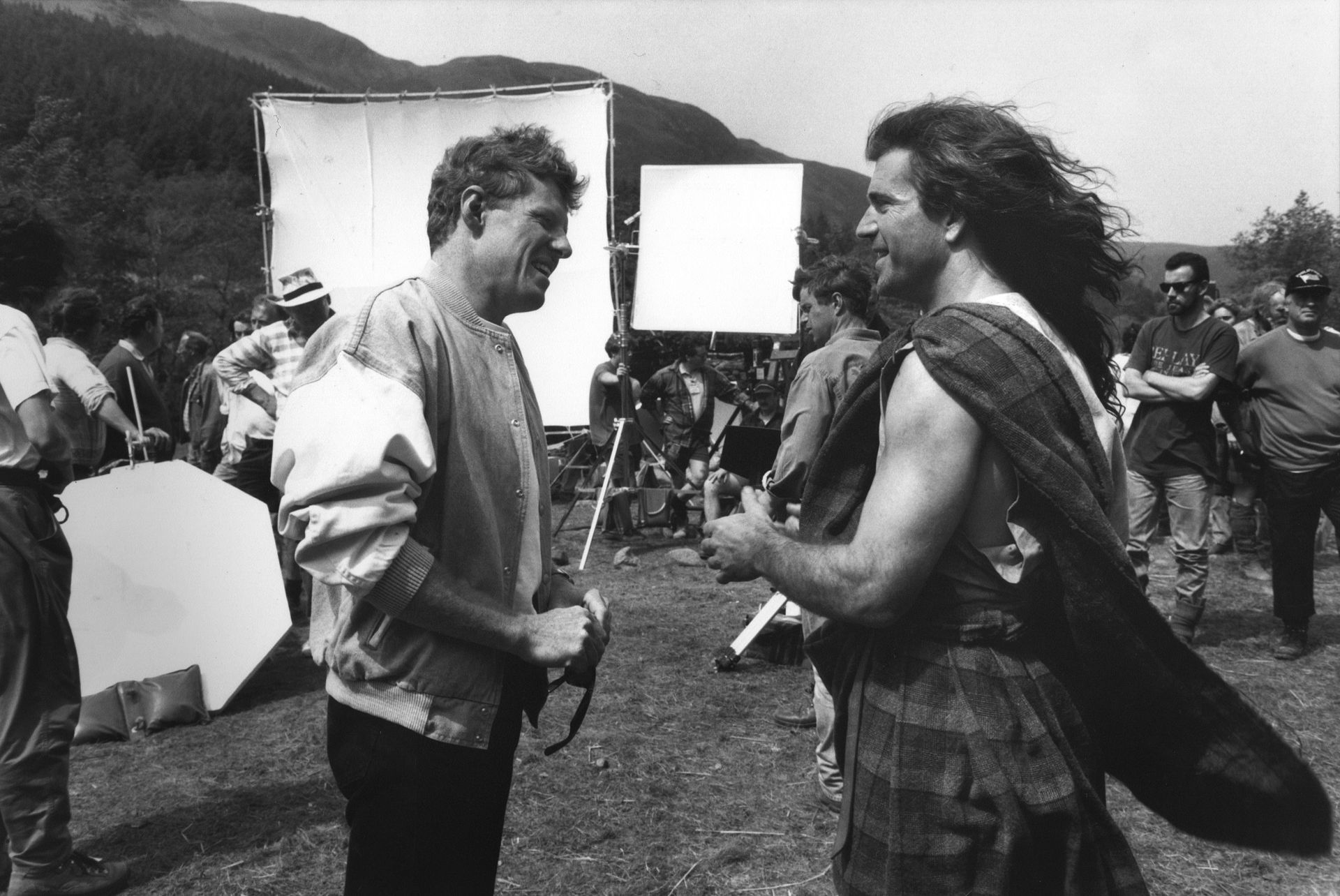
The legendary Battle of Stirling Bridge is a chapter unto itself. As the name suggests, this pivotal event took place on a bridge. The Scots based the genius of their tactics on hiding and waiting until the heavily armored English army began crossing the narrow wooden bridge over the River Forth. The bridge acted as a bottleneck, and the Scots subsequently massacred the enemy [2,3,4,5]. In the film, however, there is no bridge. We see a horde of tattooed highlanders charging across a vast open field straight at the enemy [2,3,13]. Mel Gibson himself admitted that he omitted the bridge intentionally to make the battle look more spectacular on screen [5]. The Battle of Falkirk is also inaccurate; no Irish conscripts crossed over to the Scottish side in the middle of the battle with a smile and a handshake [5,13,16]. In reality, the Scots fought against a better-armed and more numerous enemy in so-called schiltrons—circular formations bristling with pikes on all sides.
Tyrant Edward, Princess Isabella, and the Myth of the First Night
The English King Edward I, known as Longshanks, is portrayed in the film as an archetypal cold-blooded villain (but highly capable and pragmatic, and all the more dangerous for it) and an almost pagan despot. The real Edward was indeed a towering figure for his time, rough-hewn, and his outbursts of anger were legendary, but at the same time he was a deeply religious man who loved poetry and harp music, regularly donated money to charity, and was very devoted to his wife Eleanor (even as a young crown prince, he led the last crusade, and the legendary Assassins sent an assassin after him with a poisoned dagger. However, the wounded Edward wrenched the weapon from the assassin and killed him with it, after which his wife saved his life by reportedly sucking the poison from the wound) [16]. He also died of dysentery on his way to Scotland roughly two years after Wallace’s execution, not on the same day on his deathbed in his palace, as the film suggests [9,13,16]. The king was portrayed very convincingly by the American actor (with Irish roots) Patrick McGoohan, whom viewers may also recognize from four episodes of the popular detective series about Lieutenant Columbo (in which he always played the murderer).
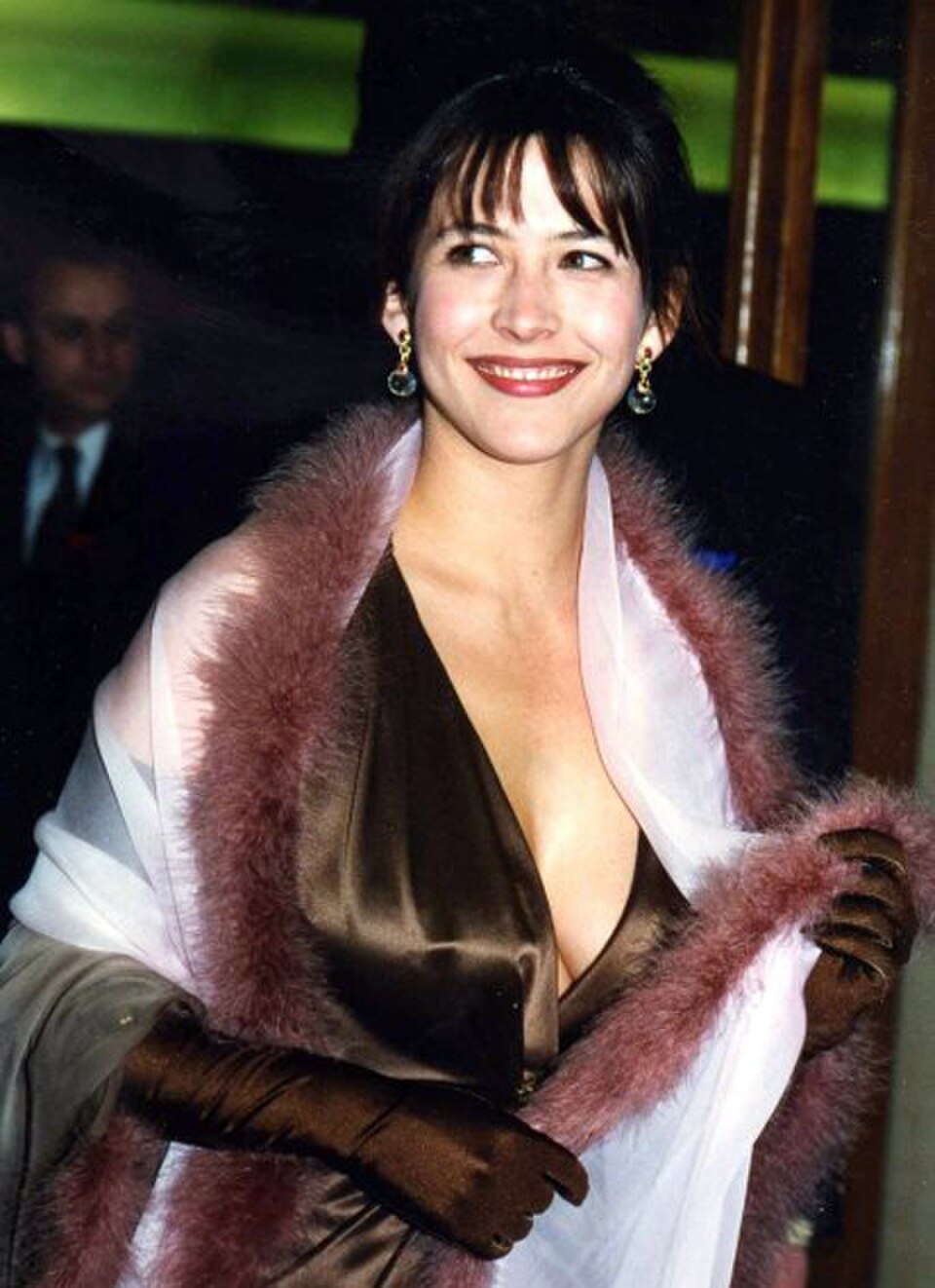
Perhaps the greatest narrative invention is the love affair between Wallace and the French princess Isabella (played in the film by Sophie Marceau), who is the wife of the historically first Prince of Wales, the future Edward II. (The title, now held by Prince William, originated when Edward I definitively conquered Wales before his invasion of Scotland and bestowed the title upon his son). In reality, at the time of Wallace’s execution, Isabella was estimated to be only three to ten years old; she was still living in France with her parents and did not marry Edward II until several years after Wallace’s death [2,3,5,12,16,18]. These two historical figures therefore never met [13].
And what about the infamous right of the first night (jus primae noctis), which King Edward in the film intended to use to “exterminate the Scots” by having English nobles deprive Scottish brides of their virginity? This literally drives historians to despair. No such right ever existed anywhere in Great Britain, and Edward I never instituted it [4,5,10,13]. There is not a single medieval legal document that would confirm its application [7]. This entire salacious phenomenon is merely a historical myth, popularized by the Scottish historian Hector Boece in 1527. He simply invented a nonexistent king named Evenus, who was said to have enacted this depravity into law [10,19]. Mel Gibson used this myth because it perfectly served to provoke the viewer’s emotional outrage [7]. Common sense also tells us that while a medieval serf can endure a great deal, if you start laying hands on his wife, you’re asking for a peasant uprising and a violent death. The right of the first night thus never existed anywhere in Europe, though that does not mean there were no nobles who (illegally) attempted to satisfy their desires in this manner.
What did the film get right?
Despite a huge number of missteps, the film got a few things right. Mel’s heavily criticized Scottish accent is, surprisingly, considered by many to be the most authentic element in the film [2]. It also accurately depicts the fact that King Edward I was hastily returning from a military campaign in France to suppress Wallace’s rebellion [13]. It is also true that the Battle of Falkirk in 1298 was decided in favor of the English (ironically, mainly by Welsh) archers. Most chillingly realistic, however, is Wallace’s death itself. The English did not capture him until 1305, transported him to London, and tried him for treason (though he had never sworn allegiance to the English crown). He was then stripped naked, dragged by horses, hanged until he lost consciousness, then disemboweled, castrated, beheaded, and quartered [1,3,13]. His head ended up impaled on a wheel at London Bridge, and his limbs were sent to four northern cities as a warning [1,5]. Of course, the film had to tone down the visuals of this massacre somewhat for a mass audience [4,5,13]. And again, no record suggests that Wallace, as he was being dragged, shouted the legendary “Freedom!” with his last breath [14].
Braveheart vs. Outlaw King: Historical Accuracy vs. Emotion
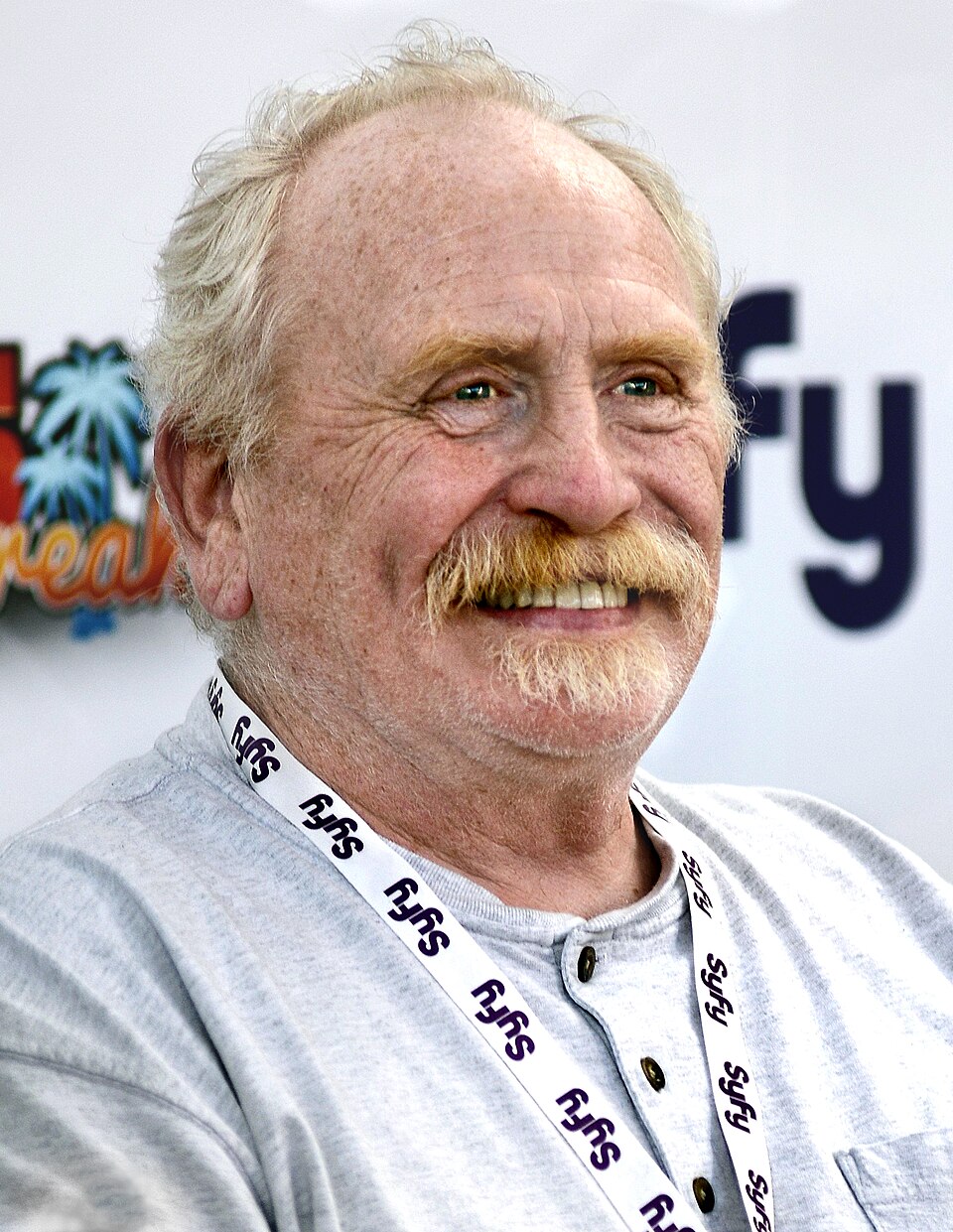
While Braveheart distorted history for the sake of drama, streaming giant Netflix decided in 2018 to tell the story of Wallace’s successor, King Robert Bruce, who plays a significant (though not very heroic) role in Gibson’s film, where he serves as the narrator. The film Outlaw King, directed by David Mackenzie and starring Chris Pine, serves as an unofficial but far more accurate sequel. The director made no secret of the fact that he wanted to correct the mistakes of Gibson’s blockbuster, eliminate Hollywood tropes, and create an “anti-fantasy film” with an emphasis on the harsh medieval reality, with the crew studying actual archaeological finds and tapestries [6,8]. Both films are linked by Scottish actor James Cosmo, who in Gibson’s opus played the virtually indestructible Hamish’s father—a man who survives an arrow to the chest and the severing of his right hand—while in the sequel he took on the role of the main character’s father, who, according to the film, once went on a crusade with King Edward.
From a historical perspective, *Outlaw King* completely outshines its predecessor [9]. The nonsensical kilts and anachronistic uniforms have completely disappeared, the weapons have been given authentic designs (unlike Gibson’s giant swords from later centuries), and no one paints blue patterns on their faces anymore [9,12,16,18]. In this film, Robert Bruce truly embodies his historical role as a powerful nobleman. The film very accurately depicts his motivations as well as his secret agreement with his rival, John Comyn. When Comyn betrays the agreement, Bruce arranges a meeting with him at the Franciscan church in Dumfries, where he actually stabs him with a dagger in front of the main altar—just as in reality, though in the film he finishes him off himself, whereas in reality the fatal blows were dealt by his men [1,9,13,17].
His second marriage to Elizabeth de Burgh is also accurately portrayed (brilliantly played by Florence Pugh, though the age difference between the actors did not correspond to historical fact), the humiliating defeats at the start of the war, when the English attacked his poorly defended camp at night, as well as the guerrilla tactics of raiding castles in the winter [1,9,13].
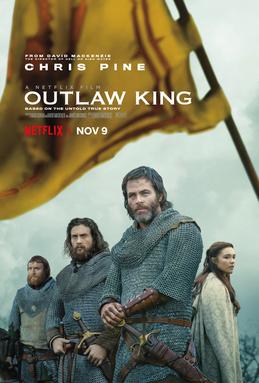
The Battle of Loudoun Hill in May 1307, depicted in the film, where Robert used mud and trenches to halt the heavy English cavalry, is a stunning and tactically accurate reconstruction of the military tactics of the era [1,9]. The film had only minor inaccuracies—for example, Chris Pine’s character stands nearly 183 cm tall, while the real Robert the Bruce, according to a modern skull reconstruction, had a shorter, stocky build with a massive head and a muscular neck [1]. Also, the brutal imprisonment of Scottish women in suspended cages took place in castles, but Queen Elizabeth herself was not placed in a cage [9,17].
Despite all this accuracy, however, the film’s critical reception has leaned in a different direction. While Braveheart shines in the rankings as a masterpiece (IMDb 8.3, ČSFD 88%), Outlaw King is perceived merely as an (above) average follow-up (IMDb 6.9, ČSFD 75%). Why? Braveheart, though reminiscent of a historical fairy tale, functions as a perfect cinematic drama. It has a gripping pace, epic, moving music, and a hero whose motives—freedom and revenge—the audience immediately understands [15,17]. The viewer simply wants to get up and run into battle with a sword. In contrast, Outlaw King struck many as cold. The story of Robert Bruce is that of a pragmatic opportunist and an ambitious nobleman who merely craved the throne [3,9,11]. Chris Pine portrayed the king in a very down-to-earth manner, as an understanding and kind hero, lacking Gibson’s fanatical spark and frenzied rage [11,17].
From a historical perspective, Braveheart is thus a jumble of the most absurd historical blunders, anachronisms, and romanticized myths [16]. Paradoxically, however, it was precisely this massive cinematic feat that sparked massive interest in real Scottish history around the world, from which the significantly more credible but colder Outlaw King also benefits [3]. Both works show us that Hollywood often faces a difficult choice—sometimes you have to sell the truth to buy an immortal legend.
List of References:
[1] Outlaw King vs the True Story of Robert the Bruce and His Real Face https://www.historyvshollywood.com/reelfaces/outlaw-king/
[2] Debunking Braveheart in Stirling – Cameron’s Travels | Rick Steves Europe https://blog.ricksteves.com/cameron/2015/08/debunking-braveheart-in-stirling
[3] Braveheart Movie: William Wallace and Historical Inaccuracies - Kiltman Kilts https://kiltmankilts.com/blogs/news/braveheart-movie-william-wallace-and-historical-inaccuracies?srsltid=AfmBOoq7Pssm7TT3_X-9ccU34K1lp4tIV4AW0_ElcAjGlrKDFlM6PytD
[4] Braveheart True Story: Everything Mel Gibson's Movie Gets Right & Wrong https://screenrant.com/braveheart-movie-true-story-right-wrong-changes/
[5] BraveHeart – The 10 historical inaccuracies you need to know before watching the movie – Hande's Blog https://thehande.wordpress.com/2011/12/05/braveheart-the-10-historical-inaccuracies-you-need-to-know-before-watching-the-movie/
[6] Outlaw King—an anti-Braveheart? — Jordan M. Poss https://www.jordanmposs.com/blog/2018/9/11/outlaw-kingan-anti-braveheart
[7] Primae Noctis Myth – Unraveling the ‘Right of the First Night’ in History and Culture – Medieval History https://historymedieval.com/primae-noctis-in-popular-culture-from-literature-to-film/
[8] David Mackenzie on avoiding 'Game of Thrones'-style fantasy — and 'Braveheart' comparisons — with his medieval epic 'Outlaw King' - Los Angeles Times https://www.latimes.com/entertainment/movies/la-et-mn-outlaw-king-david-mackenzie-20181109-story.html
[9] Outlaw King: Better Than Braveheart | An Historian Goes to the Movies https://aelarsen.wordpress.com/2019/05/25/outlaw-king-better-than-braveheart/
[10] Prima Nocta or Prima “Not”? | Histastrophe! https://histastrophe.com/2013/06/30/prima-nocta-or-prima-not/
[11] Outlaw King user reviews - Metacritic https://www.metacritic.com/movie/outlaw-king/user-reviews/
[12] Outlaw King vs Braveheart on Historical Accuracy - Popular Mechanics https://www.popularmechanics.com/culture/movies/a25018061/outlaw-king-braveheart/
[13] Um Actually: Braveheart and Outlaw King – Nerdcrash! https://nerdcrash.blog/2023/10/20/um-actually-braveheart-and-outlaw-king/
[14] The Horrifying Execution of William Wallace - Mercat Tours https://www.mercattours.com/blog-post/the-horrifying-execution-of-william-wallace
[15] How Outlaw King Stands Apart From Braveheart, According To The Stars And Director | Cinemablend https://www.cinemablend.com/news/2460965/how-outlaw-king-stands-apart-from-braveheart-according-to-the-stars-and-director
[16] Braveheart - Wikipedia https://en.wikipedia.org/wiki/Braveheart
[17] Outlaw King: It’s Not Braveheart – M.A. Kleen https://michaelkleen.com/2018/11/26/outlaw-king-its-not-braveheart/
[18] Outlaw King (2019): Better Than Braveheart? – Frock Flicks https://frockflicks.com/outlaw-king-2019/
[19] Primae Noctis – Right of the First Night – The Past World https://thepastworld.com/2020/12/16/primae-noctis-right-of-the-first-night/