Enemies to the death?
Today, we rightly view Israel and Iran as irreconcilable adversaries. However, if we take a step back in time, we might be surprised to learn what their relationship was like in the past.
Two "Satanic" Forces
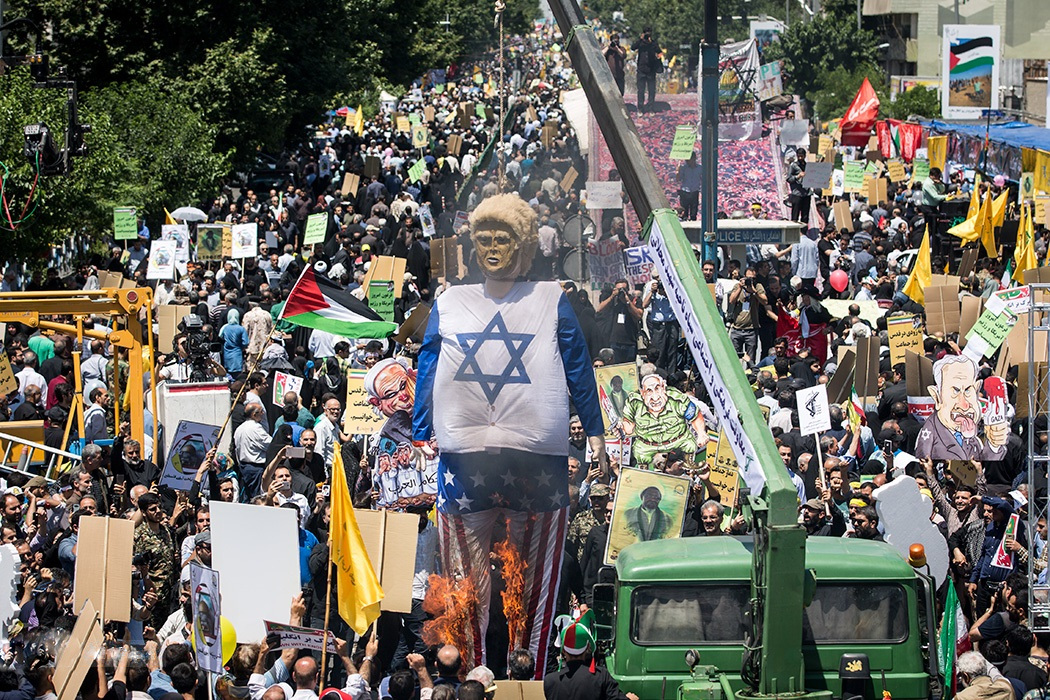
The Iranian regime presents its network of militant proxy groups, such as Hezbollah and Hamas, as the so-called “axis of resistance” aimed against Israel and American influence in the Middle East [25]. In the official rhetoric of the Iranian leadership, the United States is referred to as the “Great Satan,” while Israel has historically been labeled the “Little Satan” [24]. However, this radical anti-Israel ideology did not become part of Iranian state policy immediately after the establishment of modern Israel, but developed several decades later.
The King-Messiah
An interesting fact from deeper history is that the historical memory of Jewish-Persian relations is exceptionally positive from the perspective of Judaism. The founder of the Persian Empire, King Cyrus the Great, is highly esteemed in the Old Testament and is even the only non-Jewish figure ever designated as a messiah in these texts [24]. The reason for this recognition is his decision in 538 BCE, by which, after the conquest of Babylon, he generously released the Israelites from their long captivity [9].
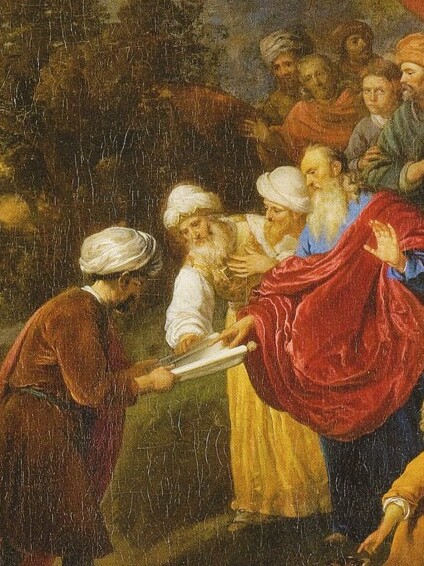
According to the biblical Book of Ezra, this Persian ruler not only allowed the Jews to return to their homeland, but also issued a decree ordering and financially supporting the rebuilding of their temple in Jerusalem [15]. Thanks to this exceptional act of kindness and tolerance, the Jewish people honored Cyrus the Great as a dignified, just king and savior [15]. As a sign of gratitude and historical remembrance, streets in many modern Israeli cities are still named after Cyrus the Great [9].
Alliance Against the Arabs
After the establishment of the modern State of Israel in May 1948, its relations with Iran, ruled by the Pahlavi dynasty, were by no means hostile. In fact, Iran became the second Muslim-majority country after Turkey to diplomatically recognize Israel as a sovereign state [2,13]. The so-called “periphery doctrine,” formulated in the 1950s by Israel’s first prime minister, David Ben-Gurion, contributed significantly to this strategic rapprochement [4,10].
The essence of Israel’s Periphery Doctrine was the systematic building of alliances with non-Arab and non-Muslim states or minorities on the geographical periphery of the Middle East. The aim of this approach was to break through a dangerous diplomatic blockade and military isolation so that Israel could counterbalance the strong hostility of neighboring Arab countries [1,4]. At that time, Israel regarded pre-revolutionary Iran, Turkey, and Ethiopia as its natural allies against the powerful Arab coalition led primarily by Egyptian President Gamal Abdel Nasser [1,4,10].
Following the Suez Crisis in 1956, when Egypt withstood a joint invasion by Great Britain, France, and Israel (albeit only because the Americans did not support the attack), this concept of the periphery led to formal regional partnerships with secular Turkey and the Ethiopian Emperor Haile Selassie [3,4]. In 1958, a strictly secret trilateral intelligence alliance was even formed between Israel, Iran, and Turkey, known under the code name “Trident” [1,26]. These countries were pragmatically united by shared concerns about aggressive Arab nationalism, as well as the Soviet Union’s growing expansionism in the surrounding region [8,23].
During the reign of Shah Mohammad Reza Pahlavi, Israel and Iran experienced a period of close cooperation, which translated into extensive trade and economic ties. Israel maintained its own permanent delegation in Tehran, which functioned as a de facto embassy, and the Israeli airline El Al operated regular direct flights between Tel Aviv and Tehran [13]. During the same period, Imperial Iran also served as an exceptionally important supplier of oil to the isolated State of Israel.
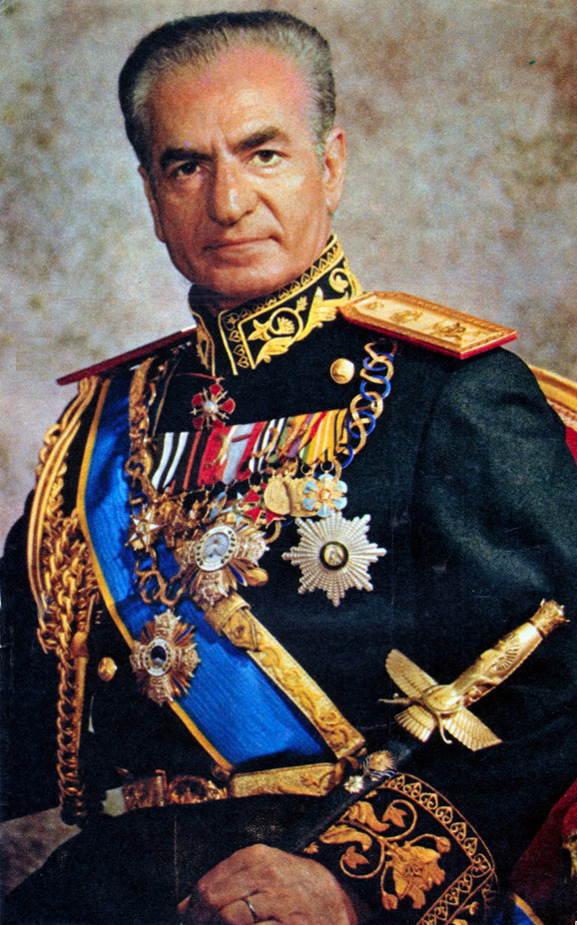
After the Six-Day War in 1967, the two countries even initiated a joint project and built the Eilat-Ashkelon oil pipeline. Through this pipeline, a massive volume of Iranian oil flowed not only directly to Israel but subsequently on to European markets [2,13]. There was also extensive military cooperation between Tel Aviv and Tehran, though this was kept strictly secret so as not to politically provoke the surrounding Arab nations [2,13].
Thanks to these secret agreements, Israel provided the Iranian armed forces not only with vital military training but also with modern weapon systems (similar to the U.S.) [23]. At the turn of the 1970s, these two states also collaborated on an ambitious military program known as Project Flower, aimed at developing an entirely new type of missile [13,14]. From a historical perspective, these were highly pragmatic alliances in which both sides were guaranteed specific mutual benefits in the fields of security and trade [12].
The Revolution Shuffles the Deck
This era of friendship came to a dramatic and irreversible end in 1979, when the pro-Western Shah was overthrown during a massive revolution that was ultimately dominated by Islamists. The new leadership, headed by Ayatollah Ruhollah Khomeini, established a theocracy that immediately rejected Western influence and adopted a staunchly anti-Zionist state ideology [23]. The new religious regime began to view Israel as a hostile colonial entity and an imperialist creation of the United States [23,24].
Just eight days after the official victory of the Islamic Revolution, Iran severed all previous diplomatic, cultural, and commercial ties with Israel. The building of the closed Israeli embassy in Tehran was demonstratively handed over to the Palestine Liberation Organization and its leader, Yasser Arafat [2,19]. Holders of Iranian passports were prohibited, under severe penalties, from traveling to Israel, and Iranian athletes were permanently banned from competing against Israeli representatives [19].
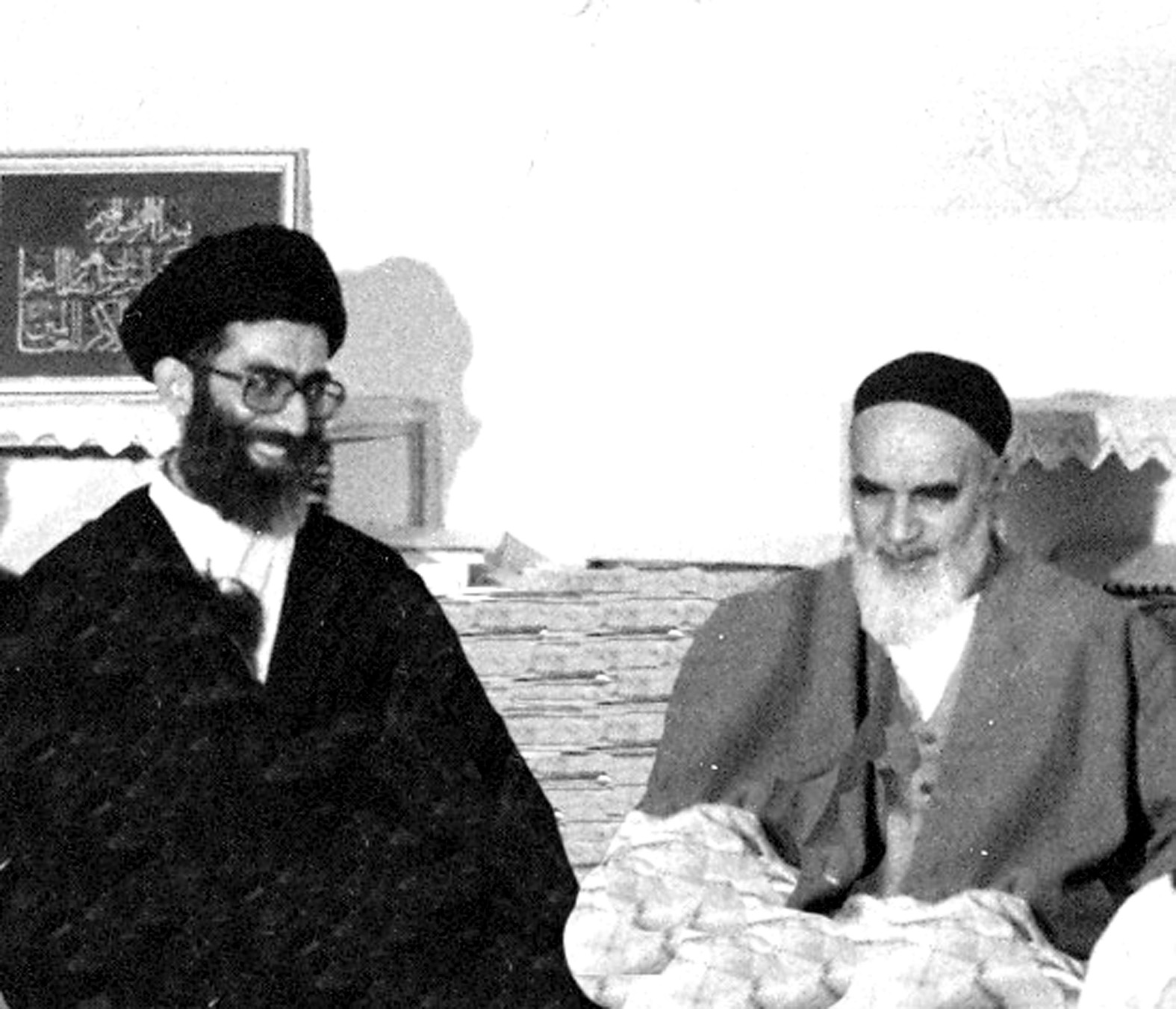
For the new Iranian regime, embracing the Palestinian cause also held high strategic and political significance in terms of power and influence across the broader region. Ayatollah Khomeini deliberately sought to transform the Palestinian issue from an Arab nationalist struggle into a global Islamic cause [2]. Through this shrewd move, he sought to erase the deep divisions between Arabs and Persians, assume a leadership role in the Islamic world, and put pro-American Arab regimes on the defensive [2].
The roots of today’s deep and proxy conflict between Israel, Iran, and the U.S. thus trace back to the ideological turning point of 1979. This silent struggle subsequently flared up in full force in the early 1990s, when, following the collapse of the Soviet Union and the weakening of Iraq during the first Gulf War, the old common threats to Tel Aviv and Tehran definitively disappeared [2,16]. Iran’s power ambitions subsequently focused on exporting the revolution through massive funding of militant organizations across the Middle East [23,25].
It is precisely these quasi-state and non-state armed groups—of which the Lebanese Hezbollah has become the strongest—that serve as Iran’s key instruments of influence and pressure on Israel [20,27]. For Israel, this Iranian presence on its borders, coupled with Iran’s efforts to acquire weapons of mass destruction, poses an absolute existential threat. In response, Israel has begun carrying out preemptive airstrikes against Iranian targets in Syria and covert intelligence operations against Iranian nuclear scientists [16,22].
This local conflict is also significantly exacerbated by the presence and power support of the United States. The Americans serve as Israel’s largest military and political supporter, while they have a long and tense history of hostility with Iran [5,6]. Tehran has not forgotten that U.S. intelligence agencies helped overthrow their Prime Minister Mossadegh in 1953 and later actively provided military support to Iraqi dictator Saddam Hussein during the brutal Iran-Iraq War [6,7]. The U.S., in turn, has not forgotten the humiliation it suffered during the hostage crisis, when radicals in Tehran held U.S. embassy staff captive for 444 long days, releasing them only on the day of President Reagan’s inauguration, January 20, 1981.
An Uncertain Future
Against the backdrop of this dangerous geopolitical chessboard, however, the question arises as to whether there is any hope for future reconciliation, particularly in the event of a regime change in Tehran. Analysts argue that if the current Islamic theocratic regime were to fall, a new pro-Western and secular Iran could quickly become a close ally of both the West and Israel [23,28]. In such a case, the new government would likely seek a path toward normalizing relations, which would attract foreign investment and dramatically alter the dynamics of the entire Middle East [23].
The stance of the Iranian public and the democratic opposition toward the state’s anti-Israel policy is already becoming increasingly open and critical. Many Iranians, especially among the younger generation, are losing all interest in the Palestinian issue and refuse to sacrifice their own economy to fund Hamas or Hezbollah [17,24]. In a 2025 public opinion poll, the renowned GAMAAN Institute even found that as many as 69 percent of Iranians surveyed unequivocally want their government to immediately stop calling for the destruction of Israel [18].
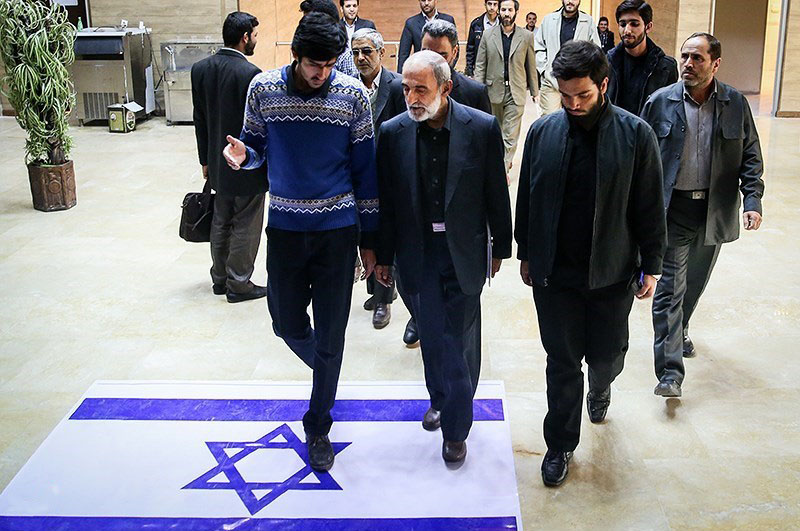
Sadegh Zibakalam, professor emeritus at the University of Tehran, notes that the sympathy some young Iranians feel toward Western leaders often does not stem from their policies but serves as a direct act of defiance against the Ayatollahs’ dictatorship [17]. The Iranian democratic opposition faces harsh punishment for these stances. One example is the prominent cleric and former interior minister Abdollah Nouri, who was sentenced to five years in prison back in 1999 after he dared to publicly question Khomeini’s aggressive doctrine toward Israel [17].
It therefore remains to be seen whether the war in 2026 will ultimately bring about the desired fall of the regime or whether the ayatollahs will survive and Iran will become even more radicalized.
List of References
[1] Israel's troubled relationship with Turkey and Iran: the "periphery" dimension https://ciaotest.cc.columbia.edu/wps/noref/0021205/index.html
[2] Iran and Israel: From allies to archenemies, how did they get here? | Israel-Palestine conflict News | Al Jazeera https://www.aljazeera.com/news/2023/11/6/iran-and-israel-from-allies-to-archenemies-how-did-they-get-here
[3] Surrounded but Unbroken: Israel Redraws the Region https://blogs.timesofisrael.com/surrounded-but-unbroken-israel-redraws-the-region/
[4] A look at Israel’s strategy to Balkanize Iran and why it will fail - Tehran Times https://www.tehrantimes.com/news/515347/A-look-at-Israel-s-strategy-to-Balkanize-Iran-and-why-it-will
[5] "How far would the US go to defend Israel?". The BBC.
[6] Clandestine Service History: Overthrow of Premier Mossadeq of Iran, Mar. 1954: p. iii.
[7] Love, Robert William. History of the U.S. Navy. Harrisburg: Stackpole Books, 1992. ISBN 978-0-8117-1863-9 p. 787
[8] Iran and Israel's Covert Pragmatic Friendship - New Lines Magazine https://newlinesmag.com/argument/iran-and-israels-covert-pragmatic-friendship/
[9] Iran’s revolution, 40 years on: Israel’s reverse periphery doctrine | Brookings https://www.brookings.edu/articles/irans-revolution-40-years-on-israels-reverse-periphery-doctrine/
[10] The collapse of Israel’s ‘Periphery Doctrine’ https://foreignpolicy.com/2010/06/26/the-collapse-of-israels-periphery-doctrine/
[11] The US-Israel War on Iran: Analyses and Perspectives https://arabcenterdc.org/resource/the-us-israel-war-on-iran-analyses-and-perspectives/
[12] Israel’s Periphery Doctrines: Then and Now | INSS https://www.inss.org.il/publication/israels-periphery-doctrines-then-and-now-2/
[13] Dahl, Brock; Slutzky, Danielle (2006). "Timeline of Turkish-Israeli Relations, 1949–2006". Turkish Research Program. Washington Institute for Near East Policy. Archived from the original on April 3, 2020. Retrieved July 26, 2012.
[14] "Iran". Nuclear Threat Initiative. November 2011. Archived from the original on July 28, 2012. Retrieved July 26, 2012.
[15] Iran–Israel relations - Wikipedia https://en.wikipedia.org/wiki/Iran%E2%80%93Israel_relations
[16] Ostovar, Afshon (2024). Wars of Ambition: the United States, Iran, and the Struggle for the Middle East. New York, NY: Oxford University Press. p.6. ISBN 978-0-19-094098-0. The simmering conflict between Iran and Israel, which is driven by the Islamic Republic's aim of destroying Israel as a Jewish entity, fuels the Palestinian crisis, and reverberates across the region and beyond, also features heavily and is the focus of the book's latter section. [...] Iran sought ... an end to America's dominance and to Israel's existence as a Jewish state. Those had been Iran's goals since the 1979 revolution ...
[17] Arjomand, Said Amir (2009). After Khomeini: Iran under his successors. Oxford; New York: Oxford University Press. pp. 95–96. ISBN 978-0-19-539179-4.
[18] "Iranians' Attitudes Toward the 12-Day War – Gamaan". Gamaan – The Group for Analyzing and Measuring Attitudes in IRAN. November 5, 2025. Retrieved February 7, 2026.
[19] The Main Axes of Iran’s Foreign Policy Toward the Palestinian-Israeli Conflict — Valdai Club https://valdaiclub.com/a/highlights/the-main-axes-of-iran-s-foreign-policy/
[20] A Revolution and A War: How Iran Transformed Today’s Middle East – The Cairo Review of Global Affairs https://www.thecairoreview.com/essays/a-revolution-and-a-war-how-iran-transformed-todays-middle-east/
[21] Why did the US and Israel attack Iran and how long could the war last? https://www.bbc.com/news/articles/cx2dyz6p3weo
[22] Farnaz Fasihi. ‘Iran Commanders Killed in Syria, Israel Says.’ The New York Times. April 1, 2024. Accessed April 21, 2024. https://www.nytimes.com/2024/04/01/world/middleeast/iran-commanders-killed-syr-ia-israel.html.
[23] [PDF] Shifting Sands: From Alliance to Adversity Tracing Iranian-Israeli ... https://www.ojs.pssr.org.pk/journal/article/download/831/648%E2%80%A4
[24] Israel-Iran: A Primer for the Maine Community https://www.mainejewish.org/israel-iran-a-primer-for-the-maine-community
[25] The Degradation of Iran’s Proxy Model https://www.belfercenter.org/research-analysis/degradation-irans-proxy-model
[26] Nixon, Kissinger, and the Shah: The United States and Iran in the Cold War, Roham Alvandi, 2016, pp. 71-72, ISBN 978-0-19-061068-5
[27] The impact of the Islamic Revolution of 1979 - No Labels https://nolabels.org/the-latest/the-impact-of-the-islamic-revolution-of-1979/
[28] Understanding the War between Israel and Iran: Q&A with Amichai Magen and Abbas Milani | FSI https://cddrl.fsi.stanford.edu/news/understanding-war-between-israel-and-iran-qa-amichai-mage