Michael Collins – When a Revolutionary Hero Became a Film Legend
Thirty years since the premiere of the film that divided both critics and Ireland.
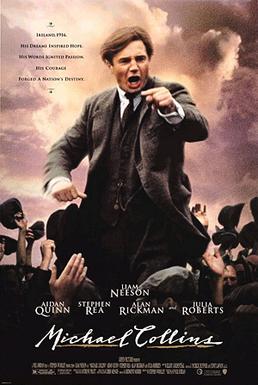
In 1996, Irish director Neil Jordan released the ambitious biographical film *Michael Collins*, which sought to bring the story of one of the most significant figures in modern Irish history to a global audience. Starring Liam Neeson in the title role, London-born Alan Rickman as Éamon de Valera, and Julia Roberts as Collins’ fiancée Kitty Kiernan, the film became one of the most remarkable political biopics of the 1990s. [11] On the occasion of the 30th anniversary of its theatrical release, it is worth examining what the film told audiences, what it omitted, and where it adapted history to the needs of a compelling narrative.
The Man Who Changed the Rules of the Game
To understand the film, we must first understand the man it tells the story of. Michael Collins was born in 1890 in West Cork to a family of moderately wealthy farmers with a strong revolutionary Fenian tradition; he emigrated to London and worked as a bank clerk, joining the Irish Republican Brotherhood. [5] He fought in the Easter Rising of 1916, where he played only a minor role as Joseph Plunkett’s aide at the General Post Office in Dublin. [15]
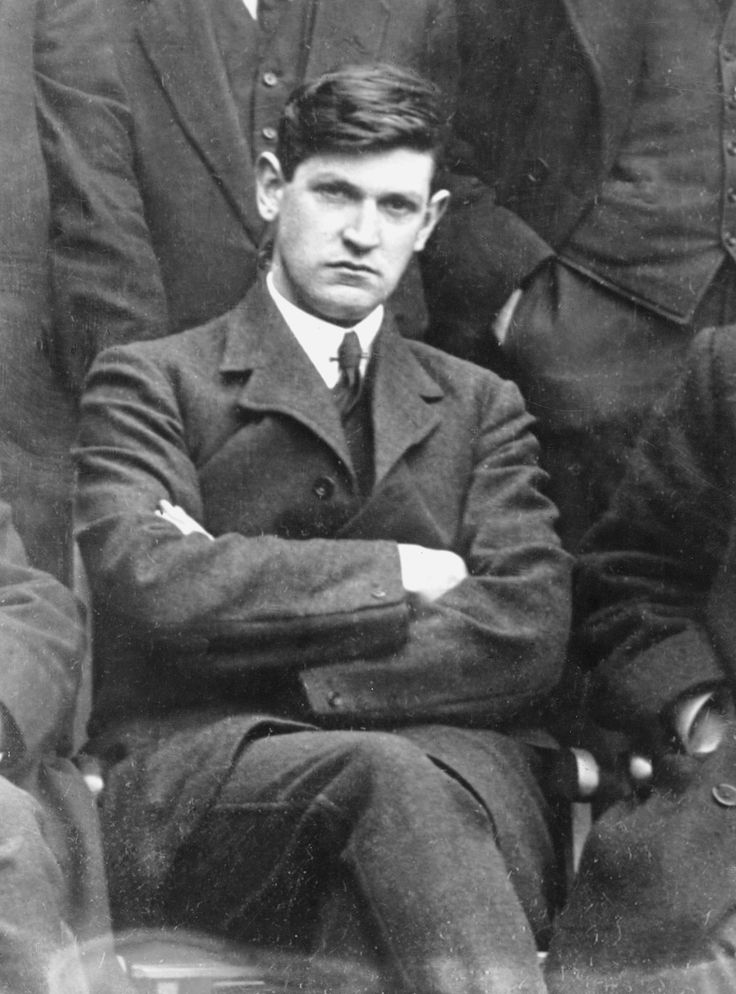
After his internment at Frongoch Camp in Wales—which became a “school of revolution”—Collins transformed into one of the most effective guerrilla strategists in modern history. [1] By his thirties, he was Minister of Finance, Director of Intelligence for the Irish Republican Army (IRA), and likely also Chairman of the Supreme Council of the Irish Republican Brotherhood. [15] He was essentially a pioneer of guerrilla warfare, a deliberately mysterious underground figure who, after the failed Easter Rising, realized that any conventional struggle against the British was doomed to failure. [14]
The Easter Rising – Where It All Began
The film opens with dramatic scenes from the Easter Rising in April 1916, which serves as the logical starting point for the entire story. The uprising was organized by seven members of the Military Council of the Irish Republican Brotherhood and began on Easter Monday, April 24, 1916. [1] Approximately 1,200 volunteers and members of the Irish Citizen Army occupied key positions in central Dublin, with the General Post Office serving as their main base, in front of which Patrick Pearse read the Proclamation of the Irish Republic. [1]
The British Army, with superior numbers and artillery, quickly suppressed the uprising, and Pearse agreed to an unconditional surrender on Saturday, April 29. [1] Facing approximately 20,000 British soldiers, the rebels had no chance of military success—the uprising was suppressed after six days, leaving 485 dead, most of whom were civilians. [21] Most of the leaders were sentenced to death by a military court; between May 3 and 12, 14 of the main rebels were executed, which paradoxically shifted public opinion in favor of the revolutionary nationalists. [1]
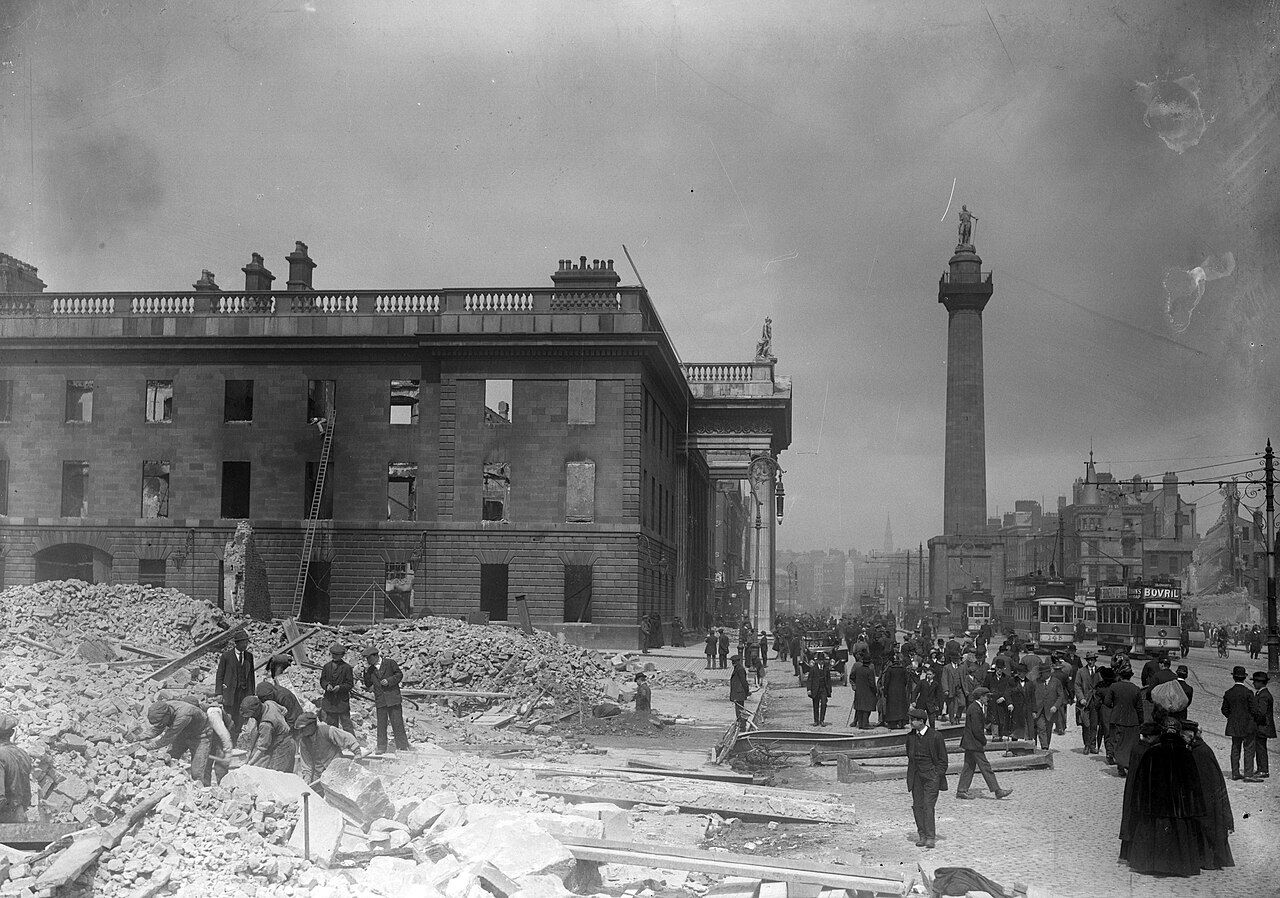
The film depicts this sequence with dramatic emphasis, showing the executions of Pearse, Connolly, and other leaders and dramatically creating an atmosphere of defeat from which, however, a new kind of resistance is born. In the film, Collins and his friend Harry Boland (Aidan Quinn) “miraculously” avoid execution. [13] The reality was more prosaic—Collins was not one of the leaders of the uprising, and therefore, as an ordinary participant, he was interned instead of executed.
From Guerrilla Warfare to the Negotiating Table
After his release from internment, Collins reorganized the resistance movement in a way that was previously unknown in Ireland. The film fairly accurately depicts how Collins built a sophisticated intelligence network and employed guerrilla warfare tactics instead of conventional military engagements. As a reviewer for The Movie Buff wrote, it is precisely in its depiction of these paramilitary tactics—particularly guerrilla warfare—that the film excels, as it shows what set Collins apart from previous failed attempts. [13]
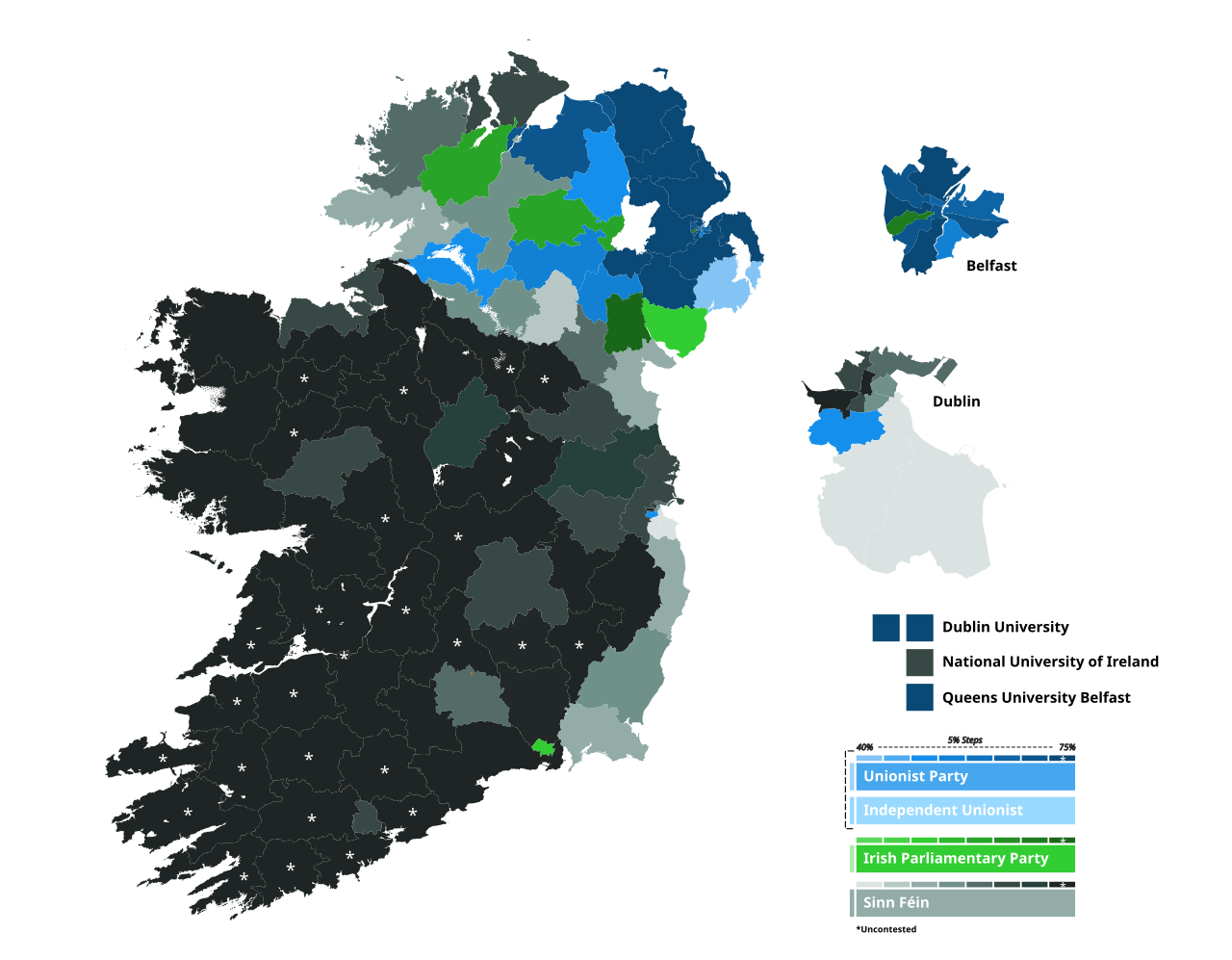
In December 1918, Republicans represented by the Sinn Féin party won 73 of 105 Irish seats in the British parliamentary elections. On January 21, 1919, they convened the so-called First Dáil, declared the independence of the Irish Republic, and later that same day, the Irish War of Independence began. [1] At that time, Collins was effectively both the commander of the IRA and the Minister of Finance, and since most of the civilian leadership was imprisoned, he was the one who contributed most to coordinating the military resistance from 1919 to 1921. [5]
The Anglo-Irish Treaty – Collins’ “Pyrrhic Victory”
The film places great emphasis on the events surrounding the Anglo-Irish Treaty, and this is where the biggest problems with historical accuracy begin. After the end of the War of Independence and the conclusion of the armistice in July 1921, representatives of the British government and five Irish treaty delegates led by Arthur Griffith, Robert Barton, and Michael Collins negotiated in London from October 11 to December 6, 1921. [2] Éamon de Valera, President of the Irish Republic, controversially decided not to participate in the negotiations—allegedly to preserve his position in case the results were unsatisfactory. [6]
Collins was a reluctant participant in the delegation, angry at de Valera for his absence. [15] Collins himself put it bluntly: “When our cabinet sent me to London, I made it clear that neither I nor anyone else could bring back the republic, and de Valera admitted to me that it was not possible.” [4] Collins even claimed that de Valera had pleaded with him before he left for London: “Get me out of the straitjacket of the Irish Republic—I can’t get it back.” [4]
The negotiations were extremely tense. On the Irish side, Collins and Griffith always participated, while on the British side, future Prime Minister Neville Chamberlain was a regular participant. [4] On Monday, December 5, Prime Minister Lloyd George informed the Irish delegation that they must sign immediately, or it would mean war “within three days.” Collins and Griffith convinced the last holdout, Robert Barton, that if he did not sign, he alone would be responsible for “the devastation of Irish homes and the slaughter of Irish youth.” [8] The treaty was signed at 2:20 a.m. on December 6, 1921. [8]
In a frequently cited exchange, F. E. Smith, Earl of Birkenhead, one of the British negotiators, said to Collins: “I may have just signed my political death warrant.” Collins replied: “I may have signed my actual death warrant.” [7] These were prophetic words.
Collins versus de Valera – Reality and Cinematic Fiction
One of the most controversial aspects of the film is its portrayal of the relationship between Collins and de Valera. According to critic Roger Ebert, the film depicts de Valera as “a weak, affected, whining prima donna whose grand gestures led to decades of needless bloodshed in Ireland and for the sake of Ireland.” [11] In the film, Alan Rickman created a character that one review described as the “indispensable Irish villain” embedded within the narrative. [13]
The historical reality was considerably more complex. The faction opposing the treaty, led by de Valera, objected that accepting the treaty would abolish the Irish Republic of 1919, to which they had sworn allegiance. [2] De Valera and his supporters argued that “people have no right to do evil”—by which they meant that even majority support for the treaty did not justify betraying republican ideals. [2] What bothered them most was that the state would remain part of the British Empire and that members of parliament would have to take an oath, which they considered an oath of allegiance to the British king. [2]
On the other hand, Collins and his pro-Treaty forces argued that while the Treaty did not provide “the ultimate freedom that all nations strive for and develop, it did provide the freedom to achieve it.” [2] De Valera himself later acknowledged the accuracy of this claim—when he took power in 1932 and read the records of the previous government, he told his son: “They were magnificent.” [19]
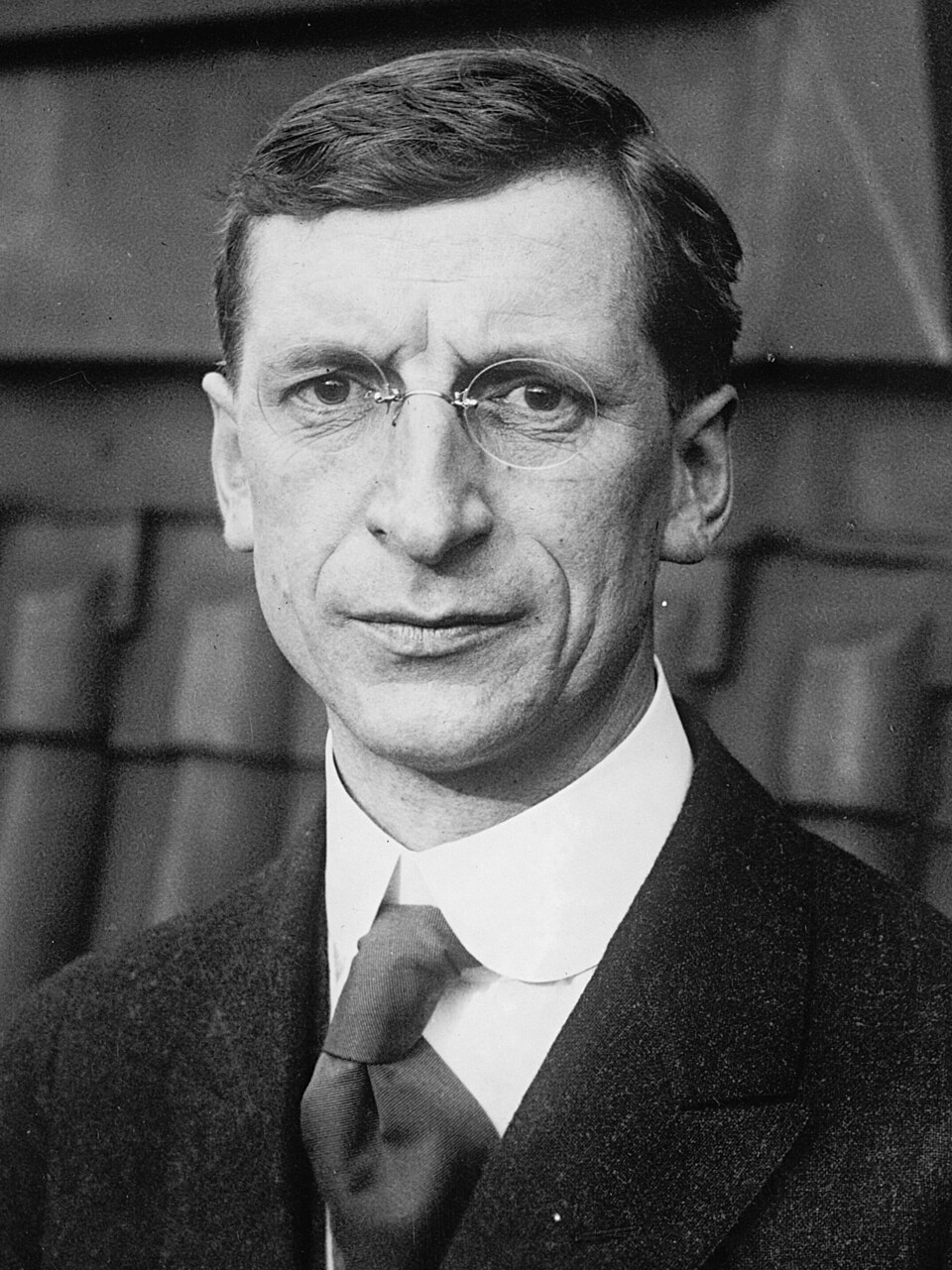
The relationship between Collins and de Valera was undoubtedly more complex than the film portrays. As one reviewer noted, “when one makes a film for an international audience, nuance is often the first thing to be sacrificed.” [17] Director Jordan himself admitted that the portrayal of de Valera in the film was “unfair.” [11] According to Alan Rickman, there was a scene in the script that clearly showed his character was not involved in Collins’s death, but it was cut in favor of a more romantic conclusion. [11]
Death at Béal na Bláth
The film culminates in Collins’s death, suggesting that he was deliberately lured into a trap by de Valera’s associates. [11] In reality, Collins was killed during an ambush during the Irish Civil War on August 22, 1922, near Béal na Bláth in his native West Cork, likely while traveling to reconcile with former comrades-in-arms. [15] He was only 31 years old. Although both Jordan and Rickman later claimed that it was not intentional, the film suggests that de Valera played a role in Collins’s murder. [17] Coincidentally, Arthur Griffith died of a cerebral hemorrhage just ten days before Collins, but the Treaty supporters managed to recover from the double loss and win the civil war in May 1923.
Interestingly, de Valera later in life paid tribute to Collins in a eulogy, suggesting that he may have recognized his own mistakes. [13] However, historians still disagree on the exact circumstances of Collins’s death—it remains one of the greatest unsolved mysteries of modern Irish history. [9]
Other Historical Inaccuracies
The film contains several other deviations from historical facts. One of the most striking is the fate of Ned Broy, Collins’s spy within the Dublin police force, whom Stephen Rea portrays as a sympathetic tragic figure—in the film, he becomes a victim of bloody British revenge. In reality, Ned Broy outlived Michael Collins by several decades and died peacefully at the age of 84. [17] Similarly, Harry Boland did not die in the manner the film suggests—he was shot in a firefight with soldiers of the Irish Free State (i.e., supporters of the Treaty) at the start of the civil war at the Grand Hotel in Skerries, not under romantically tragic circumstances. [11]
The film also significantly altered the events surrounding Bloody Sunday at Croke Park and the formative years of Dáil Éireann. [11] Neil Jordan defended his film by arguing that a two-hour movie cannot provide a completely accurate account of events and must be accessible to an international audience unfamiliar with the details of Irish history. [11] Some critics were lenient, others less so. As one reviewer noted, the film “cleanses historical tedium by replacing it with a mashup of star power.” [20]
Julia Roberts – the star no one expected
The casting of Julia Roberts as Kitty Kiernan was one of the film’s most debated decisions. Many viewers were puzzled by her presence in the relatively small role of Collins’s Irish fiancée. [16] Director Jordan explained it bluntly: “The truth is, Michael Collins wouldn’t have been made without Julia. She was very interested in the script. She looked like Kitty Kiernan. The only problem is that when you cast the biggest star in the world in a relatively minor role, everyone asks, ‘That’s Julia Roberts; what is she doing here?’” [16]
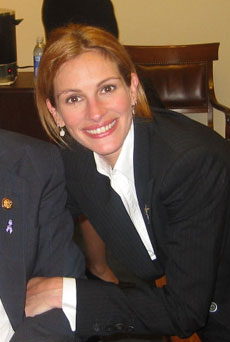
Critical reception was mixed. A reviewer for Variety noted that Roberts was “charming, even though she played a role that remained underdeveloped in the script.” [14] Others were more blunt—her American accent was described as “questionable” and her very presence in the film as “distracting.” [3] Nevertheless, Roberts helped draw a wider audience to a lesser-known story. [16]
Neeson and Rickman – the film’s acting pillars
Liam Neeson delivered a performance in the title role that earned him the Volpi Cup for Best Actor at the Venice Film Festival. [11] Three years after the timeless Schindler’s List, he still possessed the charisma that made that film a success, and in Michael Collins, he looked like the embodiment of a “reluctant patriot.” [13] Neeson was perhaps a few years older than the role of a man who died at thirty-one would have required (he was 43 at the time of filming), but he played with “a charismatic presence that made him believable as a leader.” [17] A Variety reviewer called him “a riveting dynamo who seized his role with a passion and courage entirely in keeping with the character’s approach to life.” [14]
Alan Rickman created a memorably sinister de Valera. [17] Although some critics complained that the character was too one-dimensional, Rickman “effectively planted the seeds that things between de Valera and Collins might not end well.” [14] For this performance, he was nominated for a BAFTA Award for Best Supporting Actor. [11]
Critical Reception – From Venice to the Box Office
The film Michael Collins won the Golden Lion for Best Film at the 53rd Venice International Film Festival. [11] On Rotten Tomatoes, it has a 78% rating based on 50 reviews with an average score of 6.90/10, with the site’s consensus stating: “As impressively ambitious as it is satisfyingly moving, Michael Collins honors the remarkable achievements of its subject with a magnetic performance by Liam Neeson in the title role.” [11] On Metacritic, it received a weighted average of 60 out of 100, indicating “mixed or average reviews.” [11]
Irish journalist Kevin Myers, known for his criticism of armed Irish republicanism, surprisingly praised the film in his column in the Irish Times: “I think it’s magnificent. I was unable to leave the theater after it ended, so deeply moved and saddened was I." [11] Geoff Andrew in Time Out wrote that "this is Jordan’s most ambitious and satisfying film—a thriller with a real sense of scale, pace, menace, and moral significance." [11] Variety described the film as “stunningly well-made... a film with immense action, plot, and dynamism.” [11]
Roger Ebert gave the film three out of four stars, and Ian Nathan of Empire gave it four out of five, describing it as “a mature, passionate biography of a tragic Irish revolutionary that takes a thoughtful, intelligent stance.” [11] Audiences in the CinemaScore survey gave the film an average grade of B+ on a scale from A+ to F. [11]
Box Office Success – An Irish Record, an American Disappointment
The film had an estimated budget of $25 million, with 10 to 12 percent coming from the Irish Film Board—it was one of the most expensive films ever made in Ireland. [11] In Ireland, it became an absolute phenomenon. During its opening weekend, it grossed 442,867 pounds in the Republic of Ireland, surpassing the previous record held by Independence Day. [10] It became the highest-grossing film in Irish history, surpassing Jurassic Park with earnings of 4.27 million Irish pounds ($6.7 million); in 2000, it was surpassed in this category only by Titanic. [11]
In the United States, the story was less well-known and the film had a more modest opening—it opened in only six theaters on October 11, 1996, earning $182,221 over the weekend. [11] In total, it grossed $11.1 million in the U.S. and Canada. [11] Internationally, it grossed $21.7 million, for a worldwide total of $32.8 million. [11] With a budget of $25 million, this was only a modest commercial result—worldwide box office receipts amounted to just 1.1 times the production budget. [12]
On the one hand, the film attracted an unusual audience in Ireland. One man reported that he had not been to a movie theater in 50 years. [10] Schools booked group tickets, and the film became a nationwide cultural event. [10] On the other hand, in the U.S., the historical theme was not particularly appealing, and the film failed to reach a mass audience despite the presence of Julia Roberts. [14]
Context of Creation – When History Didn’t Want to Repeat Itself, But Could
An interesting aspect of the film’s production was the fact that the IRA ceasefire collapsed during filming, causing the premiere to be postponed from June to December. Warner Bros. executive producer Rob Friedman even pressured the director to reshoot the film’s ending and focus on the love story between Collins and Kitty instead of the political context of the collapse of peace negotiations. [11] The film was thus made in a tense atmosphere, when Ireland’s past was a painfully vivid presence. Peace in Northern Ireland finally came about after the signing of the so-called Good Friday Agreement on April 10, 1998, which was subsequently approved by referendums in both Northern Ireland and the Republic of Ireland.
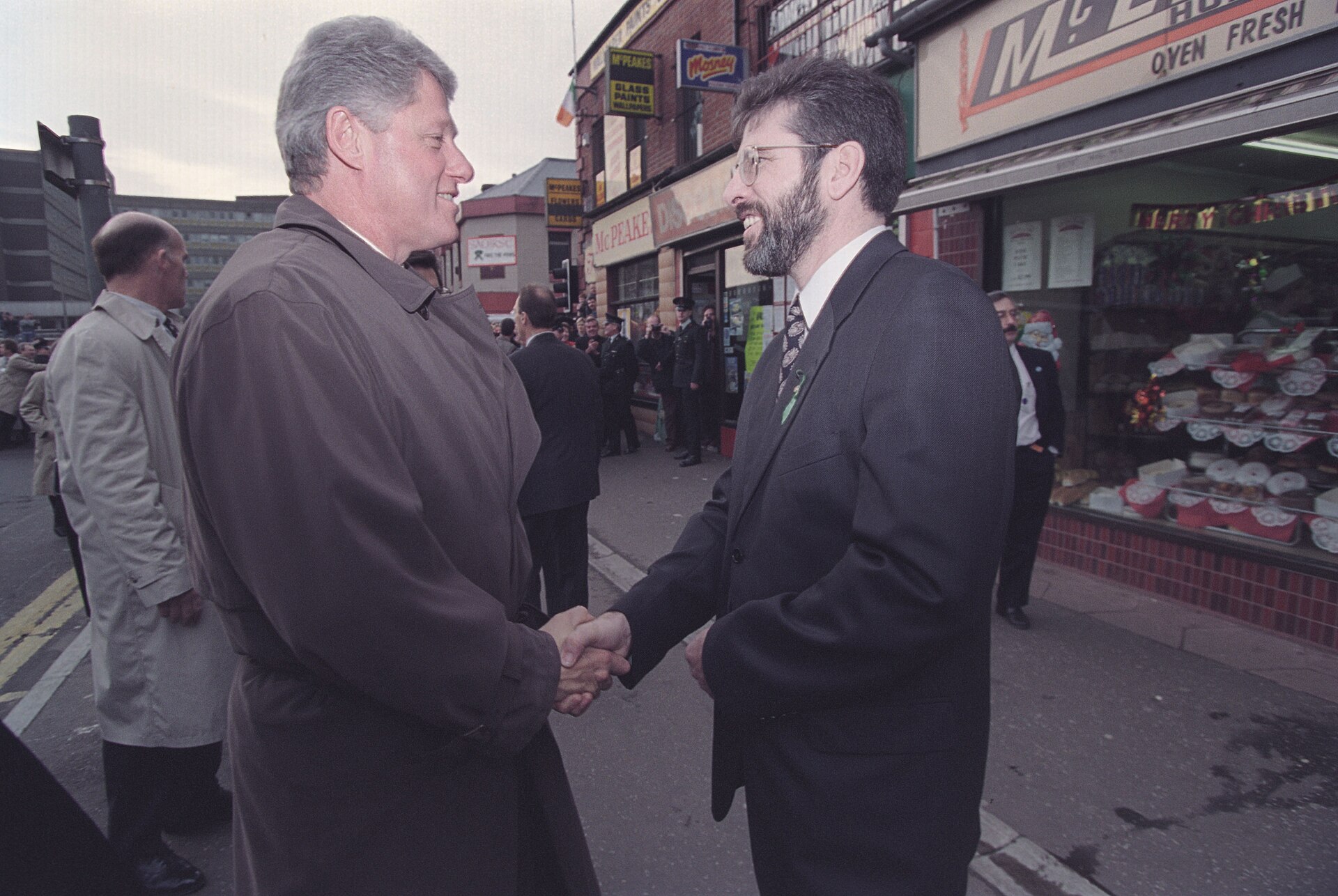
The Irish film censor originally intended to give the film a rating for ages 15 and up, but ultimately decided on a PG rating due to its historical significance, stating that “parents should have the opportunity to decide for themselves whether their children will see the film or not.” [11]
Verdict – a grand but biased portrait
Thirty years later, Michael Collins remains an impressive but flawed film. Jordan “entertains and informs, but personalizes at the expense of the political dimension.” [20] The film significantly idealizes the protagonist and reduces his opponent, de Valera, to the role of a villain, which is historically inaccurate. De Valera’s relationship with Collins was undoubtedly more complex than the film portrays. [17]
Despite all its shortcomings, the film fulfilled an important role—it brought to an international audience the story of a man who was a revolutionary leader, a pragmatic statesman, and ultimately a martyr for peace. Collins himself summed it up best after signing the treaty: “Consider what I have gained for Ireland? Something it has longed for the past 700 years. Will anyone be satisfied with this exchange? Will they? I tell you this—I have signed my own death warrant.” [18] Nine months after signing the treaty, he was dead. [7] The film captures this tragic arc with a power that, even three decades later, leaves no viewer indifferent.
List of References
[1] Easter Rising – Wikipedia https://sk.wikipedia.org/wiki/Ve%C4%BEkono%C4%8Dn%C3%A9_povstanie
[2] Ireland – Wikipedia https://sk.wikipedia.org/wiki/%C3%8Drsko
[3] Best Actor: Alternate Best Actor 1996: Liam Neeson in Michael Collins https://actoroscar.blogspot.com/2014/03/alternate-best-actor-1996-liam-neeson.html
[4] The National Collins22 Society | Treaty Plenipotentiaries http://www.generalmichaelcollins.com/life-times/rebellion/treaty-plenipotentiaries/
[5] Today in Irish History, the Anglo-Irish Treaty is Signed, December 6, 1921 – The Irish Story https://www.theirishstory.com/2011/12/06/today-in-irish-history-6-december-1921-the-anglo-irish-treaty-is-signed/
[6] John M. Regan, The Irish Counter-Revolution 1921–1923, p. 12
[7] Tim Pat Coogan, Michael Collins, p. 276
[8] Hopkinson, pp. 30–32; Pakenham, pp. 245–247
[9] The Good Friday Agreement, the 1921 Treaty, and Michael Collins | The Assassination of Michael Collins: What Happened At Béal na mBláth? https://collinsassassination.wordpress.com/2023/04/05/the-good-friday-agreement-the-1921-treaty-and-michael-collins/
[10] "Michael Collins" breaks Irish box office records – The Irish Times https://www.irishtimes.com/news/michael-collins-breaks-irish-box-office-records-1.106871
[11] Michael Collins (film) - Wikipedia https://en.wikipedia.org/wiki/Michael_Collins_(film)
[12] Michael Collins (1996) - Box Office and Financial Information https://www.the-numbers.com/movie/Michael-Collins
[13] REVIEW - 'Michael Collins' (1996) | The Movie Buff https://www.themoviebuff.net/2023/08/review-michael-collins-a-tragic-biography-that-brings-the-big-fella-to-life/
[14] Michael Collins https://variety.com/1996/film/reviews/michael-collins-1200446989/
[15] Michael Collins | THE ANGLO-IRISH TREATY DELEGATIONS 1921 https://theanglo-irishtreatydelegations1921.org/michael-collins
[16] The one role nobody wanted Julia Roberts to play https://faroutmagazine.co.uk/the-role-nobody-wanted-julia-roberts-to-play/
[17] Film Review: Michael Collins (dir. by Neil Jordan) https://unobtainium13.com/2025/03/17/film-review-michael-collins-dir-by-neil-jordan/
[18] Furneaux Smith, Eleanor (1940). Life's a circus. Doubleday, Doran & Company, Inc. p. 142. Archived from the original on April 16, 2021. Retrieved October 16, 2015.
[19] Anglo-Irish Treaty - Wikipedia https://en.wikipedia.org/wiki/Anglo-Irish_Treaty
[20] Bullet-Riddled/Star-Studded History https://legacy.chass.ncsu.edu/jouvert/v1i1/PRAMAG.HTM
[21] GLASNEVIN TRUST, 2015. 1916, Necrology 485. [online] [cited 2022-03-11]. Available from: https://www.scribd.com/doc/261363665/Glasnevin-Trust-1916-Necrology-485