The Magna Carta marked the beginning of the rule of law
On the occasion of the coronation (May 27, 1199) of the only English king named John, we will examine a document adopted during his reign that was the first to limit royal power and thus, at the very least indirectly, marked the beginning of the rule of law.
The Wicked Ruler
The hero of the Third Crusade, King Richard the Lionheart of England died in April 1199 during the siege of a castle in France after being fatally struck by an arrow, which immediately sparked a power struggle over the vacant throne between his brother John and his twelve-year-old nephew Arthur, the son of their other brother Geoffrey [5,8,24]. While Norman law favored John as the sole surviving son of Henry II, Anjou law favored the young Arthur [9,26]. The English and Norman nobility ultimately supported John, who, with the help of his mother Eleanor of Aquitaine, was crowned on May 27, 1199, at Westminster Abbey [10,26].
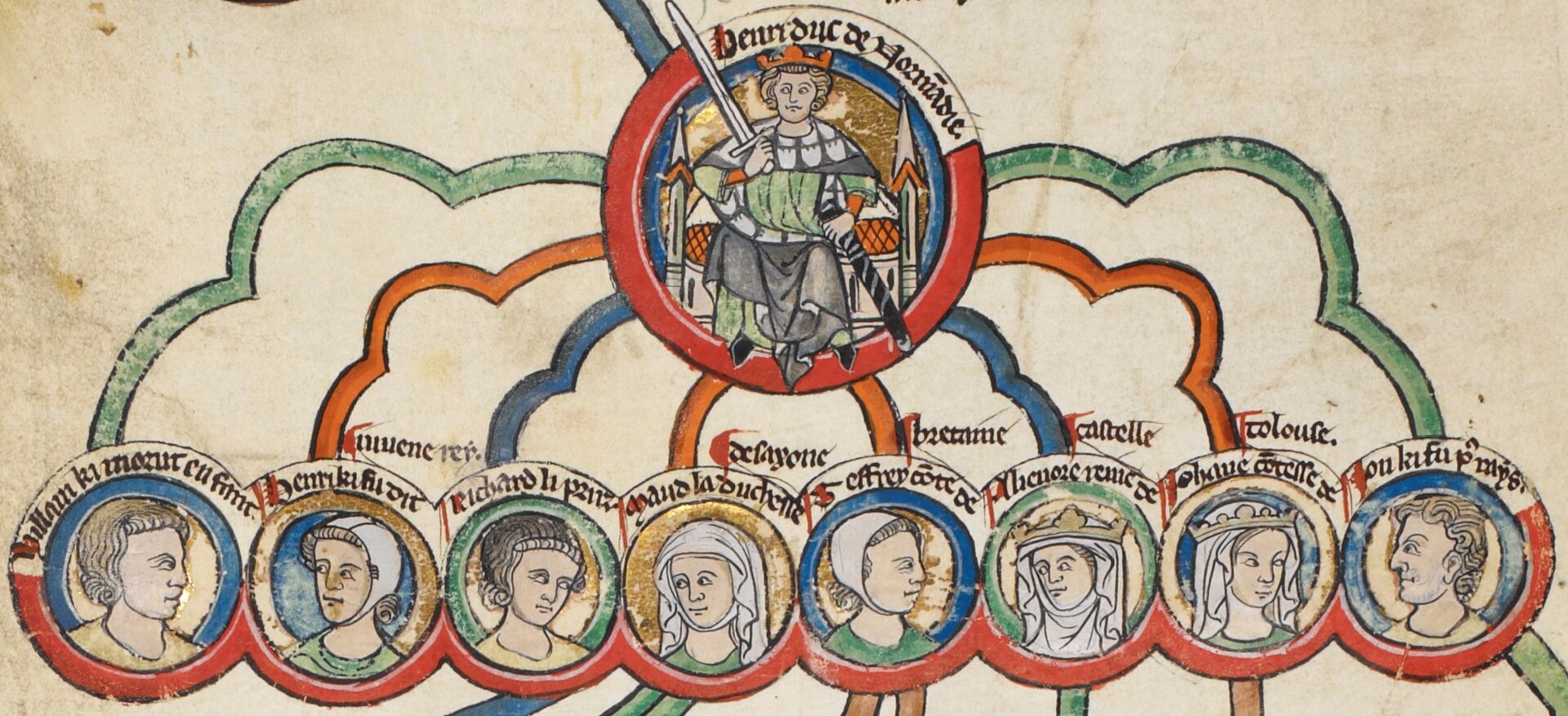
John Lackland, as he later went down in history, quickly earned a reputation as one of the least popular monarchs due to his unpredictable nature and cruelty [5,14,24]. His reign was a disaster, primarily because he lost vast English territories in France, including Normandy and Anjou, for which he earned the derisive nickname “John Soft Sword” [5,14,19]. In an effort to reclaim these valuable territories, he constantly raised taxes, thereby financially ruining his own country without achieving any military successes [5,26].
His personal missteps and the deep distrust he inspired among his powerful subjects also contributed to his immense unpopularity [11,24]. The king not only alienated the nobility by abusing the judicial system and selling legal privileges, but also entered into open conflict with Pope Innocent III, who excommunicated him [26,29]. The situation was further exacerbated by dark rumors that John had, on several occasions, starved the families of his opponents to death and, when emboldened by wine, allegedly murdered his captive nephew—his rival Arthur—with his own hands [12,24,25].
The defeat sparked a rebellion
The final straw for the discontented subjects was the crushing defeat at the Battle of Bouvines on July 27, 1214, where the French King Philip Augustus defeated the German Emperor Otto IV along with the English auxiliary force, led by John’s half-brother William, nicknamed Longsword.[11,24]. When the monarch returned to England and again demanded more money from the impoverished barons, the nobility in the north of the country refused to obey and rebelled [11,25,29]. The rebels, who called themselves "God’s Army," successfully occupied London in May 1215, forcing the king to begin negotiations [11,25,28].
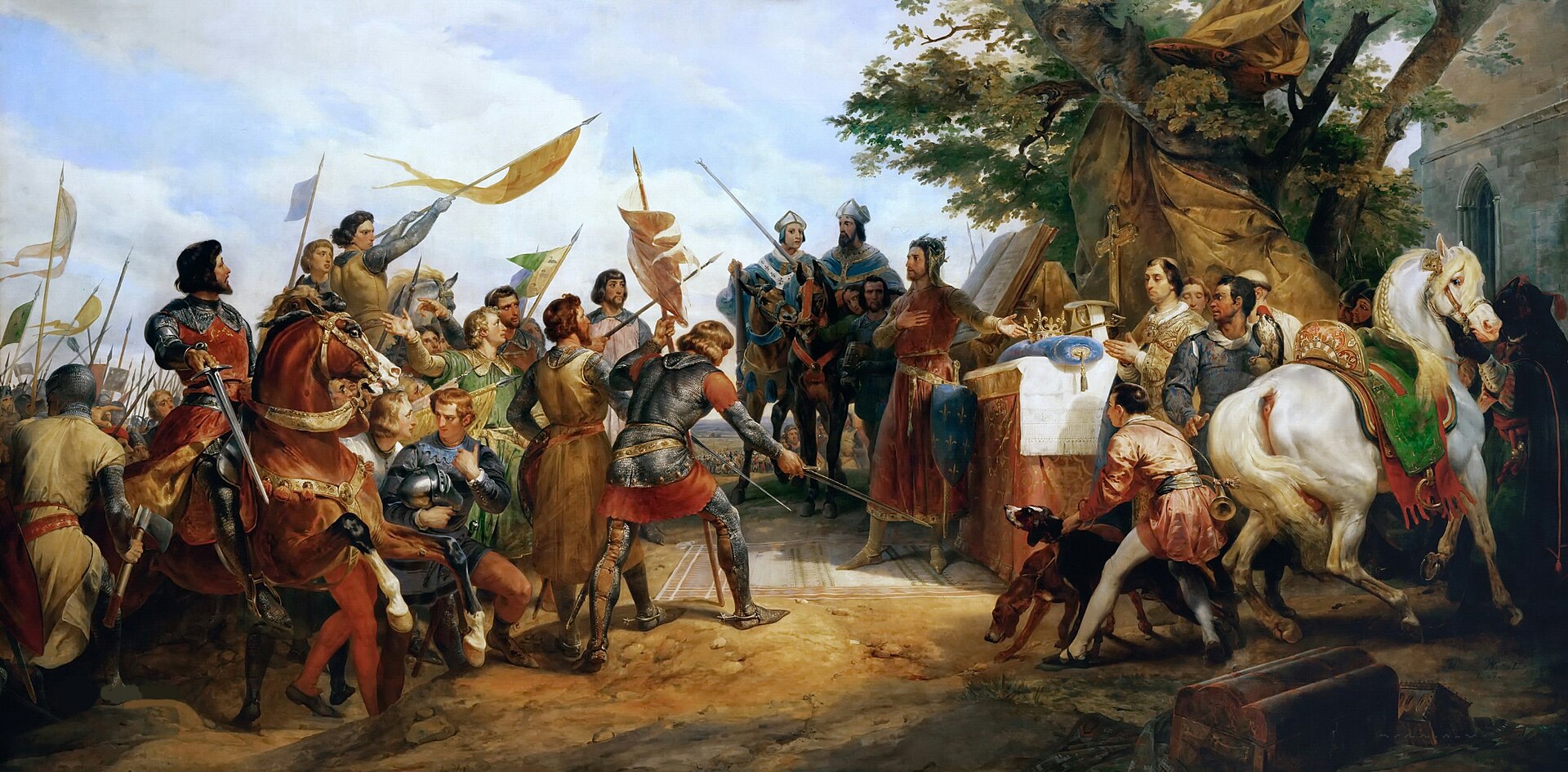
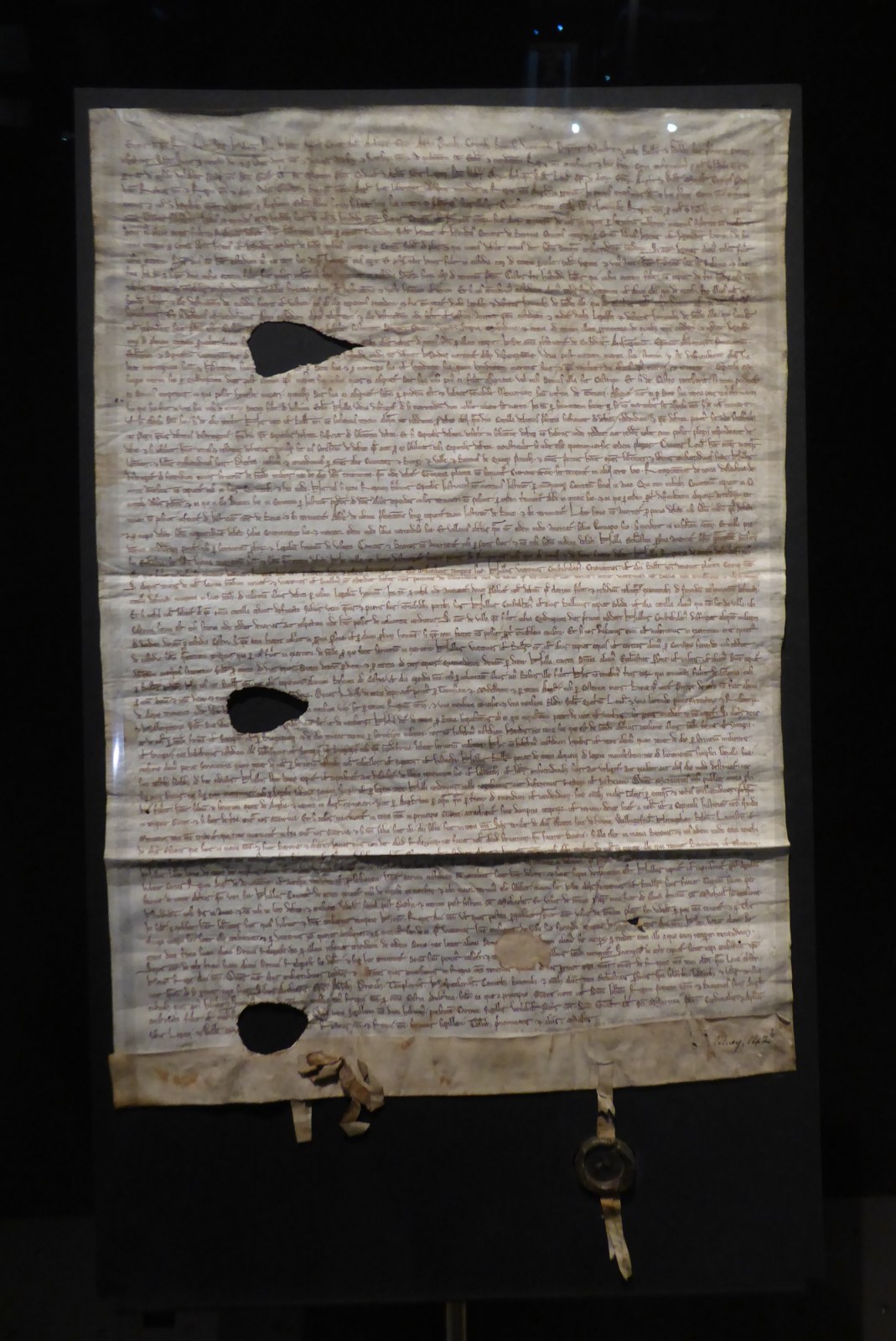
These tense historical events culminated in the famous meeting on the meadow at Runnymede on June 15, 1215 [5,29]. King John, in a desperate situation, was forced to sign a peace treaty with his barons to prevent a devastating civil war [1,27]. This document went down in history as the Magna Carta and became a fundamental milestone in constitutional history, as it radically limited the monarch’s arbitrary power [11,29]. John himself died in 1216 of dysentery, and his reputation is well illustrated by the fact that no subsequent English king bore that name.
His line, however, continued, as his son Henry took the throne, and John’s grandson was Edward I, the conqueror of Wales (popularized by Gibson’s famous film *Braveheart*), and his great-great-grandson was Edward III, who sparked the Hundred Years’ War with his claim to the French throne. Today, we know John Lackland mainly as the treacherous prince who plots against his brother Richard the Lionheart in the stories of Robin Hood.
A Revolutionary Document
Before the adoption of this landmark document, English kings considered themselves rulers chosen by God, standing far above the laws of the land [1,6]. The Magna Carta abolished this absolutist approach and established a legal framework that even the king himself was required to follow [1,20]. The document expressly prohibited the monarch from arbitrarily seizing property or imposing unreasonable taxes on the barons without their prior consent [5,6,20].
Among the most revolutionary and best-known parts of the document are Clauses 39 and 40, which to this day form the cornerstone of modern law [7,30]. Clause 39 solemnly guaranteed that no free man would be imprisoned, deprived of his property, or banished except by a lawful judgment of his peers and in accordance with the law of the land [1,28]. In Clause 40, the monarch further pledged not to sell, deny, or artificially delay access to justice for anyone [7,23].
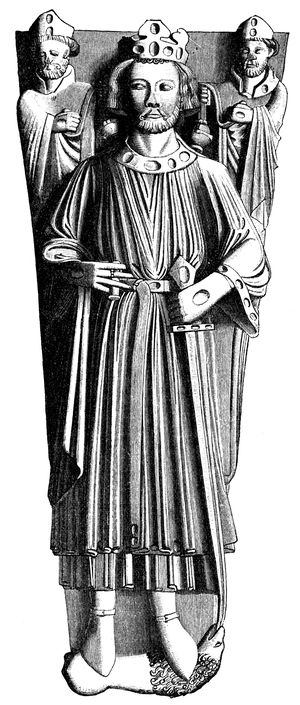
Although the Magna Carta is sometimes exaggeratedly referred to as the birth of democracy, in reality this medieval document did not defend the rights of the common people [6,23]. It was rather a pragmatic agreement drafted by powerful barons to protect their own privileges against royal power [7,29]. Nevertheless, this collective action by the nobility planted the seed of future democratic development and became an important step on the path to a constitutional monarchy [5,23].
Rule of Law
The greatest contribution of the Magna Carta lies in the fact that it laid a solid foundation for the rule of law and the concept of the so-called “rule of law” [4,16]. In practice, this meant the establishment of the principle that governmental power must be exercised according to fixed rules and that no one, not even a powerful monarch, stands above the law [2,15]. This transition from the rule of the ruler to the rule of law was something completely unprecedented in Europe at the time, where an absolutist hierarchy prevailed [4,20].
Also of interest is the influence of this document on the formation of the English parliamentary system itself [23]. The Magna Carta established a body of twenty-five barons tasked with ensuring that the king adhered to the new laws and rectified any violations [1,11]. This council of barons functioned as an early system of checks and balances, which gradually evolved into a representative parliament divided into the House of Lords and the House of Commons [1,18,23].
The legacy of the Magna Carta has not faded even after centuries and has permanently shaped the development of constitutions and legal systems far beyond the borders of England [13,23]. The American Founding Fathers were strongly inspired by it in drafting the Declaration of Independence and the U.S. Constitution itself [1,21,29]. This is most clearly seen in the Fifth Amendment to the U.S. Constitution, which directly adopts the historic guarantee that no one may be deprived of life, liberty, or property without due process of law [2,6].
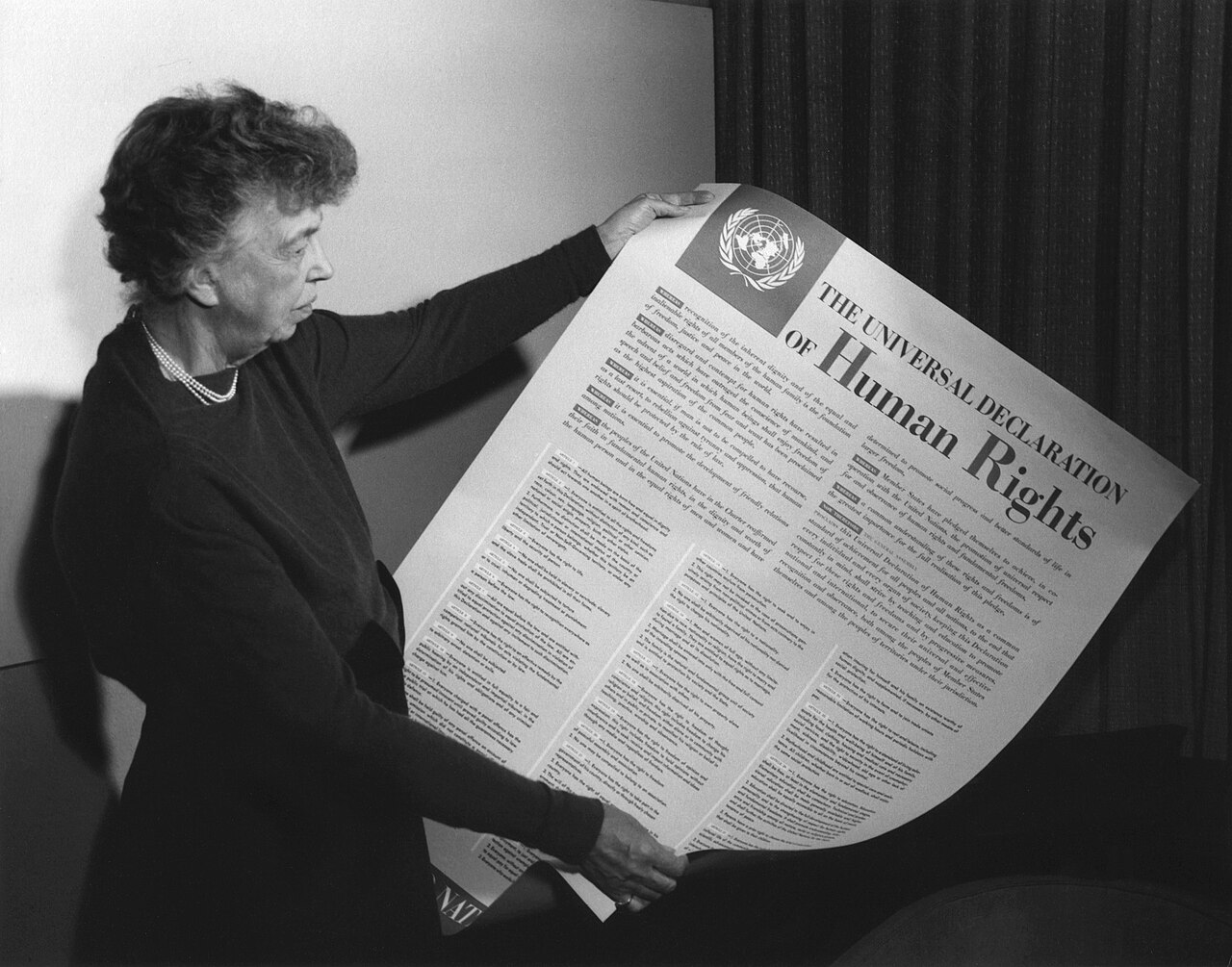
These ancient legal principles have resonated in many corners of the modern world, from Canada and Australia to postcolonial constitutions in countries such as India [22,31]. When the Universal Declaration of Human Rights was adopted by the United Nations in 1948, its author, former U.S. First Lady Eleanor Roosevelt, proudly called it the Magna Carta for all humanity [2,3,17]. What began as a temporary peace treaty with a despotic king ultimately became the most powerful global symbol of the struggle for human freedom and justice [29].
List of References:
[1] Magna Carta | Wex | US Law | LII / Legal Information Institute https://www.law.cornell.edu/wex/magna_carta
[2] Magna Carta and Human Rights - Rule of Law Education Centre https://www.ruleoflaw.org.au/explainer-magna-carta-and-human-rights
[3] 800 Years of Magna Carta - Your Missouri Lawyers https://missourilawyershelp.org/events/800-years-of-magna-carta
[4] Magna Carta, the Rule of Law, and the U.S. Constitution | IAALS https://iaals.du.edu/news/magna-carta-rule-law-and-us-constitution
[5] King John of England: England's Most Unpopular King? - World History Encyclopedia https://www.worldhistory.org/King_John_of_England
[6] Magna Carta’s Influence on the Declaration of Independence & U.S. Constitution - Constituting America https://constitutingamerica.org/90day-dcin-magna-carta-influence-on-declaration-of-independence-and-us-constitution-guest-essayist-george-landrith
[7] The contents of Magna Carta - UK Parliament https://www.parliament.uk/about/living-heritage/evolutionofparliament/originsofparliament/birthofparliament/overview/magnacarta/magnacartaclauses
[8] Carpenter, David (2004). The Struggle for Mastery: The Penguin History of Britain 1066–1284. London: Penguin. ISBN 978-0-1401-4824-4.
[9] Barlow, Frank (1999). The Feudal Kingdom of England, 1042–1216. Harlow, UK: Pearson Education. ISBN 0-5823-8117-7.
[10] Warren, W. Lewis (1991). King John. London: Methuen. ISBN 0-4134-5520-3.
[11] Turner, Ralph V. (2009). King John: England's Evil King?. Stroud, UK: History Press. ISBN 978-0-7524-4850-3.
[12] McLynn, Frank (2007). Lionheart and Lackland: King Richard, King John and the Wars of Conquest. London: Vintage Books. ISBN 978-0-7126-9417-9.
[13] How Did the Magna Carta Influence the American Constitution? | Due Process, Rights, Justice, Amendments, & Facts | Britannica https://www.britannica.com/topic/How-Did-the-Magna-Carta-Influence-the-American-Constitution
[14] [PDF] The Spirit of Magna Carta Continues to Resonate in Modern Law https://www.aph.gov.au/binaries/senate/pubs/pops/pop39/lairg.pdf
[15] Chapters 12 and 14; these provisions were altered in the 1217 charter (see McKechnie, note 16 above, pp. 172–175) and were entirely excluded from later reissues. Furthermore, this provision in no way limited the King’s right to levy tallage in London and other towns. It thus contained only the germ of the later principle that taxation was to be levied only with the consent of property owners, as represented in Parliament.
[16] W.S. McKechnie, Magna Carta—A Commentary on the Great Charter of King John, Glasgow UP, Glasgow, 1905, p. 118.
[17] See note 60 above, p. 862. However, Lauterpacht, criticizing the Universal Declaration, rejected parallels with Magna Carta and other later declarations because, at least initially, it was primarily aspirational: see “The Universal Declaration of Human Rights,” British Yearbook of International Law, vol. 25, 1948, pp. 354, 371–372.
[18] [PDF] Magna Carta and the Rule of Law 1215–https://www.fofweb.com/Electronic_Images/Onfiles/WHOFvol2_2_13.pdf
[19] [PDF] The Economic Legacy of Magna Carta - RAND https://www.rand.org/content/dam/rand/pubs/perspectives/PEA4400/PEA4491-1/RAND_PEA4491-1.pdf
[20] Bogdanor, V. 2015. ‘Magna Carta, the Rule of Law and the Reform of the Constitution’. Magna Carta and its modern legacy, pp.23-41. Cambridge University Press.
[21] Dickinson, H. T. 2018. “Magna Carta in the American Revolution.” In Magna Carta: History, Context, and Influence, pp. 79–100. University of London Press.
[22] Chandrachud, C. 2015. “800 Years of the Magna Carta: The Magna Carta and the Making of the Indian Constitution.” Journal of the National Human Rights Commission, 14.
[23] Stefanovska, V. 2015. “The Legacy of Magna Carta and the Rule of Law in the Republic of Macedonia.” SEEU Review, 11(1).
[24] Just how bad was Bad King John? | National Geographic https://www.nationalgeographic.com/history/article/england-king-john-richard-the-lionheart
[25] John: The Worst Ever King of England? – Millie Thom https://milliethom.com/2015/08/25/john-the-worst-ever-king-of-england
[26] Coronation of King John http://kingscoronation.com/coronation-king-john
[27] Why Magna Carta remains a foundation of our common law heritage - GOV.UK https://www.gov.uk/government/speeches/why-magna-carta-remains-a-foundation-of-our-common-law-inheritance
[28] The Magna Carta and Its Legacy | Origins https://origins.osu.edu/milestones/january-2015-magna-carta-and-its-legacy
[29] The Magna Carta: Ideas for All Seasons | Magna Carta Trust 800th Anniversary | Celebrating 800 years of democracy https://magnacarta800th.com/articles/the-magna-carta-ideas-for-all-seasons
[30] Magna Carta and the U.S. Constitution - Magna Carta: Muse and Mentor | Exhibitions - Library of Congress https://www.loc.gov/exhibits/magna-carta-muse-and-mentor/magna-carta-and-the-us-constitution.html
[31] Magna Carta and the Development of Law around the World https://www.canada.ca/en/news/archive/2015/04/magna-carta-development-law-around-world.html