The Journey There and Back: China as a World Power
Today, the world is watching with amazement—and sometimes with concern—as China re-emerges as a global superpower. After a long period of relative weakness and the so-called “century of humiliation,” it seems that the Middle Kingdom is returning to the position it has historically always held.
The Chinese themselves view their history as an unbroken line stretching back thousands of years [4]. The ancient term “Zhongguo” (Middle Kingdom), used since at least the 4th century BCE, embodies the idea of Chinese civilization and culture, which this unbroken line of dynasties was tasked with protecting [4]. But what were the periods when China was at the height of its power actually like? How did it assert its influence, and why did these golden ages always end up in ruins?
The Foundations of Power and Long-Term Continuity
Although ancient China saw many rulers, the turning point was its first true unification. The first emperor, Qin Shi Huangdi (reigned 221–210 BCE), chose the title of emperor instead of king and established the first vast empire [9]. His reign was characterized by brute force; he destroyed all the older kingdoms, ruled with extreme harshness (burning books and executing scholars), and succeeded in conquering more neighbors than any kingdom before him [9].
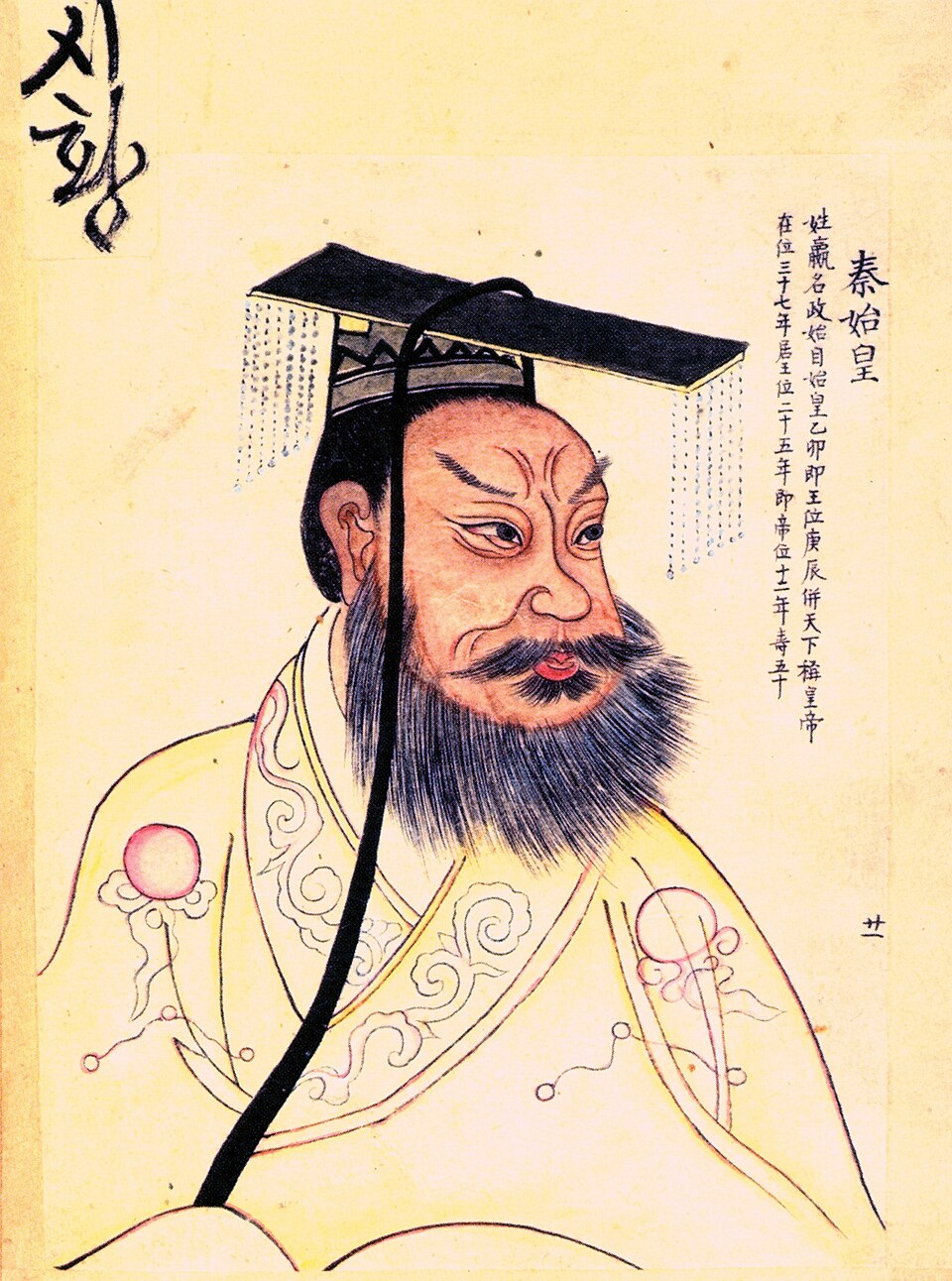
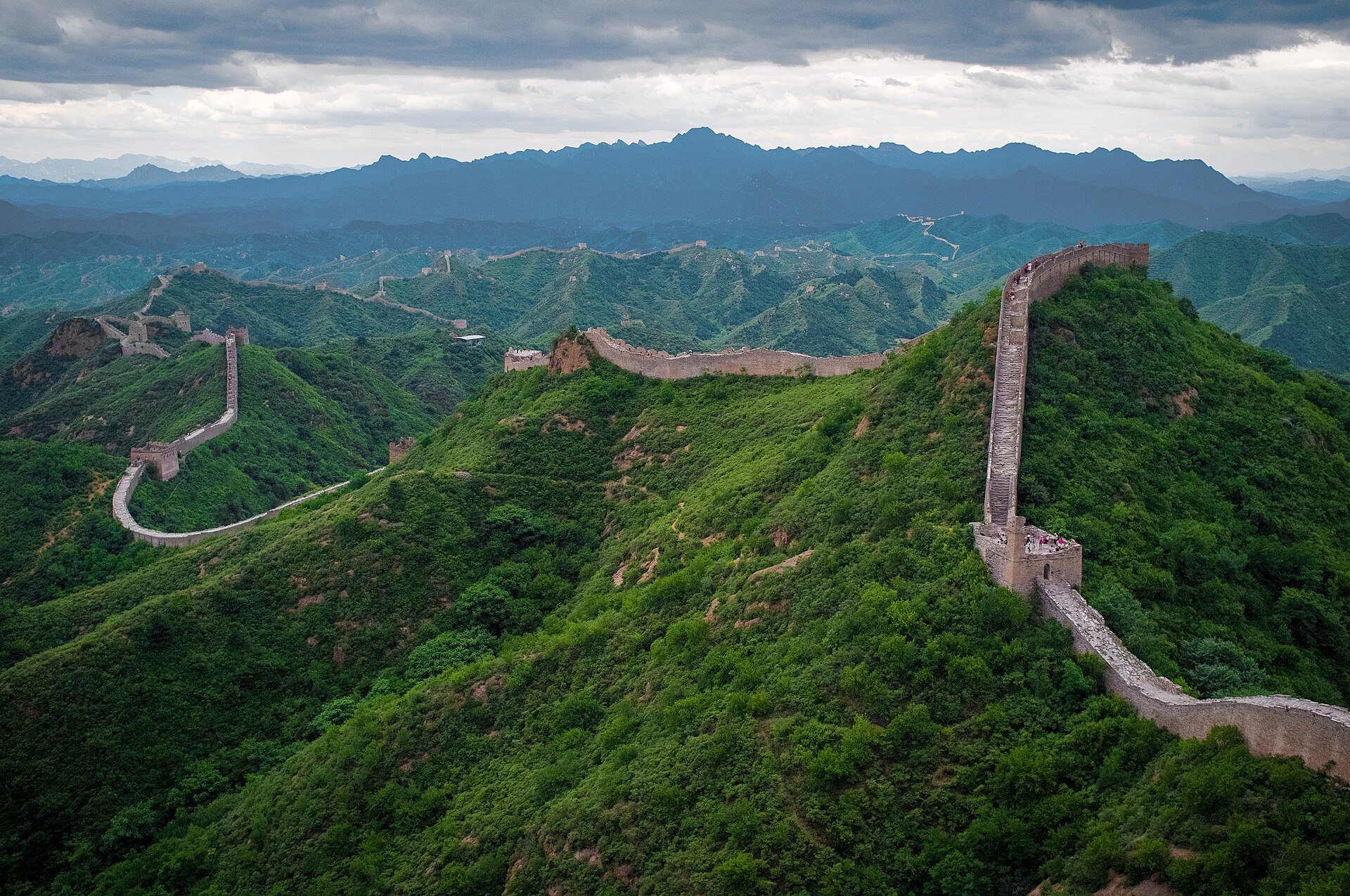
However, it was precisely this first emperor of the Qin dynasty who laid the foundations of political continuity from which China draws to this day. He introduced extensive reforms, built a vast network of roads, and connected the first sections of the Great Wall of China [16]. He established an imperial system, abolished the old feudal system, and replaced it with a system of prefectures and counties, thereby greatly strengthening the central government’s control over the provinces [27]. He also promoted the unification of writing and customs and standardized weights and measures [27]. Although the Qin Dynasty collapsed rapidly after his death and lasted only about 15 years in total [4], the centralized and bureaucratic system he created survived for millennia and became the foundation of the modern Chinese state [4].
The Most Powerful Dynasties: The Golden Ages of the Middle Kingdom
The foundations laid by the Qin Dynasty were fully utilized and institutionalized by the subsequent Han Dynasty (206 BCE – 220 CE) [1]. It was the Han Dynasty that held the empire together and established the institutions that have characterized most of Chinese history [25]. The Han Dynasty period is considered the classic golden age of Chinese history, during which Confucianism became the official state philosophy [2,4].
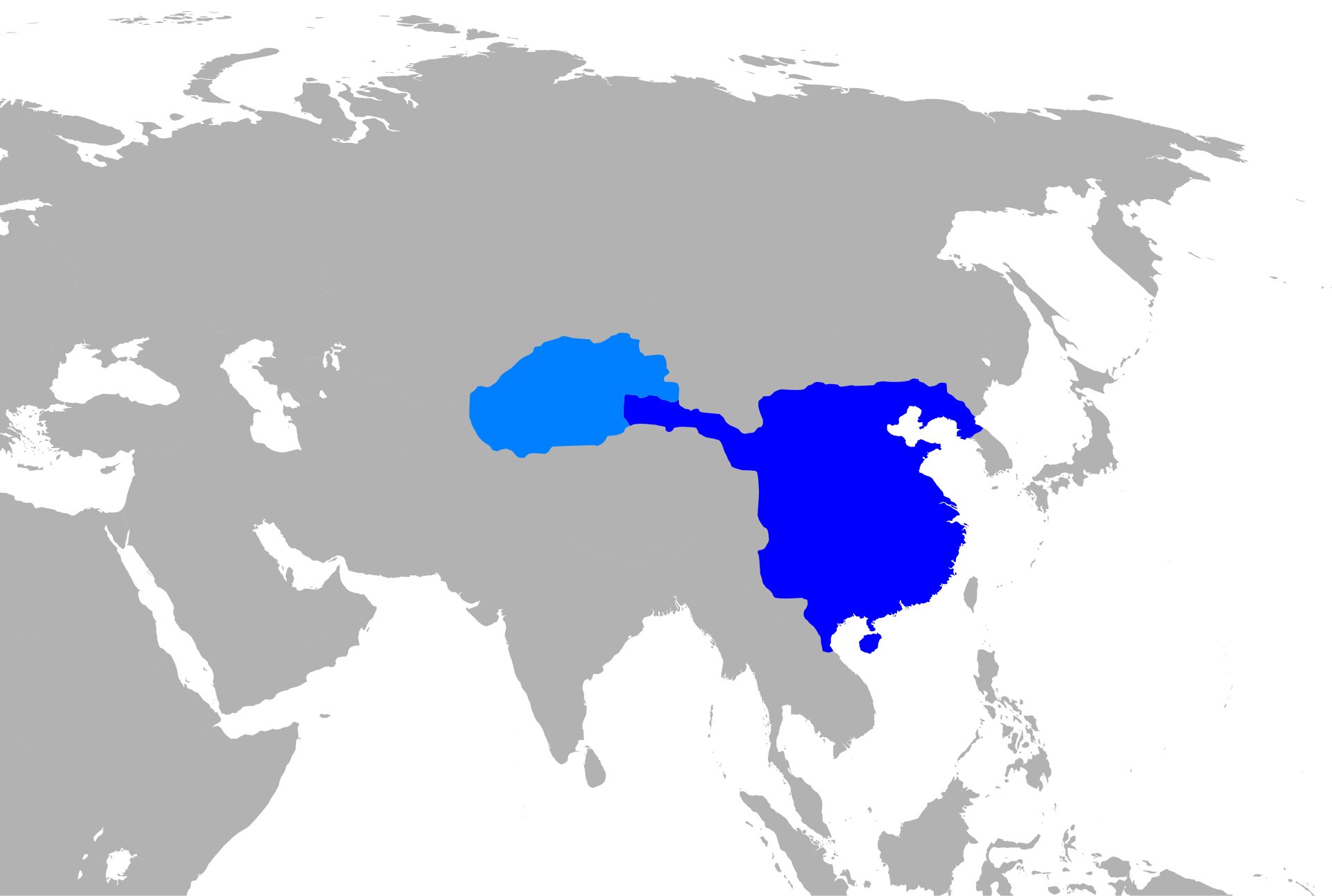
Another peak was the Tang Dynasty (618–907 CE). It is often referred to as the greatest and most powerful dynasty of all time [1,2]. It was a veritable golden age of economic and social development, immense cosmopolitanism, and stability [2,3,4,24].
However, China’s influence also expanded significantly under dynasties that were not ethnically Chinese (Han). The Mongol Empire founded by Genghis Khan, which conquered China and ruled as the Yuan Dynasty (1279–1368), spread across all of Central Asia [2,17]. The last Qing Dynasty (1644–1911), founded by the Manchus, even doubled the empire’s territory compared to the preceding Ming Dynasty and shaped China’s current vast geographical form by effectively controlling territories such as Tibet, Xinjiang, Manchuria, and Mongolia [10,17,25].
Military Aggression or Peaceful Trade?
One of the most fascinating questions in Chinese history is the manner in which the empire expanded. Modern Chinese leaders often present an idealized version of history that emphasizes that China has always grown peacefully, solely through cultural and commercial appeal [17]. The historical reality, however, is far more complex.
The fact is that Chinese empires did not shy away from military conquest. On the Asian continent, there is a long history of successive Chinese empires that were built precisely through military conquest, expansion, and settler colonialism [10]. When the Middle Kingdom reached the peak of its power, it tended to expand directly through military conquests and indirectly through the so-called tribute system [14].
As early as the Han Dynasty, a powerful military machine enabled rulers to expand the borders from the traditional core in the Yellow River valley southward into what is now southern China and westward into Central Asia [4,25]. To control trade routes and encircle their enemies, the Chinese militarily occupied most of Xinjiang for decades [1,25]. The Tang Dynasty’s armies were exceptionally successful in part because they learned to fight like the steppe nomads and militarily subjugated Central Asia [21,25]. During the Qing Dynasty, expansion occurred primarily through military force, and the empire was aided by the invention of gunpowder, which definitively eliminated the threat of the steppe tribes [17,25].

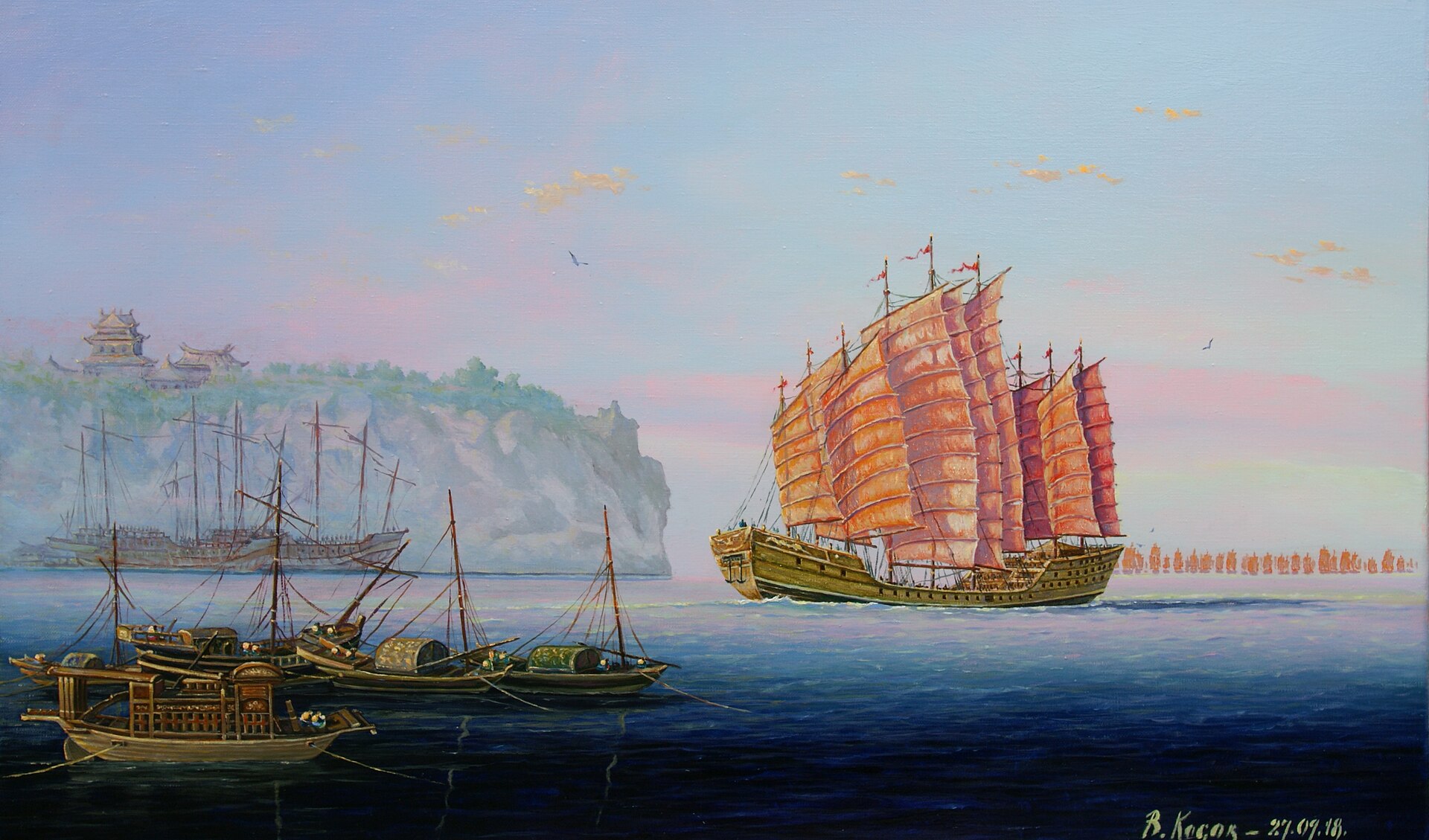
On the other hand, however, the Chinese state did not limit itself to warfare. It was exceptionally proactive in protecting and promoting trade [5]. The Great Wall of China was also extended to protect lucrative trade routes [6]. Also well-known are the famous voyages of Admiral Zheng He during the Ming Dynasty, which, in addition to demonstrating power, combated pirates and promoted maritime trade in the Indian Ocean [12,14]. However, the Middle Kingdom did not continue its explorations after the admiral’s death, and so we can only speculate on what might have happened had the Chinese been the first to reach America (its west coast).
Diplomacy of the Middle Kingdom: The Tribute System
China did not always have to enforce its influence by force of arms. Compared to Western countries, which built colonies through brute force, the Chinese world order was perceived as “more civilized” and managed to attract the admiration of vassal states [17]. The so-called tribute system served this purpose.
It was a system that lasted for nearly two thousand years [14]. The Middle Kingdom saw itself as the center of the world and, to consolidate this order, adopted the strategy of “giving much and receiving little” (hou wang bo lai) [13]. It worked in such a way that neighboring, weaker states paid homage to China (paid tribute). In exchange, they received gifts from the Chinese emperor, which were generally much more generous and valuable than the tribute itself [14].
The states involved in this system gained a tremendous privilege: the right to trade with wealthy China [14]. At the same time, the Chinese emperor confirmed the legitimacy of local rulers in the so-called Ce Feng process, thereby guaranteeing them sovereignty and military protection, for example against nomadic invasions [14]. In return, these rulers had to be China’s allies in its own wars and maintain peace [14]. This system facilitated the spread of the Chinese language, culture, art, and Confucianism to countries such as Japan, Korea, and Vietnam, which modeled their governments after the Chinese example [14,27].
The tribute system was the pinnacle of asymmetric diplomacy and allowed the Middle Kingdom to manage its sphere of influence without the need for a constant military presence [14]. During the Qing Dynasty, Chinese diplomacy became a true masterpiece—during the so-called Great Game, the Chinese skillfully maneuvered between Russia and Great Britain. Neither of these powers wanted the other to gain territory in Central Asia, so they were happy to let China retain this vast buffer zone [25].
Arteries of Influence: The Silk Road
Nothing symbolizes China’s ancient global influence as perfectly as the Silk Road. This vast network of trade routes did not arise by chance; it was initiated by the Chinese state during the Han Dynasty. Specifically, following the successful missions of the imperial envoy Zhang Qian and subsequent military victories, China succeeded in connecting with the nomadic lands to the west [19,20,27].
The Silk Road fundamentally shaped the historical trajectory of civilizations. It connected Asia with the Mediterranean and East Africa [2]. Chinese silk, tea, and paper became luxury and highly sought-after commodities that flowed for centuries into the Roman Empire and later into Byzantium, causing Chinese wealth to skyrocket [6,15].
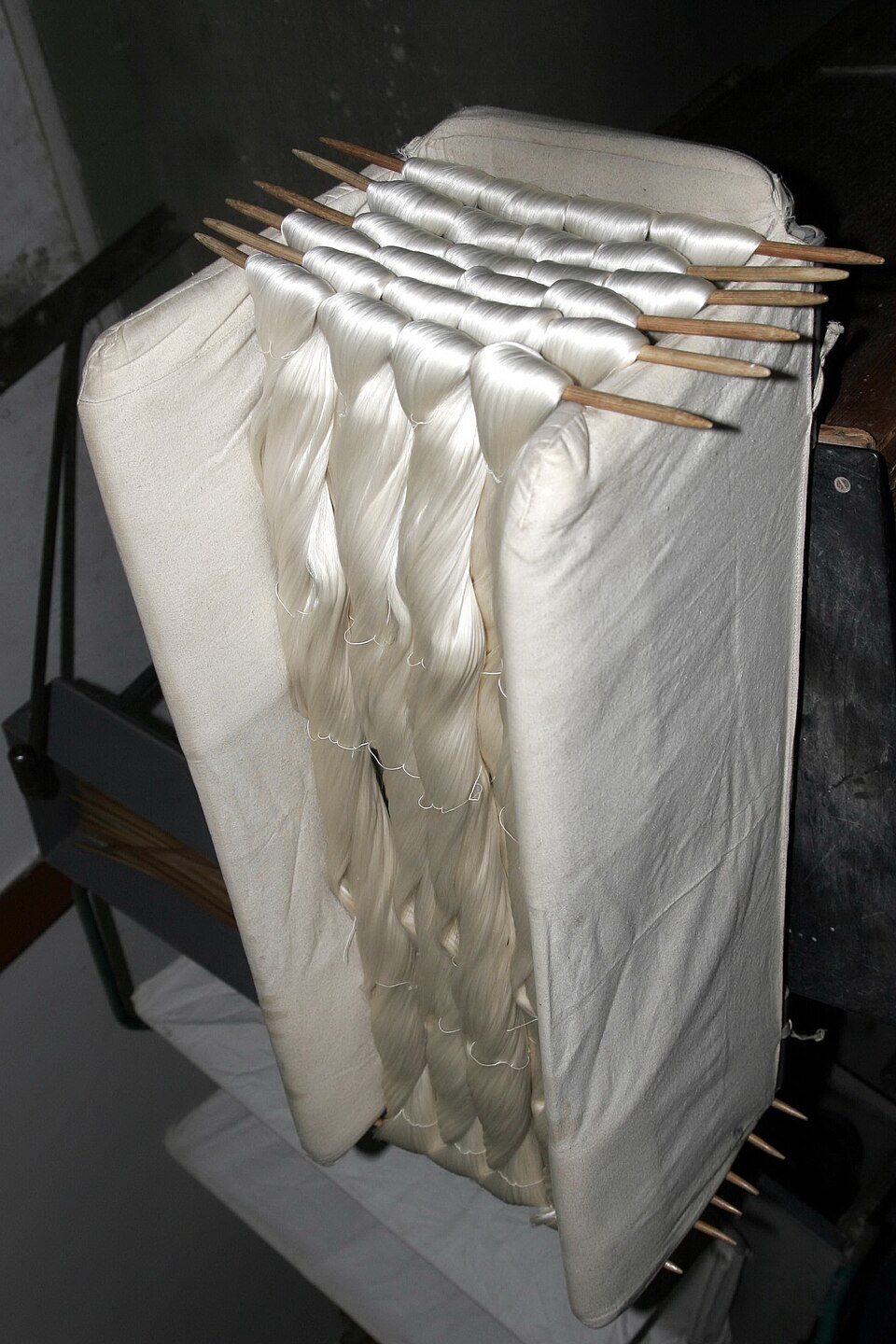
This network experienced its golden age during the reign of the Tang Dynasty (the so-called Pax Sinica), when Persian and Sogdian merchants profited from it and the Chinese empire itself became highly cosmopolitan in its urban centers, teeming with foreign envoys and cultures [4,24]. Later, during Mongol rule, these routes were famously traveled and documented by the Venetian merchant Marco Polo [2].
The influence of the Silk Road was by no means limited to trade. It was through this route that Buddhism reached China from India [23,25]. Along with it, Christianity and Islam spread to Central Asia and China [7,24]. In the opposite direction, from China to the world, revolutionary technologies such as papermaking, gunpowder, the compass, and printing technology spread, completely transforming societies around the globe, even though they were not utilized as effectively within China itself [7,15].
The Cycle of Dynasties: The Rise and Fall of Power
The concept of the so-called “dynastic cycle” is deeply rooted in Chinese historical thought [4]. It was believed that every dynasty goes through a phase of rise to power, followed by a golden age of prosperity, after which decline and ultimately collapse inevitably follow, often accompanied by rebellions, foreign invasions, or the ruler’s suicide [4]. Not even the strongest dynasty was exempt from this cycle.
So what caused the fall from the absolute pinnacle of power into a period of weakness? The cause was usually a combination of internal corruption, external pressures, and rebellions. A prime example is the Han Dynasty. Although it doubled its territory, it was gradually weakened by internal strife, the lust for power among the elites, and peasant uprisings, which led to its collapse in 220 CE and the division of China into the well-known period of the Three Kingdoms [2,4].
The golden age of the Tang Dynasty was disrupted by one of the most catastrophic moments in history: the An Lushan Rebellion (led by a general of Central Asian origin) from 755 to 763 [22,25]. The growing flow of money created a greedy aristocracy, and unjust taxes provoked anger. The rebellion and the subsequent famines and diseases decimated up to half of the empire’s population, which is considered one of the greatest man-made catastrophes [4,25].
The Song Dynasty (a golden age of culture and technology) was overthrown by devastating military attacks by the Mongols, the ancestors of Genghis Khan and Kublai Khan [2]. Their Mongol Yuan Dynasty fell due to an inability to govern the settled population and a series of peasant uprisings known as the Red Turban Rebellion [4]. The Ming Dynasty was also brought to an end in the late 16th century by bloody popular uprisings (such as that of Li Zicheng) combined with a military invasion by the neighboring Manchus [2,4].
The demise of the last and geographically largest Qing Empire was no longer merely a classic transition within the dynastic cycle. From the late 18th century onward, the empire suffered from overpopulation, famines, and corruption [4]. The real blow, however, was the brutal clash with the European international order. When the Qing dynasty attempted to halt the devastating impact of opium smuggled into the country by Western powers, it suffered a crushing defeat in the Opium Wars [4,26].
Decades of foreign domination and decline followed, and even failed attempts at industrialization could not prevent the empire’s definitive collapse in 1911, when the last emperor, Puyi, abdicated [2,4]. The once-famous and feared “universal empire” suddenly became just another provincial state in a world dominated by the West [26].
Historical Continuity and Modern Foreign Policy
Looking back, it is clear that Chinese history is characterized by a tremendous degree of continuity. Traditional Chinese statecraft, as experts argue, is of considerable importance for understanding China’s current behavior on the international stage [13]. Although Communist China formally adopted the modern norms of a sovereign state and employed Marxist-Leninist rhetoric, at its core it still conducts foreign policy through the lens of traditional imperial statecraft [13].
When modern China recovered from its weakness, its communist leaders did one crucial thing: just like the nationalists before them, they unhesitatingly adopted the territorial map and borders established through the aggressive expansions of the last Qing dynasty [10,11]. Modern China thus not only retained its core territory but continues to this day to control regions such as Tibet and Xinjiang, much as the ancient dynasties did [10,25]. The system of control over ethnic minorities largely mirrors imperial practices for administering territories on the empire’s periphery [11].
Today, we can observe efforts to rebuild China’s sphere of influence, which many analysts refer to as the “Great Revival of China” or the restoration of the ancient Sinocentric system in Asia [14]. The most visible example of this connection between the past and the present is the extensive modern Belt and Road Initiative (BRI) [8]. It is essentially the modern equivalent of the ancient Silk Road, through which China is once again influencing the dynamics of global trade and diplomacy [8]. Just as the Middle Kingdom sought to protect its trade corridors in the past, today it uses its wealth and economic connections to strengthen its global political influence [14].
Modern Chinese leaders, including President Xi Jinping, are literally obsessed with using history to shape both domestic and foreign policy [17]. From ancient dynasties, they select the parts of the narrative that suit them at the moment. On the one hand, they paint an idealized version of a prosperous, harmonious, and benevolent imperial China (Tianxia—all under heaven), thereby seeking to assure the world that the rise of contemporary China will be peaceful [17].
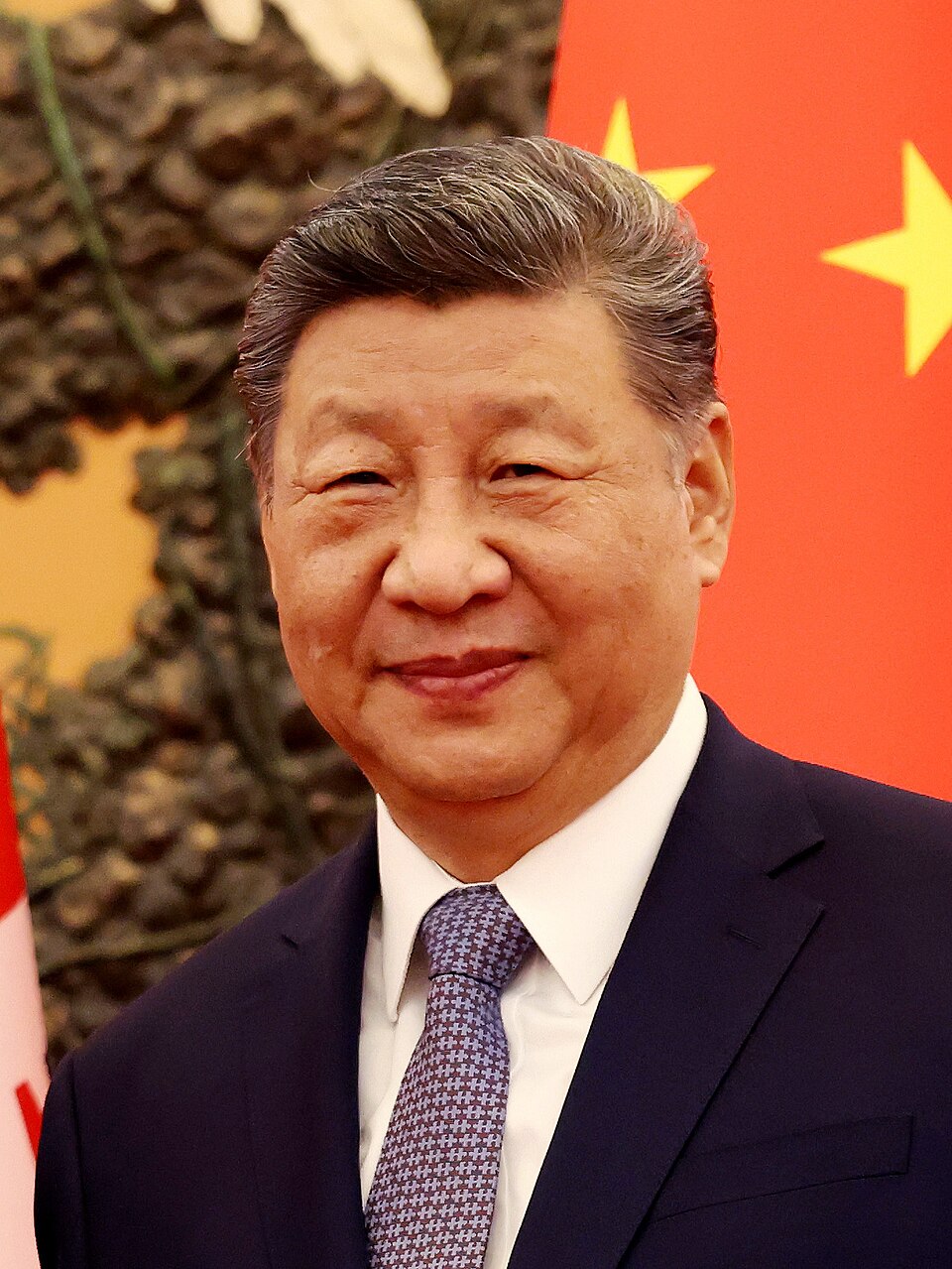
From the historical downfalls of powerful dynasties, however, they also draw a different, far more realistic lesson: the empire collapsed when it was not strong enough to defend itself. China’s elites thus uphold the inexorable law of survival—China must never again be weak and must do everything to become the strongest once more [17]. Contemporary policy thus combines the ancient philosophy of moral realism (for example, the writings of the scholar Sun Tzu from two thousand years ago emphasizing justice to win the hearts of the people) with a hard-nosed realpolitik approach in the struggle for raw materials and markets [18,28].
The history of the Middle Kingdom is not merely a series of dusty dates. It is a living manual for survival, expansion, and diplomacy. Understanding how the first emperors unified the country, how the Han and Tang dynasties built global trade, how the asymmetric tribute system functioned, and why these golden ages came to an end is today an absolute necessity for both the layperson and the analyst to comprehend the superpower that aspires to shape the 21st century.
List of References
[1] China's 3 Most Powerful Dynasties https://www.linkedin.com/pulse/chinas-3-most-powerful-dynasties-edward-voskeritchian
[2] Imperial China's Dynasties https://education.nationalgeographic.org/resource/imperial-chinas-dynasties/
[3] The Ancient Silk Road's Historical Significance and Its Role in Inspiring Joint Development of the Belt and Road Initiative https://www.prnewswire.com/news-releases/the-ancient-silk-roads-historical-significance-and-its-role-in-inspiring-joint-development-of-the-belt-and-road-initiative-301202677.html
[4] A Guide to the Dynasties of China: History Essentials https://www.humanalens.com/post/a-guide-to-the-dynasties-of-china
[5] Whitfield, S. (1999). Life along the Silk Road. University of California Press.
[6] Liu, X. (2010). The Silk Road in World History. Oxford University Press.
[7] Hansen, V. (2012). The Silk Road: A New History. Oxford University Press.
[8] [PDF] The Legacy Of The Silk Road And China's Role In Ancient And ... https://migrationletters.com/index.php/ml/article/download/11535/7705/27938
[9] The pattern of “outsiders” usurping the empire is surprisingly old: even the famous ancient Chinese dynasty of the Zhou represents such an invasion by outsiders, “less civilized” people invading, usurping, adapting, and expanding existing state machinery—taking over its wealth accumulation. The Qin, who created the first empire, also represent such an invasion of a wealthy, more civilized center.
[10] The Qing Empire was led by ethnic Manchus, not Han Chinese. However, just as with the earlier Mongol world empire, which ruled China as the Yuan dynasty, they are claimed in official Chinese history education to be one and the same tradition. And this is not wrong, not just because both Mongols and Manchus (and other outsiders taking over the imperial machinery) assimilated into Chinese culture—which is the usual argument—but precisely because of the continuity of the conquest empire. Its ethnicity is less important than its structure and geography.
[11] The Legacy of the Chinese Empires Beyond “the West and the Rest” - Association for Asian Studies https://www.asianstudies.org/publications/eaa/archives/the-legacy-of-the-chinese-empires-beyond-the-west-and-the-rest/
[12] Which of the five most powerful dynasties in Chinese history are they?-zhihu https://www.zhihu.com/en/answer/125516892565
[13] [PDF] China's Asymmetric Statecraft - UBC Press https://www.ubcpress.ca/asset/83085/1/9780774868136_excerpt.pdf
[14] The Rising Dragon: Looking at China’s Expansion in a Historical Perspective https://zli.medium.com/the-rising-dragon-looking-at-china-s-expansion-in-a-historical-perspective-f9322850c117
[15] How the Silk Road Shaped the Ancient Global Economy https://silk-road.com/2025/03/10/how-the-silk-road-shaped-the-ancient-global-economy/
[16] The First Emperor of China - NFB Collection https://collection.nfb.ca/film/first_emperor_of_china
[17] Reconstruction of Chinese History for a Peaceful Rise https://archive-yaleglobal.yale.edu/content/reconstruction-chinese-history-peaceful-rise
[18] Nathan and Scobell, 2020, p. 92.
[19] Higa, Kiyota (January 1, 2015). "Legend of Silk Road pioneer lives on".
[20] Li, Bo; Zheng, Yin (2001). 中华五千年 5000 years of Chinese history (in Chinese). Inner Mongolia People's Publishing Corp. p. 254. ISBN 978-7-204-04420-7.
[21] Ebrey, Patricia Buckley (1999). The Cambridge Illustrated History of China. Cambridge: Cambridge University Press. ISBN 978-0-521-66991-7.
[22] Ebrey, Patricia Buckley; Walthall, Anne; Palais, James B. (2006), East Asia: A Cultural, Social, and Political History, Boston: Houghton Mifflin, ISBN 978-0-618-13384-0, p. 100.
[23] Jerry Bentley, Old World Encounters: Cross-Cultural Contacts and Exchanges in Pre-Modern Times (New York: Oxford University Press, 1993), 32.
[24] Bowman, John S. (2000). Columbia Chronologies of Asian History and Culture. New York: Columbia University Press.
[25] China's 3 Most Powerful Dynasties - The National Interest https://nationalinterest.org/feature/chinas-3-most-powerful-dynasties-12726
[26] [PDF] System, empire and state in Chinese international relations https://library.fes.de/libalt/journals/swetsfulltext/16957000.pdf
[27] Top 6 Greatest Dynasties of China, Most Powerful Chinese Dynasty - Easy Tour China https://www.easytourchina.com/fact-v1606-top-6-greatest-dynasties-of-china
[28] China's ancient statecraft and the future of global order: Does China pursue hegemony or harmony? https://fiia.fi/en/publication/chinas-ancient-statecraft-and-the-future-of-the-global-order