Defenseless Civilians Targeted by Russian Leaders
The targeted killing of civilians and the destruction of civilian infrastructure in Ukraine are not isolated phenomena in Russia’s military and political history. Putin’s regime is currently continuing a long and dark tradition of previous Russian tsars and dictators. These leaders repeatedly used state-sponsored violence against defenseless civilians as a tool to maintain power and spread terror.
The Reign of Terror of Ivan the Terrible
The first historically documented example of such massive state terror against his own citizens was Ivan IV, known as Ivan the Terrible [29]. This ruler divided the country into two administrative regions, governing the so-called Oprichnina himself in whatever manner he deemed appropriate [26]. Life under his direct rule meant a constant state of fear, as he systematically tortured and executed his political rivals [26].
The climax of his reign of terror was the massacre of Novgorod in 1570, which was at that time the second-largest city and a powerful rival to Moscow [26]. Based on unsubstantiated accusations of treason and suspicions that local leaders and the clergy were plotting a conspiracy, the tsar ordered a brutal attack [26] [29]. The ensuing orgy of bloodshed, targeting both prominent merchants and ordinary people, lasted a full five weeks [27].
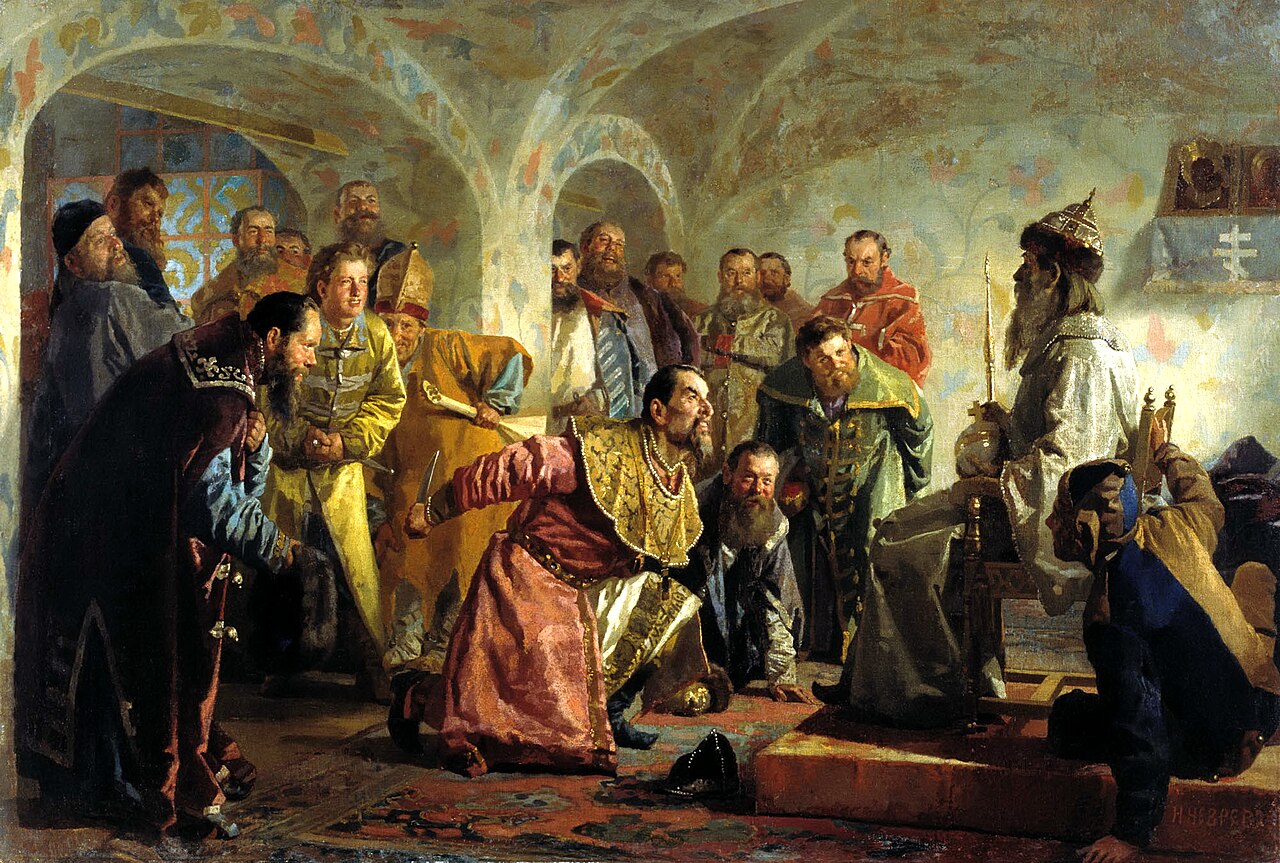
The Oprichniki arrested local priests and monks, whom they beat to death, while their monasteries were looted [26]. The residents of Novgorod themselves were subjected to extreme forms of torture; many were roasted alive in special pans, and entire families were tied to sleds and drowned in the icy waters of the Volkhov River [26] [29]. Any attempt to escape was impossible, as soldiers were ordered to push the drowning civilians underwater with pikes and axes [26].
Estimates of the number of victims of this massacre led by Ivan the Terrible vary significantly across different sources. The First Pskov Chronicle estimates 60,000 dead, while other sources cite figures as high as 100,000 killed [26] [29]. However, after examining the archives, modern researchers and historians tend to favor an estimate of 2,000 to 12,000 murdered civilians [27].
The consequences of this state-sponsored tragedy were devastating for Russian society, and after the massacre of its citizens and the destruction of its commerce, Novgorod definitively lost its dominant position [26] [27]. Furthermore, Ivan the Terrible ordered the burning and destruction of up to 90 percent of the arable land surrounding the city, which triggered a massive famine [27]. Such constant terrorization of its own population ultimately led the Russian medieval economy to total collapse [26] [29].
The “Man of Steel” as a Mass Murderer
In the twentieth century, Joseph Stalin became a symbol of state terror against the population, elevating these practices to the level of a cold-blooded industry. In an effort to consolidate his power and eliminate any criticism from within the Communist Party of the USSR, he used the assassination of Sergei Kirov to launch massive purges [23]. Staged public trials of alleged enemies of the people served as a political cover for the massive extermination of citizens [23].
The Great Terror of the 1930s was driven by Stalin’s exaggerated fear of counterrevolution, his desire to maintain dictatorial power, and his paranoia about infiltration of the party [22] [24]. In addition to domestic opponents, he also viewed the growing military power of Nazi Germany and militaristic Japan as a major threat to the Soviet Union [13] [22]. Under the pretext of unifying and strengthening the country in the face of these threats, he therefore unleashed unprecedented terror [22].
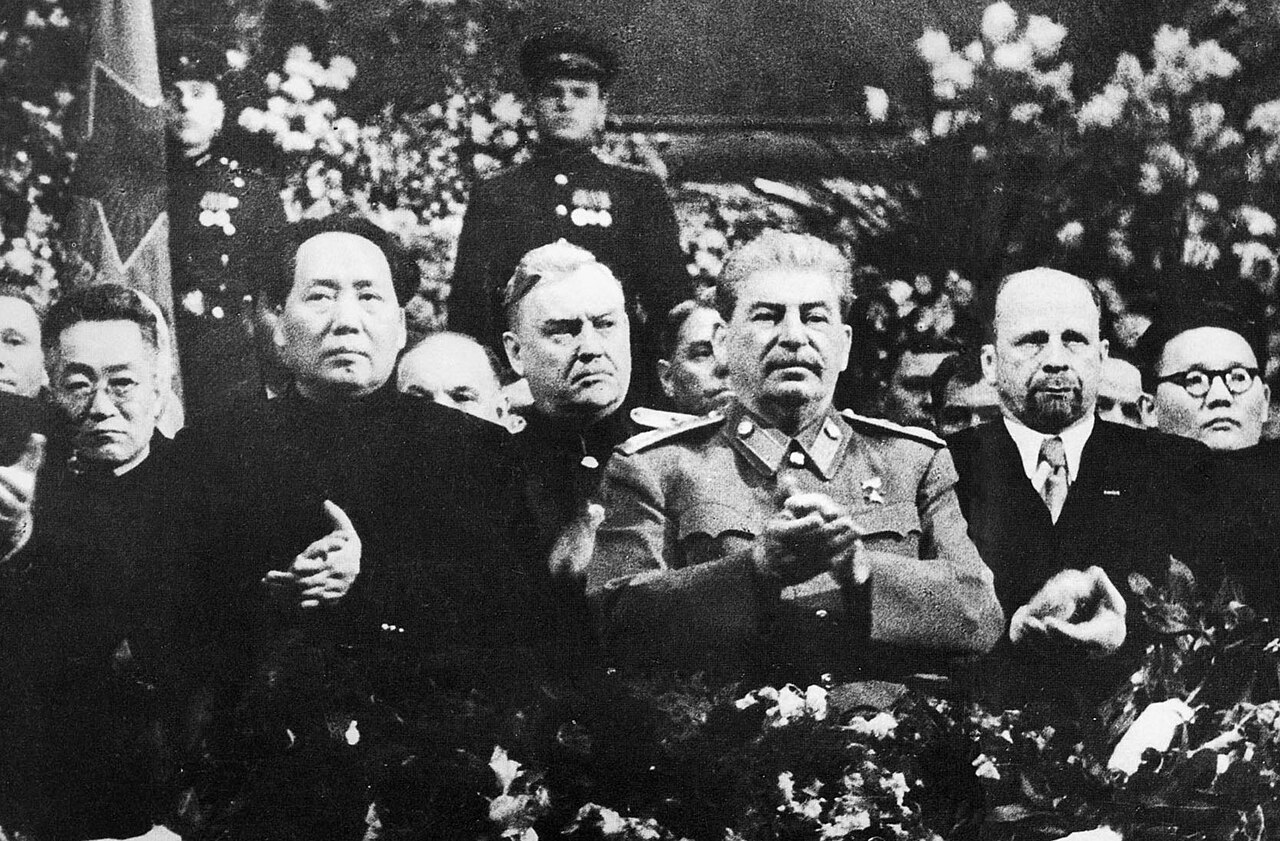
This claimed the lives of at least 750,000 citizens who were directly executed, while more than a million others were deported by the authorities to Gulag labor camps [13]. Stalin’s purges were not limited to the political elite but mercilessly targeted peasants, intellectuals, artists, and various foreigners [13]. In addition, the NKVD secret police specifically targeted ethnic minorities, such as ethnic Germans, Ukrainians, and Poles, for murder [13].
The widespread purges destroyed entire command structures and economic leadership, which significantly weakened the country from within. The elimination of the Red Army’s experienced military elite later proved to be a key factor in the catastrophic performance of Soviet forces during the initial phase of the Nazi invasion of the USSR in 1941 [23]. Stalin’s terror created a deep climate of fear and suspicion throughout society, which, according to historians, completely broke the spirit of the Soviet people [22] [23].
Civilians in Chechnya
In modern times, the Russian military has continued the historical practices of terror during its devastating military campaigns in Chechnya. Although the Russian leadership, under Vladimir Putin, officially declared that the airstrikes were aimed exclusively at the positions of Islamic terrorists, the opposite was true [14] [33]. The First Chechen War claimed the lives of more than 50,000 people due to the soldiers’ exceptionally brutal methods and the deliberate bombing of civilians [28].
During the Second Chechen War, which broke out in 1999, cities such as Grozny repeatedly faced indiscriminate carpet bombing and massive artillery bombardment [1]. The Russian command dropped leaflets on civilians threatening that anyone who remained in the besieged city would be labeled a terrorist and destroyed [31].
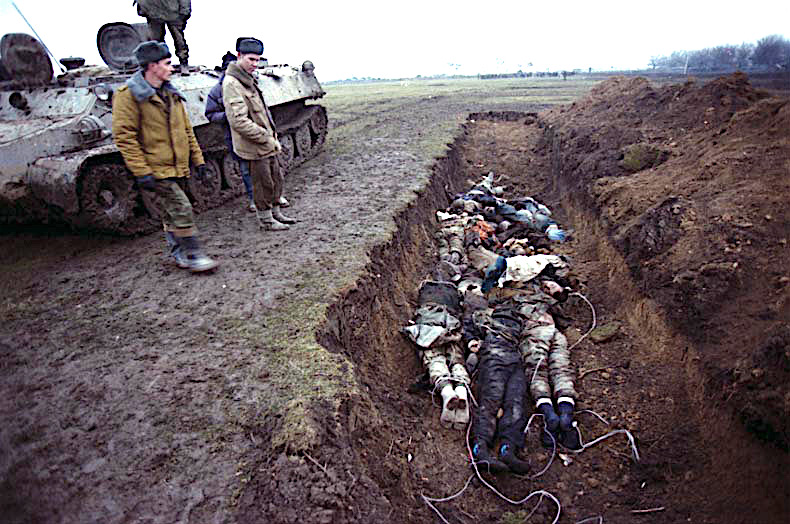
Such methods functioned as a targeted “punitive” strategy aimed at a desperate population, most of whom were the elderly or innocent people unable to flee [2] [32].
As a result of this doctrine, bombs fell on marketplaces, maternity wards, and mosques; in a single attack on the center of Grozny, over a hundred people were killed and hundreds more were injured [11]. Human rights organizations documented numerous war crimes not only during the bombings but also during ground operations to “cleanse” captured residential neighborhoods. One such horrific incident was the execution of dozens of civilians in the town of Novye Aldy by Russian special police in February 2000 [11].
Civilian Casualties in Syria
The Russian military has perfected the tactic of mass destruction of civilian infrastructure since 2015, when it began military intervention in support of Bashar al-Assad’s regime in Syria. Researchers and Syrian activists have documented dozens of cases in which joint Syrian-Russian forces deliberately destroyed homes, schools, and hospitals in the Idlib and Aleppo regions [3]. In just the short period from April to May 2019, as many as 25 attacks were documented that directly destroyed or severely damaged medical facilities [5].
The deliberate destruction of civilian infrastructure in Syria is not viewed merely as accidental collateral damage, but as part of a comprehensive strategy by the Russian military [3] [12]. By using extremely destructive weapons such as cluster and incendiary bombs in densely populated areas, the Kremlin is massively increasing the social cost of any resistance [4] [6]. The ongoing indiscriminate attacks on marketplaces and residential areas were primarily intended to instill terror in people’s hearts and force them to flee en masse [12].
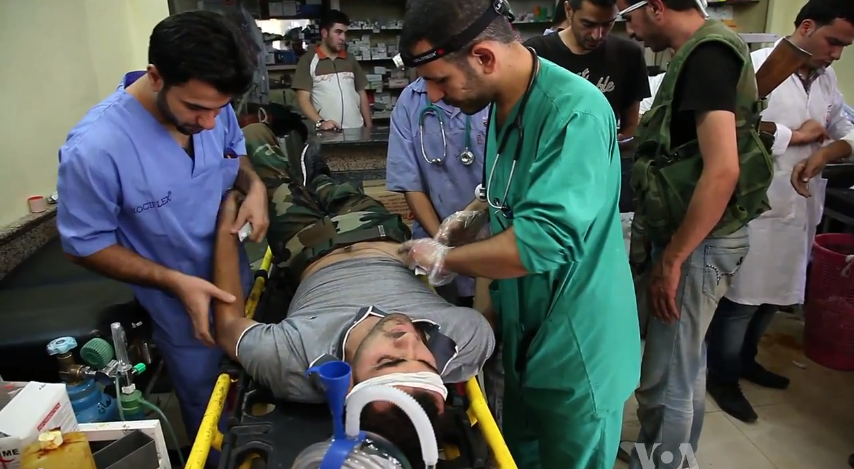
Furthermore, Russia cynically and openly used the Syrian theater of war as a testing ground for the integration of its new weapons, reconnaissance drones, and GLONASS navigation systems [7] [8]. These ruthless weapons tests had a devastating impact on thousands of innocent people, including rescue workers from the White Helmets organization. In its reports, an independent international UN commission directly accused the Russian Federation of illegal strikes on civilian infrastructure and of committing serious war crimes [9].
It was precisely the Syrian battlefield that firmly established the so-called “double-tap” strike in Russian military doctrine, which constitutes a flagrant violation of international humanitarian law [30]. This is a practice in which the first missile is dropped on a civilian target, and a second is fired the moment firefighters or rescue workers arrive at the scene [30]. These repeated and deliberate strikes have caused enormous loss of life among first responders and crippled efforts to assist the wounded [30].
Ukrainians Put to the Test
This horrific scenario and murderous strategy were subsequently fully replicated on European soil following the massive Russian invasion of Ukraine in February 2022. Russian armed forces have demonstrably used weapons and missile strikes that systematically and disproportionately target civilian areas [25]. To date, more than 11,100 Ukrainian civilians have been killed in this conflict and more than 21,860 have been injured, while Russian carpet bombing has caused damage estimated at an astronomical $588 billion [10] [30].
The killing of ordinary citizens is a daily reality for Ukrainian society, with Russian soldiers not hesitating to engage in so-called “human safaris.” Investigators have found that operators of Russian drones in southern Ukraine are deliberately seeking out and killing individual civilians in order to create a climate of constant terror [21] [25]. The presence of modern cameras on the drones clearly demonstrates that the soldiers know exactly who they are attacking, even when their victims are retirees and unarmed people working in the fields [21] [25].
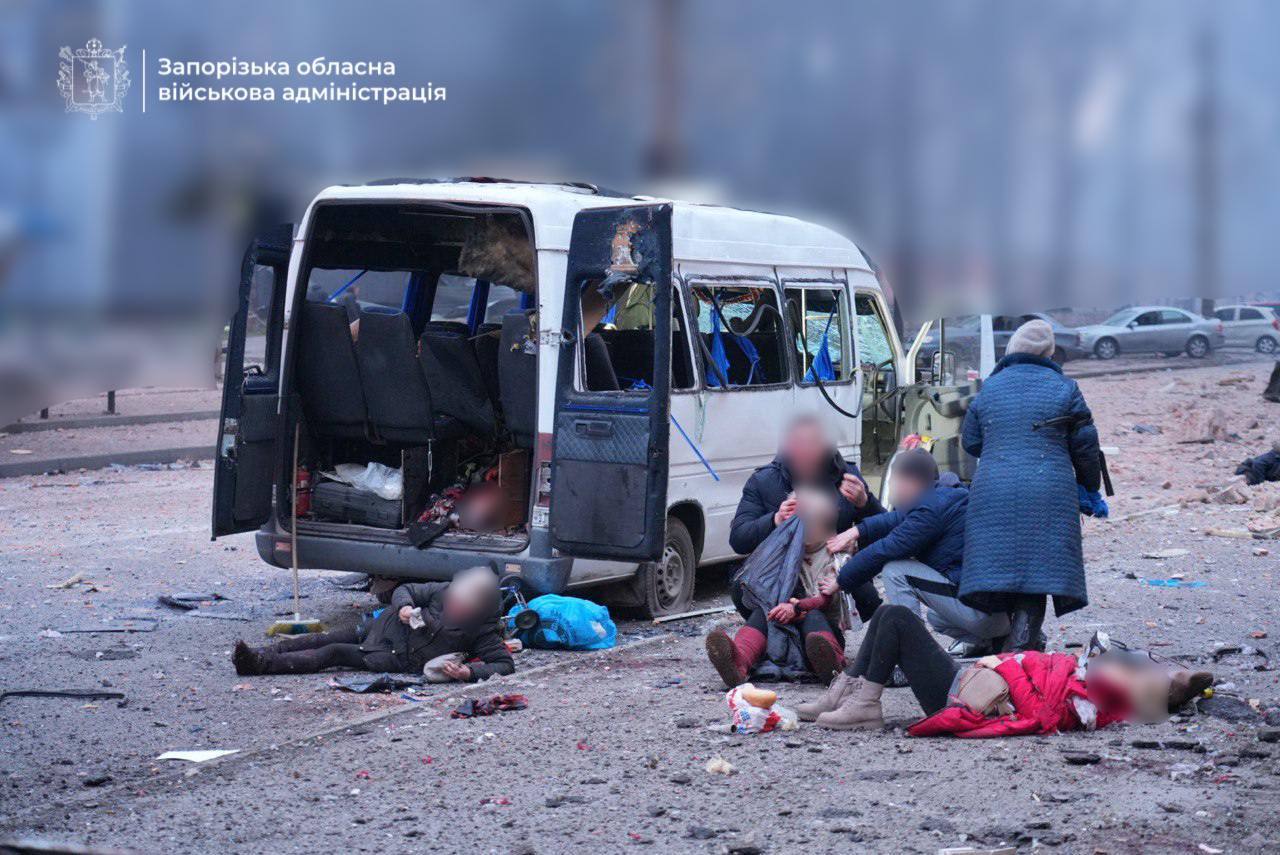
An official component of Vladimir Putin’s destructive military doctrine is also a large-scale national campaign of strategic bombing of Ukrainian power plants, which is taking place especially as winter approaches [21]. The Kremlin thus seeks to deprive millions of people of heat and water through cold and frost, believing that this will force the Ukrainian people into unconditional surrender [21] [25]. Data confirm that attacks by Russian ballistic missiles and drones are deliberately destroying hospitals, educational institutions, and civilian neighborhoods in an effort to depopulate the Ukrainian countryside [15] [21].
Just as in war-torn Syria, the Russian military is carrying out cold-blooded “double-tap” missile strikes in the streets of Ukrainian cities such as Kharkiv, Odesa, and Kyiv. For example, deadly Iskander-class missiles are deliberately targeting firefighters, police officers, and humanitarian volunteers who are arriving to help victims in collapsed buildings [25] [30]. Such deliberate targeting of rescue workers refutes any Russian excuses about mistakes and fully exposes the intent to carry out mass killings of protected segments of the population [30].
Will the dictators pay the price?
Unlike the atrocities committed by Ivan the Terrible or dictator Stalin in the recent and distant past, however, international courts are finally responding to the crimes of today’s Russian regime. UN investigators have designated the massive illegal detention of civilians, forced deportations, and systematic drone terror as official crimes against humanity [21]. An unprecedented collection of satellite data and intelligence is underway worldwide to support serious formal charges [10].
From the perspective of international law, the International Criminal Court (ICC) has already taken historic steps and, in March 2023, issued a direct arrest warrant for President Vladimir Putin and Maria Lvova-Belova [10] [20]. The reason was the recognition of their direct political responsibility for war crimes related to the illegal and forced deportation of hundreds of Ukrainian children to the Russian Federation [20].
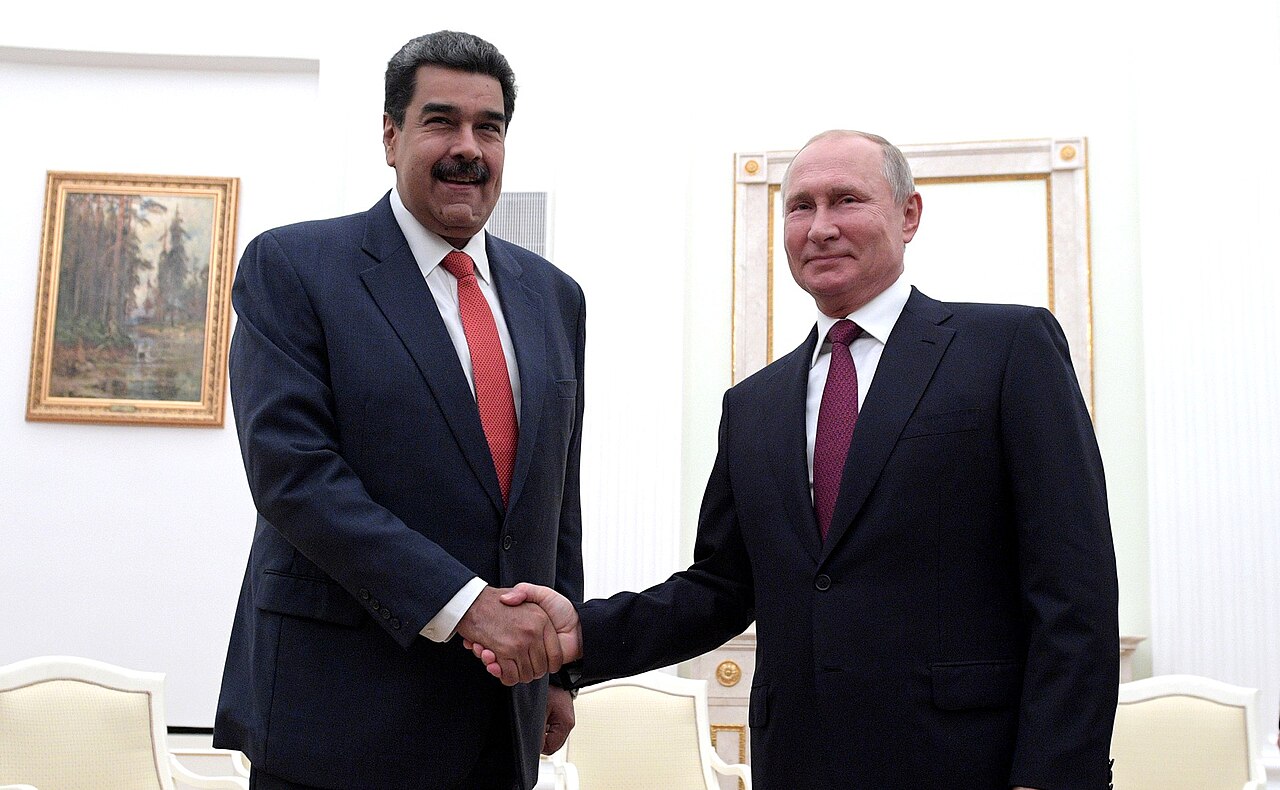
ICC arrest warrants were also issued for high-ranking Russian military leaders, such as former Defense Minister Sergei Shoigu and longtime Chief of the General Staff Valery Gerasimov [17] [19]. According to the court, military commanders Viktor Sokolov and Sergei Kobylash should also be imprisoned for war crimes [16]. These four officers are directly accused of intentionally and recklessly directing missile strikes against key civilian targets and infrastructure [16] [18].
A broad view of history and the present thus unequivocally reveals that state-sponsored bloodshed in Russia is not merely an extreme mistake, but rather a deeply rooted doctrinal approach to war. The mass killings, initiated centuries ago by Ivan the Terrible and later perfected by Stalin, have been adopted by Vladimir Putin’s regime, which systematically employs them to destroy the civilian population in Syria and Ukraine [29] [30].
The challenge for global society and the emerging architecture of justice will be to ensure that, this time, those responsible for these monstrous crimes do not escape proper international punishment [30].
List of References
[1] The alleged use of this “punishment” strategy in Syria bears resemblance to some aspects of Russia’s operations during the second Chechen war, which began in 1999 and continued through spring 2009 as a counter-insurgency campaign, in which cities and towns, including the capital of the territory, Grozny, were repeatedly subjected to indiscriminate air and artillery attacks.
[2] Human Rights Watch and others documented scores of violations of the laws of war, beyond indiscriminate bombing and shelling, some of which amounted to war crimes, and some of which appeared to have been deliberate attempts to “punish” the civilian population.
[3] In 2015, Syrian-Russian joint military operations began, and their airstrikes deliberately or indiscriminately struck homes, markets, schools, and healthcare facilities, using incendiary weapons and other explosive weapons with wide-area effects, such as barrel bombs and cluster munitions.
[4] From the start of the offensive, and as the fighting intensified, the Syrian-Russian alliance used tactics reminiscent of the alliance’s takeover of Aleppo and eastern Ghouta, launching cluster munitions, incendiary weapons, and explosive weapons with wide-area effects, such as barrel bombs and cluster munitions, in populated areas. Attacks striking homes, schools, and healthcare facilities killed and wounded countless civilians.
[5] The destruction and damage to civilian infrastructure, including healthcare facilities, by the Syrian-Russian alliance was a central feature of the renewed offensive. In just one month, from April 28 to May 28, across Idlib, Hama, and Aleppo, as many as 25 attacks damaged or destroyed healthcare facilities, disrupting service in at least 20 instances.
[6] Under this theory, the escalating and routine targeting of civilians and civilian infrastructure, as documented in this report, raises the cost of societal resistance.
[7] Third, the Kremlin has repeatedly and publicly acknowledged that Russia has used the Syrian theater as a testing ground for weapons, reconnaissance systems, and operational procedures. The Russian deployment in Syria has allowed Russia to test and improve its abilities to integrate intelligence, surveillance, and reconnaissance (ISR) assets, like aerial drones, to enhance its ability to inform its commanders, control its operations, and use the available information to shorten the time it takes to identify a target and attack it.
[8] The Syrian intervention has also allowed Russia to refine its use of the Global Navigation Satellite System (GLONASS), the Russian-made constellation of satellites used to identify the position of something on the earth’s surface, like the US-launched Global Positioning System (GPS).
[9] In a March 2020 report, the Independent International Commission of Inquiry on Syria (COI), established by the UN Human Rights Council in 2011, for the first time directly implicated Russia in unlawful attacks on civilian infrastructure in Syria, saying they amounted to war crimes.
[10] In Fraught Geopolitical Times, Accountability for Russian Aggression Remains Crucial Despite U.S. Policy Reversals | Carnegie Endowment for International Peace https://carnegieendowment.org/research/2026/05/in-fraught-geopolitical-times-accountability-for-russian-aggression-remains-crucial-despite-us-policy-reversals
[11] Russia’s atrocities in Ukraine, rehearsed in Chechnya | Conflict News | Al Jazeera https://www.aljazeera.com/news/2023/1/20/russias-atrocities-in-ukraine-rehearsed-in-chechnya
[12] Syria/Russia: Strategy Targeted Civilian Infrastructure | Human Rights Watch https://www.hrw.org/news/2020/10/15/syria/russia-strategy-targeted-civilian-infrastructure
[13] resourcesforhistoryteachers / Stalin's Great Purges http://resourcesforhistoryteachers.pbworks.com/w/page/125172155/Stalin%27s%20Great%20Purges
[14] RUSSIAN FEDERATION: CHECHEN REPUBLIC https://www.amnesty.org/en/wp-content/uploads/2022/02/eur460361999en.pdf
[15] Each event may involve damage to one or more types of civilian infrastructure.
[16] International Criminal Court press release about arrest warrants against Sergei Kobylash and Viktor Sokolov, International Criminal Court, 5 March 2024, Wikidata Q124748309{{citation}}: CS1 maint: deprecated archival service (link)
[17] Situation in Ukraine: ICC judges issue arrest warrants against Sergei Kuzhugetovich Shoigu and Valery Vasilyevich Gerasimov, International Criminal Court, 25 June 2024, Wikidata Q126902384, archived from the original on 25 June 2024
[18] "Russia/Ukraine: ICC arrest warrants for senior Russian officials 'a crucial step towards justice'". Amnesty International. 25 June 2024. Retrieved 27 August 2024.
[19] "ICC issues arrest warrants for Russian officials over alleged Ukraine war crimes". The Guardian. 25 June 2024.
[20] "Situation in Ukraine: ICC judges issue arrest warrants against Vladimir Vladimirovich Putin and Maria Alekseyevna Lvova-Belova". International Criminal Court. 17 March 2023. Archived from the original on 17 March 2023. Retrieved 18 March 2023.
[21] UN report: Russia targets civilians in systematic bid to depopulate Ukraine - Atlantic Council https://www.atlanticcouncil.org/blogs/ukrainealert/un-report-russia-targets-civilians-in-systematic-bid-to-depopulate-ukraine
[22] Great Terror: 1937, Stalin & Russia | HISTORY https://www.history.com/articles/great-purge
[23] Great Purge | History & Facts https://www.britannica.com/event/Great-Purge
[24] Conquest, Robert (2008) [1990]. The Great Terror: A Reassessment. Oxford: Oxford University Press. ISBN 978-0195317008.
[25] Russian Offensive Campaign Assessment | MAR–MAY 2026 https://understandingwar.org/research/russia-ukraine/russian-offensive-campaign-assessment-updates-3
[26] Why was Ivan so terrible? | Ivan the Terrible biography & facts | Sky HISTORY TV Channel https://www.history.co.uk/articles/why-was-ivan-so-terrible
[27] Massacre of Novgorod - Wikipedia https://en.wikipedia.org/wiki/Massacre_of_Novgorod
[28] “Russia/Chechnya,” Human Rights Watch, n.d., accessed March 9, 2024, https://www.hrw.org/reports/1997/russia2/Russia-01.htm .
[29] Ivan the Terrible and the Time of Troubles – A Stamp A Day https://stampaday.wordpress.com/2018/01/16/ivan-the-terrible-and-the-time-of-troubles
[30] Death Toll Climbs in Ukraine With Russia’s 'Double-Tap' Strikes https://www.justsecurity.org/97455/ukraine-russia-double-tap-strikes
[31] “Chechen Chronicles,” Moscow: Russian Information Center, 6 December 1999, Internet, http://www.infocentre.ru. accessed 17 December 2000.
[32] Timothy L. Thomas, “Grozny 2000: Urban Combat Lessons Learned,” Internet http://call.army.mil/fmso/fmsopubs/issues/grozny2000/grozny2000.htm. accessed 17 January 2001, 3.
[33] Maria Eismont, “Russia Seals Road Out of Chechnya,” ABC News Online, Internet, http://more.abcnews.go.com/sections/world/dailynews/chechnya991023.html. accessed 17 January 2001.